如果你一直把《傲慢与偏见》当成傲娇男主爱上伶牙俐齿女主的偶像剧,那我劝你先把滤镜摘一下。因为奥斯汀写这本书的“卷”,根本不在心动,而在社会。这不是一句装腔的文学解读。你回到文本会发现,这本书最紧张的时刻,往往不是告白,而是——出身、体面、名声、钱、婚姻市场的规则。它看起来像恋爱故事,是因为奥斯汀把刀磨得太细。他用轻盈的幽默、对话里的机锋,把一整套阶层秩序写得像日常八卦。你读着读着就笑了,然后笑完才发现:原来这笑点后面站着的,是制度。
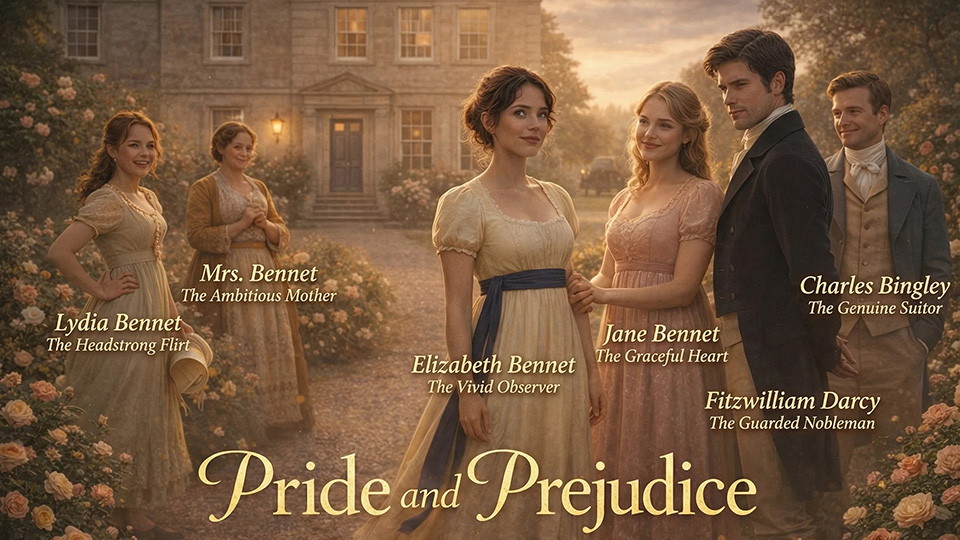
更扎心的是,很多人说伊丽莎白最后嫁给了爱情。但真正发生的,是在一个把女性当婚姻资产的时代,她硬是把自己从“可供选择的配置”,谈判成“有尊严的个体”。而达西的所谓“成长”,也不是从霸总变暖男,而是从阶层的默认设置里,学会尊重一个他原本不会认真对待的世界。
英剧《傲慢与偏见》最核心的不是爱情,而是阶层。爱情,只是这个世界允许的最漂亮的包装纸。
接下来,我们用三把刀拆开它。
-
第一刀:开篇就是婚姻市场
-
第二刀:夏洛特把滤镜砸碎
-
第三刀:第一次求婚,不是浪漫,是权力翻车
第一刀:开篇即是婚姻市场——一句“真理”背后的资源配置
被误读其实很正常,因为影视改编最爱拍心动时刻:舞会、眼神、庄园、雨中告白。这些镜头天生适合传播,短视频一剪就能爆。观众记住的是“达西好帅好有钱好会撩”,而不是这个社会怎么用名声和财产把人分层。
但奥斯汀写作的关注点恰好相反。他并不沉迷恋爱,他沉迷的是:人类怎么在社交场里互相打量、互相评估、互相定义。
你以为舞会是浪漫场景?他写舞会像写一场线下招聘会。你以为拜访是礼貌往来?他写拜访像写一次身份合影。你以为谁爱谁是重点?他真正关心的是:在这个社会里,谁有资格爱?谁被允许选择?谁只能被选择?
所以这本书的爽点,不是“爱情战胜一切”,而是:在规则里,把自己变得不可被侮辱。
《傲慢与偏见》开篇那句著名的“真理”——“一个有钱的单身男人,大家会默认他应该结婚”——注意重点:不是默认他值得被爱,而是默认他将被“分配”。这就是奥斯汀的狠。他用一句看似轻松的调侃,把婚姻的本质先摆在桌上:它是一种资源配置。
于是,你立刻就能理解贝内特太太的催婚风。很多读者喜欢拿她当笑料:俗、吵、势利,像个“婚恋博主”。但你换个角度:她不是恋爱脑,她是家庭风险控制部门。
贝内特家有五个女儿,没有儿子。在当时的继承制度和社会结构下,这意味着这个家庭的未来很不稳。女儿们无法像儿子那样自然地获得稳定财产与社会位置,她们的生活保障、体面住所、甚至家族的面子,都高度绑定在“婚姻”上。
贝内特太太并不是在追求浪漫,她在追求生存概率。你可以不喜欢她的表达方式,但你得承认:她说的是现实。她的焦虑不是“女儿没人爱”,而是“女儿没有退路”。
在那个时代,女性想要获得稳定生活,要么靠父兄,要么靠婚姻。父兄不靠谱,就只能把希望压在婚姻上。而婚姻在这里,首先是阶层谈判。
所以这本书从一开始就不是“甜”的,它只是写得很轻。轻到很多人把它当糖,忘了糖下面压着的骨头。
第二刀:夏洛特砸碎滤镜——在系统里,稳定比爱情更奢侈
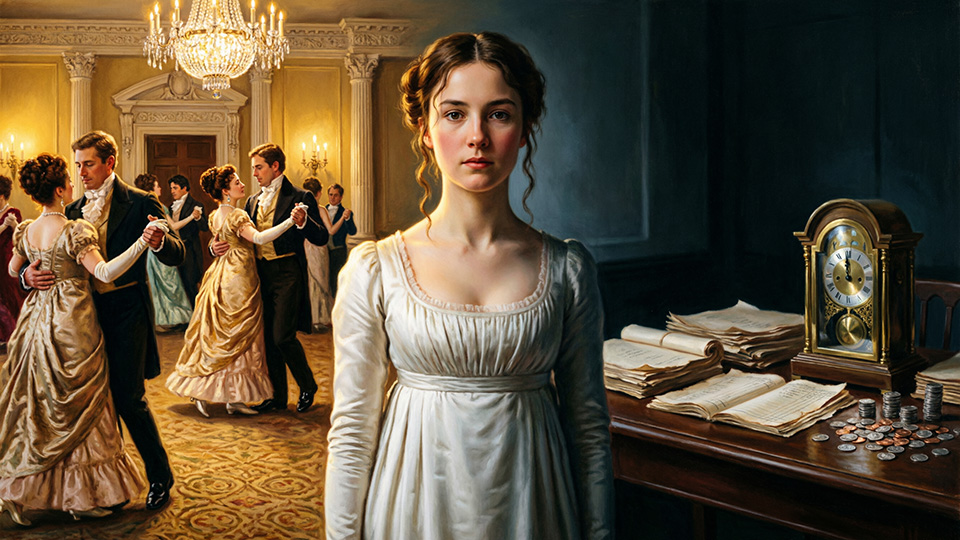
如果你把《傲慢与偏见》当恋爱故事,你会把舞会看成“心动发生地”。但奥斯汀会告诉你:舞会不是心动,是社交系统运行现场。
在舞会上,最重要的不是你跳得好不好,而是:
-
谁跟谁跳?
-
谁被介绍?
-
谁被忽视?
-
谁被赞美?
-
谁被嫌弃?
每一个细节都在传递信息:你属于哪个圈层?你有没有资格进入某个社交圈?你是不是合适的婚姻对象?
这就是为什么达西第一次出场会让人这么不舒服。他拒绝与人跳舞,嫌弃场合不够体面。很多人把这解读为“高冷”。但如果你把它放在阶层逻辑里,你会更准确地读出:这是阶层的优越感在自动运行。达西不是不懂礼貌,他是只对自己认定的“同圈层”礼貌。
伊丽莎白对他的反感,并不是因为她“玻璃心”,而是因为她敏锐地“听懂了”那种语气——你不是被平等对待,你是在被评估、被排序、被降级。
所以你看,这本书的爱情线,从一开始就踩在阶层冲突上。一个把世界按圈层划分的男人,偏偏爱上了一个不愿意被圈层定义的女人。这不是甜,这是冲突。
三、夏洛特的存在:让伊丽莎白的坚持变得“奢侈”
如果你想在《傲慢与偏见》里找最清醒的人,很多人会以为是伊丽莎白。但奥斯汀其实安排了一个更像“说明书”的角色——夏洛特·卢卡斯。
柯林斯向伊丽莎白求婚失败后,夏洛特很快就接受了他的求婚。读者的普遍反应是:震惊、嫌弃、甚至愤怒——“这也能嫁?”
但奥斯汀写夏洛特,不是为了让你骂她,而是为了让你看见:在这个社会里,女性的选择空间有多窄。
夏洛特并不幻想爱情。她甚至很直接地表达过类似意思:“婚姻里的幸福,常常靠运气。”注意这句话的“冷”——她不是抱怨某个男人不好,她是承认制度性的不确定。
当你没有经济独立、没有社会权利、没有自由流动的空间时,你怎么可能把幸福寄托在“灵魂伴侣”这种奢侈概念上?
夏洛特选择柯林斯,选择的不是爱情,是一整套稳定资源:住所、身份、可预期的生活结构、社会认可的体面。它不浪漫,但可控。
而且最绝的是,夏洛特并不是“认命”的受害者。她非常聪明,她会“管理”婚姻——尽量减少相处密度,安排丈夫忙碌,把自己的日常空间规划出来。这听起来很凉薄?不,这是生存智慧。她把婚姻当长期合作项目,把丈夫当需要管理的变量,尽量把风险降到最低。
所以,夏洛特真正刺痛读者的地方在于:她逼你承认——在某些结构里,爱情不是标配,稳定才是。你骂她现实,是因为你还没被现实追着跑。
而奥斯汀把夏洛特放进故事里,就是为了让你知道:伊丽莎白的坚持,有多“贵”。
伊丽莎白不是天真,她是在用一种近乎奢侈的方式维护尊严。
第三刀:第一次求婚——不是浪漫,是权力翻车
终于来到全书最容易被拍成“甜”的桥段:达西第一次求婚。
影视改编里,这段常常拍得很“俗”:强烈、克制、冲动、压抑已久的爱爆发,观众看得心动,觉得这是“真爱冲破偏见”。
但原著里,这段求婚简直是灾难现场。
达西的表达逻辑,大致可以翻译为:“我爱你,但你的家庭条件不够体面,你的亲戚会让我尴尬,你的社会位置对我不利,我会受到议论。不过,我还是愿意……”
听起来像深情?换成现实里的大白话就是:“你配不上我,但我不嫌弃你。”
这不是表白,这是权力展示。他把“我爱你”说成“我为了你克服了很多”——这意味着他在强调什么?强调“我高你低”,强调“我愿意下凡”,强调“你被选择是恩赐”。
所以伊丽莎白为什么会“爆炸”?不是因为她不爱,而是因为她听见了那句潜台词:“你被选择,是因为我在施舍。”
她要的是平等,而不是抬举。
你想想,如果有人对你说:“我不介意你学历一般、家庭一般、条件一般,但我还是喜欢你。”你会感动吗?你只会想:“你谁啊?你在面试我吗?”
伊丽莎白当场拒绝达西,不是戏剧效果,是她人格的核心。她宁愿不要这个男人,也不要在一段关系里被降级。

阶层冲突下的成长:尊严逼迫爱情升级
到这里你会发现,所谓“傲慢与偏见”,并不是两个人的小情绪,而是两种世界观的冲突。达西的“傲慢”来自阶层惯性,伊丽莎白的“偏见”来自她对阶层侮辱的敏感与反击。这是社会经验,不是恋爱误会。
很多人把达西的后期变化理解成“他变温柔了、变会爱了”,这说法太肤浅。达西真正的改变,是他开始意识到:自己一直用阶层当标尺衡量他人。他不是简单地道歉,而是开始修正自己的行为方式——从“我说了算”转向“我解释给你听”,从“我评判你”转向“我尊重你的判断”。
他写信解释,是在把权力姿态放下来。一个习惯掌控的人,愿意把事实摆出来接受审视,这本身就是让步。
而最能把阶层规则推到台前的,是莉迪亚私奔事件。
莉迪亚私奔——在很多“恋爱脑”解读里,是“妹妹不懂事,给姐姐添麻烦”。但在阶层结构里,这件事几乎是灭顶之灾。
因为在那个社会,女性的名声不仅是道德评价,更像一种“信用体系”。一旦家族名声崩盘,其他姐妹的婚姻机会会被连带摧毁。不是因为大家突然变得“道德洁癖”,而是因为在婚姻市场里,风险会被迅速传导:这个家教不行,这个家庭不可控,这个家族会带来麻烦。
所以莉迪亚私奔不是“八卦”,它是一场资产暴雷。贝内特太太的崩溃也不是夸张,她是在看着整个家庭的未来被毁掉。
达西在这个事件里出手,表面看像“英雄救美”,实际更深的意义是:他终于看见,伊丽莎白背负的不是“烦人的亲戚”,而是一整套对女性极其苛刻的社会机制。他用行动修复这种机制带来的伤害,也在重新塑造自己与伊丽莎白之间的关系——不再是我高你低的“施舍”,而是“我理解你的处境,并愿意承担代价”。
如果说第一次求婚是“权力翻车”,那么莉迪亚事件之后,达西才真正成为一个可平等相处的人。
结局:平等,才是比爱情更难的东西
到最后,伊丽莎白选择达西,并不是被金钱打动。更准确地说:她看见了一个可能性——这个人愿意从自己的阶层惯性里走出来,愿意把她当成平等的对话者,愿意承认她的判断、尊重她的尊严。
这才是《傲慢与偏见》最动人的地方。 它不是童话式的“他拯救她”,而是在规则极其不公平的世界里,一个女人守住底线,一个男人学会自省,最终把一段关系从“权力结构”修正成“人际关系”。
你以为这本书在歌颂爱情?其实它在歌颂一种更难的东西:平等。
在一个默认女性需要被安排的时代,伊丽莎白坚持“我有资格选择”。在一个默认阶层决定价值的社交系统里,她坚持“尊严不打折”。而达西的成长,也是在学会“别把阶层当成评判他人的唯一标准”。
所以这本书并不是“爱情战胜偏见”,而是:尊严逼迫爱情升级。
没有尊严,所谓爱情就会变成施舍。没有平等,所谓浪漫就会变成统治。
现代回响:你的“达西先生”在哪儿?
你以为阶层只存在于古代贵族社会?别太天真。
今天,当然没人穿着燕尾服在舞会上相亲。但我们换了舞台,规则仍在。学历、家庭、工作、城市、房、车、社交圈、所谓“气质谈吐”——这些词本质上都是现代的阶层符号。你依然会在各种场合被评估、被排序、被暗示“你配得上什么”。
所以《傲慢与偏见》真正的现代意义是:当系统试图把你变成“可供选择的配置”时,你能不能像伊丽莎白一样,守住那句隐形的宣言:“我不是附件,我是人。”
而你会发现,真正高级的关系,从来不是“谁有钱、谁拯救谁”,而是你不需要靠贬低对方来证明自己,你愿意承认对方的价值与边界,你能在亲密关系里实现“人对人”。
奥斯汀写得轻巧,但他的刀很稳。他不靠宏大宣言,他靠生活细节,把阶层的冷写进笑里。你笑着读完,再回头想,才发现自己被刺了一下。
这一期的结论,再说一遍:《傲慢与偏见》不是恋爱爽文,它是婚恋市场说明书,是阶层运作示范,是女性尊严的谈判史。
你如果只想嗑CP,当然也能嗑。但如果你愿意多看一层,你会发现这本书更狠——它让你明白:爱情从来不只是爱情,它总在和权力、资源、名声、社会结构纠缠。
真正难得的,不是遇到一个有钱的达西,而是守住一个不被侮辱的自己。
Pride and Prejudice: It Was Never About Love. It Was About Class.
If you have always read Pride and Prejudice as a brooding aristocrat falling for a sharp‑tongued country girl in a charming period romance, it is time to remove the rose‑tinted glasses now. Because Austen’s real obsession in this book was never romance—it was society. This is not a pretentious literary hot take. Return to the text, and you will find that its most breathless moments are rarely confessions of love; they are moments of birth, breeding, money, reputation, and the brutal arithmetic of the marriage market. The novel reads like a love story only because Austen sharpened her blade so finely that she wraps an entire class system in witty banter and glittering dialogue, so it slips down like gossip. You laugh as you read, and only when the laughter fades do you realise that behind that punchline stood a whole machinery of power.
Here is the harder truth: many say Elizabeth Bennet married for love, but what actually happened was this—in an era that treated women as transferable assets, she renegotiated her own status from a manageable asset to a sovereign soul. And Darcy’s so‑called “growth” was never about turning from a tyrant into a teddy bear; it was about unlearning the default settings of his own class, and learning to respect a world he had been taught to look down on. So let us be clear: Pride and Prejudice is not about love. Love is simply the most beautiful wrapping paper this world would allow. Now, let us cut through it with three clean strokes.
Misreading this novel is almost inevitable, because screen adaptations love to linger on the swoon: dances, glances, gardens, rain‑soaked proposals. These are tailor‑made for short clips. A ten‑second cut goes viral, and what stays in the mind is that Darcy is rich, handsome, and pines. What gets lost is how a society sorts people by name and net worth. But Austen’s eye was fixed elsewhere. She was never addicted to passion; she was addicted to how human beings size each other up in the social arena—assessing, ranking, and labelling. You see a ballroom? She saw a job fair in corsets. You see a polite morning call? She saw a verification of rank. You think the question is “Who loves whom?” Her question was, “In this world, who is allowed to love? Who gets to choose? And who can only be chosen?”
So the real thrill of this book is not “love conquers all” but holding your ground within the rules, and making yourself un‑insultable. That famous opening line—“It is a truth universally acknowledged, that a single man in possession of a good fortune, must be in want of a wife”—does not say he deserves to be loved; it says he will be assigned. That is Austen’s ruthlessness in a single sentence: she dresses a declaration of social economics as a light‑hearted quip, and sets it right on the table. And that is why we must understand Mrs. Bennet.
Many readers mock Mrs. Bennet. She is loud, obsessed, “vulgar”—a dating coach from hell. But look again. She is not a romantic; she is the Head of Household Risk Control. Five daughters, no son—in that world, under that inheritance law and that social contract, this was not a quirk but a structural vulnerability. Daughters could not inherit property, could not earn a stable living; their future—shelter, status, survival—depended almost entirely on a single variable: whom they married. Mrs. Bennet was not chasing romance; she was chasing survival probability.
You may not like her tone, but you cannot deny her accuracy. Her panic was not that her daughters were unloved, but that they had no safety net. In an era where a woman’s only access to stability was through a father, a brother, or a husband—and if the first two failed, the last was not a choice but a lifeline—marriage was never about hearts; it was a class negotiation. This book was never “sweet”; it was only written lightly enough to be mistaken for sugar, until you bite down and hit bone.
If you treat Pride and Prejudice as a romance, you will see the ball as the birthplace of passion. Austen would tell you: no. The ball is the system running in real time. It was never about how well you danced; it was about who danced with whom, who was introduced, who was ignored, who was praised, who was dismissed. Every move was a message—your circle, your eligibility, your worth. This is why Darcy’s first appearance stings: he refuses to dance, sneering at the room as beneath him. We call it aloofness, but call it what it is: class superiority on autopilot.
Darcy was not being rude; he was being selective, gracious only to those he had already approved. Elizabeth’s reaction was not hurt pride; she heard what he meant—that she was not being treated as an equal, but evaluated, ranked, and dismissed. From the very first scene, the love story rests on class collision: a man who draws lines around the world falls for a woman who refuses to be drawn into them. That is not sweet; that is conflict.
If you want the sharpest mind in this novel, many would name Elizabeth, but Austen placed another character—more like a manual than a heroine—Charlotte Lucas. When Mr. Collins is rejected by Elizabeth, Charlotte accepts him, and readers often react with shock, revulsion, and outrage—how could she? But Austen does not write Charlotte to be condemned; she writes her to be seen. Charlotte does not believe in love as salvation; she even says plainly that “happiness in marriage is entirely a matter of chance.” Notice the chill in that sentence: she is not complaining about one bad man; she is acknowledging institutional uncertainty. When you have no independent income, no legal standing, no room to move freely, you cannot afford to hinge your entire existence on something as fragile as romantic chemistry. Charlotte chooses Collins not love, but a package: shelter, status, a predictable life, and social respectability.
It is not romantic, but it is controllable. And here is the brilliance: Charlotte is not a victim but a manager. She arranges her life to minimise exposure to her husband, creates her own space, keeps him busy, and treats the marriage like a long‑term project, with her husband as a variable to be steered. Cold? Perhaps. But it is survival intelligence. Charlotte forces us to confront an uncomfortable truth that in certain systems, love is not the default setting; stability is. You call her cynical only because you have not yet been chased by the logic she faced. And Austen placed Charlotte beside Elizabeth so we would understand one thing: Elizabeth’s defiance came at a price. Elizabeth is not naive; she is practising a kind of dignity so costly it is almost luxurious.
Now to the scene most often remembered as the romantic turning point: the first proposal. In film, it plays as restraint, longing, passion barely contained. Heartbeats rise, viewers swoon, and they feel this is love overcoming prejudice. Go back to Austen’s page, however, and this scene is a disaster. Darcy’s logic, stripped bare, reads like this: “I love you—even though your family is embarrassing, your connections are awkward, your social standing is a liability, and my reputation will suffer—but still, I offer myself.” Sounds like devotion? In plain modern English: “You are beneath me, but I will not hold it against you.” That is not a declaration; it is a display of dominance. He packages love as sacrifice and frames desire as condescension.
The subtext was unmistakable: “You are chosen because I choose to stoop.” And Elizabeth explodes—not because she does not feel something for him, but because she heard what he was not saying: that she was being honoured by his charity. She did not want charity; she wanted equality. Imagine someone telling you today, “I don’t mind that you’re less educated, less wealthy, less connected—but I like you anyway.” Would you melt, or would you think, “Who exactly do you think you are? Are you interviewing me?” Elizabeth’s refusal is not a plot beat; it is the core of her character. She would rather lose the man than lose her standing within the relationship.
By now, we see that “pride” and “prejudice” are not personal quirks but worldviews in collision. Darcy’s pride was not arrogance; it was class conditioning. Elizabeth’s prejudice was not stubbornness; it was a finely‑tuned immune response to being condescended to. This is not a romantic misunderstanding; it is social experience. Many say Darcy “becomes nicer,” but that is too shallow. He becomes aware—aware that he had been using rank as a ruler for human worth. He does not simply apologise; he changes his mode from “I declare” to “I explain,” from “I judge you” to “I respect your judgment.” He writes a letter not to defend, but to lay facts before another person and trust her reading. For a man accustomed to authority, that is a real surrender. And the final reckoning comes not in a ballroom, but in a scandal. Lydia’s elopement is often read as “the foolish younger sister causing trouble,” but in class terms it was catastrophic. In that world, a woman’s reputation was not a moral label but a credit score.
One failure could pull down the whole family—not because society was suddenly moralistic, but because the marriage market transmitted risk instantly: this family has no control, this household is dangerous, marrying into it invites damage. Lydia’s flight was not a scandal; it was a liability event. Mrs. Bennet’s hysteria was not exaggeration; she was watching her family’s future dissolve. And Darcy’s intervention here is often read as “hero saves heroine,” but look closer: he sees something real. Elizabeth is not just carrying embarrassing relatives; she is carrying an entire system of punishment designed for women. He steps in not to rescue, but to repair, as best he can, and in doing so remakes their relationship from patron to dependent into someone who understands her burdens and chooses to share them. If the first proposal was a display of power, this is the moment Darcy becomes worthy of her company.
In the end, Elizabeth does not choose Darcy because he is rich; she chooses him because she sees a possibility. Here is a man who stepped outside his own class conditioning, who learned to treat her as an equal, who recognised her judgment, her autonomy, her dignity. This is not a book about love triumphing over prejudice; this is a book about dignity forcing love to upgrade. Without dignity, love curdles into condescension; without equality, romance becomes a mask for domination. You might think that was then, that was aristocracy, and that does not apply to us. But do not be so sure.
Today, no one wears tailcoats to a ball, but the stage has changed, not the script. Education, background, job title, city, property, accent, “vibe,” “taste”—these are our modern class markers. We are still assessed, still ranked, still told, sometimes gently, what we “deserve.” So the question Pride and Prejudice leaves us with is not about Darcy; it is about you. When the world tries to reduce you to a box on a checklist, can you still say, like Elizabeth, without shouting, without violence, but with unmistakable clarity: “I am not an accessory. I am a person”?
Austen wrote lightly, but her blade was steady. She does not preach; she paints. She places the coldness of class inside a warm, wry smile. You close the book smiling—until the smile fades, and you feel the pinprick. Let me say it once more: Pride and Prejudice is not a romantic fantasy; it is a field guide to the marriage market, a case study in class mechanics, and a negotiation manual for human dignity. You can read it for the romance—many do—but if you read it one layer deeper, you will find something far more radical: it shows us that love is never just love; it is always tangled with power, status, money, and structure. And the rarest thing of all is not finding a rich Darcy. It is remaining someone who cannot be shamed into submission.
互动问题:如果你是伊丽莎白,你会选夏洛特的“稳定”,还是选伊丽莎白的“平等”?欢迎在评论区聊聊。