看美剧《傲骨贤妻》学英语:关于婚姻与女权

戏剧反讽 / Dramatic Irony
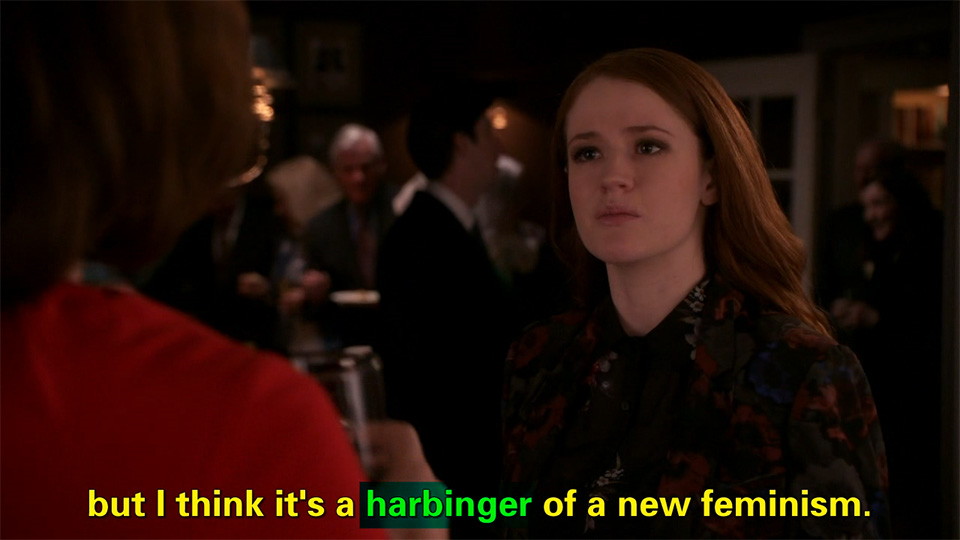
观众知道艾丽西娅对彼得的“支持”要复杂得多——掺杂着野心、怨恨,最终是一段无爱的安排。汉娜的理想化解读与艾丽西娅的真实处境形成反差,制造了张力。
观众知道艾丽西娅对彼得的“支持”要复杂得多——掺杂着野心、怨恨,最终是一段无爱的安排。汉娜的理想化解读与艾丽西娅的真实处境形成反差,制造了张力。
The audience knows Alicia’s “standing by” Peter was far more complicated—infused with ambition, resentment, and ultimately a loveless arrangement. Hannah’s idealistic reading contrasts with Alicia’s lived reality, creating tension.
Hannah’s central assertion—that “women should do what they want, even if what they want is to stand by their man”—is a provocative and timely revision of feminist doctrine. It pushes back against second-wave feminism’s suspicion of traditional domestic choices. However, its flaw lies in ignoring the structural and psychological pressures that often shape such “choices.” Alicia did not stand by Peter purely out of free will; she was entangled by political survival, financial dependence, and her own ambition. Hannah’s youthful idealism simplifies a deeply messy reality. Still, her remark serves an important function: it forces both Alicia and the viewer to reconsider whether any choice made by a woman in a patriarchal system can ever be truly autonomous—or whether feminism should expand to validate even compromised decisions. In that sense, Hannah is not wrong, but she is incomplete.
声明:本站所有文章,如无特殊说明或标注,均为绝学社原创发布。任何个人或组织,在未征得本站同意时,禁止复制、盗用、采集、发布本站内容到任何网站、书籍等各类媒体平台。如若本站内容侵犯了原著者的合法权益,可联系绝学社网站管理员进行处理。