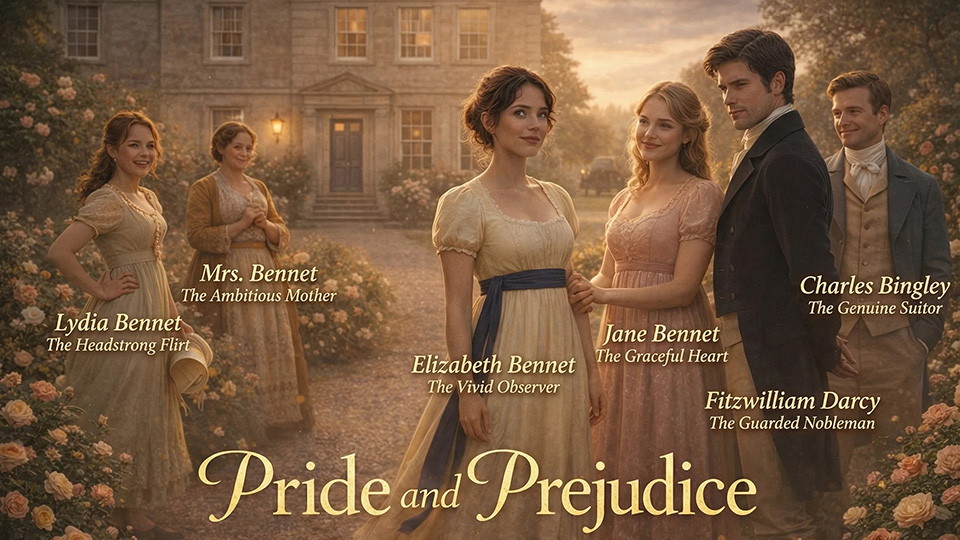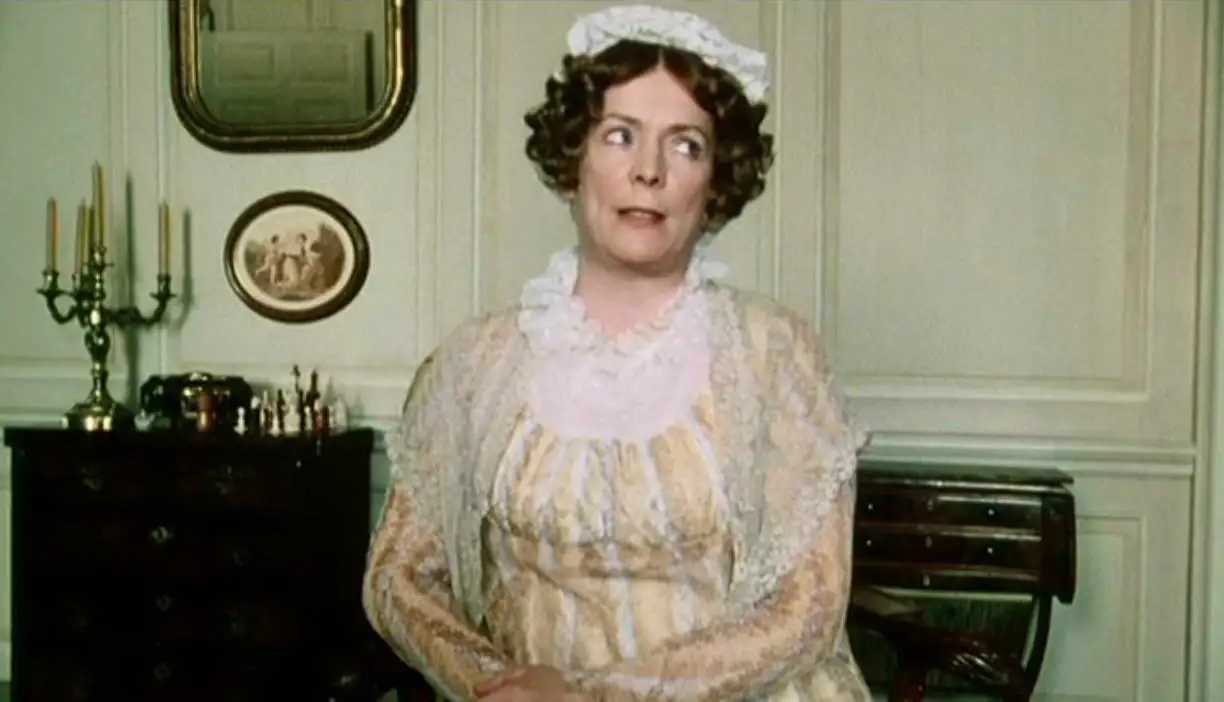

Pride and Prejudice — Chapter 5(精学笔记 · 欧文版)
Jane Austen | 1813 | Chapter 5 of 61 | 欧文精学系列 · 欧文版
献给有阅历的眼睛 | 以词为纲 · 以句为目 · 以义为魂 | 文法随文 · 叙事流排布
📍 序章 · 为什么这一章值得你用人生阅历去读?
从”舞会余波”到”客厅闲谈”——一个现实主义者登场
第四章的战场在卧室,第五章的战场在客厅。舞会后的第二天早上,Lucas 家的姑娘们上门”复盘”——这是 Austen 笔下最重要的社交仪式:一场舞会结束了,但关于它的”解读”才刚刚开始。
这一章没有求婚,没有争吵,甚至没有真正的情节推进。但它干了一件大事:让 Charlotte Lucas 出场。
Charlotte 是谁?她是 Elizabeth “intimate friend”(密友),27 岁,未婚,不漂亮、不富有、出身”不上不下”。而她在这一章说的每一句话,都像一把标尺,量出了全书最重要的裂缝——理想与现实、爱情与婚姻、Elizabeth 与她自己。
这一章是全书的”价值观定调章”: 舞会那晚 Darcy 伤了 Elizabeth 的自尊(”only just tolerable”),第二天早上,全屋人围着这句侮辱开起了”研讨会”——有人当笑话,有人当罪证,有人当辩护词。Austen 让每个人对同一句话的不同反应,勾勒出各自的婚姻观、阶级观与自我观。
🎯 给 40-70 岁读者的三个”开卷钩子”
① 你有没有一个”清醒到凉薄”的闺蜜? Charlotte 说 Darcy “有权利骄傲”——”他家世好、有钱、样样占全,凭什么不能傲?”这是全书最务实、也最让人心里一沉的话。 年轻时你多半会站 Elizabeth(”他伤了我的自尊”),活到一定年纪你才发现:Charlotte 不是凉薄,她是把婚姻看成了”生存策略”——而这样的人,往往是你身边最靠谱的军师。
② “骄傲”和”虚荣”,你真的分得清吗? Mary 掉书袋式地定义:”骄傲关乎我们对自己的看法,虚荣关乎我们希望别人怎么看我们。”这两百年前的定义,到今天依然是朋友圈心理学。 你刷朋友圈时那种微妙的不适——是”骄傲”还是”虚荣”?Austen 让最不受欢迎的三小姐说出全章最有含金量的话,这本身就是一记反讽。
③ 你有没有被一句闲话”解剖”过? Mrs. Bennet 断言 Darcy “肯定是被骄傲吃掉了”——因为她”听说” Mrs. Long 没马车,Darcy 是坐出租马车来的。Austen 用三句话,写透了”谣言的生产线”:一个事实(他不理 Mrs. Long)+ 一个推断(他嫌她没马车)= 一个定论(他被骄傲吃掉了)。 两百年后的热搜,还是这个公式。
📺 直播间话术: “年轻读者读第五章,看到的是’舞会后的八卦串门’。你们读第五章,应该看到的是一个人生选择题:Charlotte 用现实武装自己,Elizabeth 用理想武装自己——而 Austen 让她们做了最好的朋友。 这一章没有答案,它只是把两种活法摆在你面前,让你用自己的阅历去裁判。”
🎬 逐句叙事 · 第一段——Sir William Lucas 的”升职记”

“Within a short walk of Longbourn lived a family with whom the Bennets were particularly intimate. Sir William Lucas had been formerly in trade in Meryton, where he had made a tolerable fortune, and risen to the honour of knighthood by an address to the king during his mayoralty.”
Austen 的开场像一份”社会档案”: 住在 Longbourn 不远处的一户人家,是 Bennet 家的密友。Sir William Lucas 当年在 Meryton 做生意(trade),赚了一笔”说得过去的家当”,又因为在市长任内(mayoralty)向国王上过一份呈文,被封了爵士(knighthood)。
注意 Austen 的用词: “made a tolerable fortune”——”tolerable”(勉强够格的)——一个词就划出了 Lucas 家的阶级上限: 不是大富大贵,是”过得去”。这和 Darcy 的”年入一万”、Bingley 的”十万身家”一比,立刻显出差距。
🏛️ 文化背景 · Knighthood 的”阶级电梯”: 在 1813 年的英国,”爵士(knighthood)”是平民能触摸到的最高荣誉——不靠世袭,由君主授予,商人、市长、军官都有机会。一个”爵士”头衔,能把”商人 Sir William”变成”绅士 Sir William”——至少表面上如此。 但 Austen 的讽刺在于:头衔能改称呼,改不了出身——Sir William 拿到头衔后”嫌弃起自己的生意”,恰恰证明他从未真正摆脱”商人的自卑”。
“The distinction had, perhaps, been felt too strongly. It had given him a disgust to his business and to his residence in a small market town; and, quitting them both, he had removed with his family to a house about a mile from Meryton, denominated from that period Lucas Lodge; where he could think with pleasure of his own importance, and, unshackled by business, occupy himself solely in being civil to all the world.”
Austen 的讽刺藏在”perhaps”里: “这份殊荣,也许是被他感受得太过强烈了。”——爵士头衔让 Sir William 嫌弃了自己的生意和小镇,搬到一英里外,把宅子命名为”Lucas Lodge”(卢卡斯庄园),从此不事生产,专职”对全世界客气”。
“denominated”(被命名为)是个极正式的词,Austen 用它写一个”暴发户给自己的房子起名”,本身就是反讽: 住进一栋叫”庄园”的房子,不代表你就是绅士——头衔是租来的,地位是想象出来的。
🏛️ 文化背景 · Lucas Lodge 的”自封庄园”: Austen 用 “Lodge”(别墅/小屋)一词暗藏机锋——庄园(Estate)是世代传承的土地财产,贵族的”根”;而 “Lodge” 是守门人小屋或小型乡间别墅。 Sir William 把自家房子起名 “Lodge”,带着模仿贵族的野心,但这个词本身暴露了他的”山寨感”——真正的大贵族住在 “Park” 或 “Hall”(如 Netherfield Park、Rosings Park),而 Lucas 家只是 “Lodge”。
🔤 单词 1️⃣ knighthood UK /ˈnaɪthʊd/ US /ˈnaɪthʊd/ —— 爵士头衔
释义: The title and status of a knight(爵士的封号与身份)
“risen to the honour of knighthood by an address to the king during his mayoralty”
“knighthood” 是英国荣誉体系里最”亲民”的一档: 不用世袭,可以由君主授予——对平民来说,这是”阶级电梯”最快的一班。 但 Austen 的讽刺在于:Sir William 拿到头衔后,不是更谦卑,而是”嫌弃起自己的出身”——头衔没有让他变高贵,只让他变得虚荣。
E.G.1:He was rewarded with a knighthood for his services to industry.
参考翻译:他因对工业界的贡献而被授予爵士头衔。E.G.2:She accepted the knighthood with characteristic modesty, insisting it was a team effort.
参考翻译:她以一贯的谦逊接受了爵士封号,坚称这是团队功劳。
🔤 单词 2️⃣ mayoralty UK /ˈmeərəlti/ US /ˈmeɪrəlti/ —— 市长任期
释义: The office or term of office of a mayor(市长职位或任期)
“risen to the honour of knighthood by an address to the king during his mayoralty“
“during his mayoralty”(在他的市长任期内)——Austen 用一个名词,交代了 Sir William 的”进阶路线”: 商人 → 镇长 → 向国王呈文 → 封爵。这是一条典型的”新钱上升通道”:用地方职务换皇家注目,用皇家注目换社会地位。
E.G.1:The new bridge was completed during his mayoralty.
参考翻译:这座新桥是在他的市长任期内建成的。
🔤 单词 3️⃣ supercilious UK /ˌsuːpəˈsɪliəs/ US /ˌsuːpərˈsɪliəs/ —— 目空一切的、倨傲的
释义: Behaving as though you think you are better than others; contemptuously dismissive(自以为高人一等、轻蔑傲慢)
“For though elated by his rank, it did not render him supercilious; on the contrary, he was all attention to everybody.”
Austen 用”并非 supercilious”来给 Sir William 开脱——但这句”开脱”本身就是双刃剑: 他不倨傲,不是因为他有教养,而是因为他太享受”被注意”的感觉,没空去轻视别人。 “supercilious” 字面来自拉丁文 “supercilium”(眉毛)——“眉毛抬得老高”,就是傲慢最形象的画面。
E.G.1:Her supercilious smile made it clear she thought the question beneath her.
参考翻译:她那副眉毛高挑的倨傲微笑,分明表示她觉得这个问题不配她回答。E.G.2:He answered in a supercilious tone that alienated the whole committee.
参考翻译:他用一种目空一切的语气作答,把整个委员会都得罪了。
🔤 单词 4️⃣ elated UK /ɪˈleɪtɪd/ US /ɪˈleɪtɪd/ —— 得意扬扬的、兴高采烈的
释义: Extremely happy and excited, often because of something that has happened(因某事而极度兴奋得意)
“For though elated by his rank, it did not render him supercilious”
“elated by his rank”(被他的爵位弄得飘飘然)——Austen 用 “elated” 写 Sir William 的心理状态: 不是沉稳的满足,是小孩子考了满分那种藏不住的兴奋。 这个词的妙处在于:它把”封爵”写成一种”情绪事件”,而非”身份事件”——Sir William 像个暴发户,被自己的运气吓了一跳。
E.G.1:The team was elated by their unexpected victory.
参考翻译:球队为这场出人意料的胜利而欣喜若狂。
🔤 单词 5️⃣ obliging UK /əˈblaɪdʒɪŋ/ US /əˈblaɪdʒɪŋ/ —— 乐于助人的、殷勤的
释义: Willing to help and do favors for others(热心帮忙、有求必应)
“By nature inoffensive, friendly, and obliging, his presentation at St. James’s had made him courteous.”
Austen 给 Sir William 的”性格三连”: inoffensive(无害)、friendly(友善)、obliging(有求必应)——全是被动、讨好的词,没有一个是”有主见”。 而最狠的一句在后面:“his presentation at St. James’s had made him courteous”——是”在圣詹姆斯宫的一次觐见,让他变得彬彬有礼”。 注意这个因果:不是教养让他有礼,是”见过国王”让他有礼。 Austen 用一个因果倒置,写尽了小人物对大人物光芒的迷信。
🔤 单词 6️⃣ unshackled UK /ˌʌnˈʃækld/ US /ˌʌnˈʃækld/ —— 挣脱束缚的
释义: Freed from restraints or burdens(摆脱束缚、了无牵挂)
“unshackled by business, occupy himself solely in being civil to all the world”
“unshackled by business”(摆脱了生意的桎梏)——Austen 用了一个”重词”(shackle=镣铐)来写”不做生意”: 仿佛做生意是坐牢,退休是出狱。但注意 Austen 的反讽:他挣脱了”生意的镣铐”,转身却给自己戴上了”头衔的枷锁”——余生都在扮演”见过国王的绅士”。
E.G.1:Retirement left him unshackled from the daily grind of the office.
参考翻译:退休让他摆脱了办公室的日常劳役。
🔤 单词 7️⃣ denominated UK /dɪˈnɒmɪneɪtɪd/ US /dɪˈnɑːmɪneɪtɪd/ —— 被命名为
释义: Formally called or named(被正式称作、命名为)
“he had removed with his family to a house about a mile from Meryton, denominated from that period Lucas Lodge”
“denominated” 是银行/法律术语(货币面额、正式命名)——Austen 用它给”自宅起名”镀金: 一栋普通房子,一旦”被命名为 Lucas Lodge”,就像货币有了”面额”,身份有了”面值”。Austen 的讽刺:钱可以自铸,地位不能自封——但 Sir William 不信这个邪。
E.G.1:The new estate was denominated “Ashford Manor” in the title deeds.
参考翻译:这块新地产在地契上被正式命名为”阿什福德庄园”。🎬 现代镜像 · “退休局长综合征”: Sir William “从未从圣詹姆斯宫的觐见中恢复过来”——这就是现代版的”退休局长综合征”:酒桌上永远会提起”当年我在任上的时候”,朋友圈永远晒”和老领导的合影”。 《人民的名义》里那个总提”我们省委大院”的退休干部、《绝望主妇》里炫耀自家草坪的邻居,全是 Sir William 的 2026 版。Austen 写他不是为了嘲笑,是为了提醒:一个人如果没有内在的价值感,就只能靠”头衔”续命。
🎨 创新视角 · “头衔经济学”: Sir William 的”升爵之路”,是一个完整的”身份焦虑”标本:原始身份(商人,地位低但有钱)→ 身份升级(市长→觐见国王→封爵)→ 身份恐慌(拿到头衔后开始嫌弃自己的生意和小镇,越往上爬越怕被看出出身)→ 身份表演(给房子起名”Lodge”,专职”对全世界客气”)。头衔能改变称呼,改变不了不安——Sir William 的”客气”,不是教养,是”表演”。 两百年后的”身份焦虑”只是换了装备:从”爵士头衔”换成”名校学历””大厂履历””房本车本”,而”越炫耀什么,越缺什么”的原理一点没变。
📚 旁证(YouTube 学者 · Sir William 专论): “Sir William Lucas, former tradesman turned knight of the realm, is a man thoroughly intoxicated by his own mild celebrity. He’s the sort of gentleman who never quite recovered from being introduced at St. James’s Palace… Austen’s gentle jab at the newly risen gentry — those who have traded commerce for courtesy and believe that a knighthood is a one-way ticket to sophistication.”——学者点破 Sir William 的喜剧内核:”被自己的小名气灌醉的人”——Austen 用他温柔地刺了一下新贵阶层:用商业换了礼貌,就以为一张爵士证书等于全部教养。
🔧 文法机关 1:not too clever to be a valuable neighbour——”蠢得恰到好处”的双重否定
“Lady Lucas was a very good kind of woman, not too clever to be a valuable neighbour to Mrs. Bennet.”
这句话是 Austen 最毒的一记暗箭,藏在”not too clever”里:
- 字面: Lady Lucas 人很好,”不至于聪明到做不成 Mrs. Bennet 的好邻居”。
- 深挖: “not too clever to be…” 是个双重否定——潜台词是:她蠢得恰到好处,正合 Mrs. Bennet 的胃口。 Mrs. Bennet 需要的是一个能一起嚼舌根、不会反驳她的邻居;Lady Lucas “恰到好处地不聪明”,完美胜任。
Austen 用一句”好话”,同时骂了两个人: Lady Lucas 没脑子,Mrs. Bennet 只配跟没脑子的人做朋友。这就是 Austen 式的恭维——每个形容词后面都藏着手术刀。
📐 模板 · The Qualified Slight(恭维式贬低): [Someone] was a very good [kind] of person, not too [clever] to be a valuable [neighbour/asset] to [someone else].
现代版: “He’s a great guy, just not too sharp to fit in with the sales team.” / “She’s lovely, not too smart to be a perfect yes-woman for the boss.”
经验分享: 这套”恭维式贬低”是 Austen 的招牌暗器——每个词都在夸,整句都在损。 使用时注意场合:适合私下的犀利吐槽。它的杀伤力在于”无证据伤害”:你没法反驳一句夸奖。
🎯 完整例句:
E.G.1:He was not too clever to be a good yes-man to the boss.
参考翻译:他蠢得恰到好处,正好给老板当个应声虫。E.G.2:She was not too brilliant to fit in with the office gossip crowd.
参考翻译:她聪明得恰到好处,正好融入办公室八卦圈。
✍️ 仿写练习 1 · 社会档案式速写——”Sir William 的升职记”笔法
📜 选段(本章第一段,约 127 词):
“Within a short walk of Longbourn lived a family with whom the Bennets were particularly intimate. Sir William Lucas had been formerly in trade in Meryton, where he had made a tolerable fortune, and risen to the honour of knighthood by an address to the king during his mayoralty.”
“The distinction had, perhaps, been felt too strongly. It had given him a disgust to his business and to his residence in a small market town; and, quitting them both, he had removed with his family to a house about a mile from Meryton, denominated from that period Lucas Lodge; where he could think with pleasure of his own importance, and, unshackled by business, occupy himself solely in being civil to all the world.”
【技法提炼】Austen 的”社会档案式速写”——全程零评价,全靠履历排布制造反讽:
- 发迹史平铺:商人出身(formerly in trade)→ 赚到”过得去”的家当(tolerable fortune)→ 靠一封呈文封爵(knighthood)——像填履历,一个形容词都不肯多给。
- 转折藏在”perhaps”里:”The distinction had, perhaps, been felt too strongly”——”这份殊荣,也许是被感受得太过了”。一个副词,把整段身份焦虑轻轻带过。
- 讽刺收束:”unshackled by business, occupy himself solely in being civil to all the world”——”挣脱生意、专职对全世界客气”。Austen 不说他虚荣,她只让你看见:一个商人抛弃生意,去当职业礼貌家。
这手笔”不是一般人能掌握”的难点,恰恰在忍住不下判断。普通写手会补一句”他虚荣极了”;Austen 一个字都不评,全靠事实排布让读者自己笑出来。仿写时最难的是语气的零度——一加形容词,反讽就破了。
✍️ 场景一 · 公司空降高管:
Mr. Vance had been formerly in regional sales, where he had made a serviceable record, and risen to the honour of a corner office by a viral cost-cutting memo during his first quarter. The distinction had, perhaps, been felt too strongly. It gave him a disgust to his field days and to his habit of dropping into the open-plan floor; and, quitting them both, he had removed with his entourage to a glass box on the thirtieth floor, denominated from that period the Strategy Suite; where he could think with pleasure of his own importance, and, unshackled by operations, occupy himself solely in being visible to the CEO.
参考翻译:”万斯先生早年做区域销售,攒下一份说得过去的业绩,又因为在第一个季度靠一封病毒式传播的降本备忘升进了带角办公室。这份尊荣,也许是被他感受得太过强烈了——他从此嫌弃起跑一线的日子,也嫌弃起自己爱逛开放办公区的老习惯;索性两样都抛下,带着随从搬进 30 楼的玻璃隔间,从那时起命名为”战略作战室”——在那儿,他可以愉快地回味自己的重要,挣脱了业务的桎梏,专职在 CEO 面前刷存在感。”
✍️ 场景二 · 鸡娃妈妈(家庭/教育领域):
Mrs. Fang had been formerly a bookkeeper in a small firm, where she had made a serviceable salary, and risen to the honour of a neighbourhood authority on education by a daughter who topped the municipal mock exams. The distinction had, perhaps, been felt too strongly. It gave her a disgust to her old colleagues and to the habit of clocking out at six; and, quitting them both, she had removed with her family to a mortgaged flat beside the key school, denominated from that period the Study Suite; where she could think with pleasure of her own importance, and, unshackled by employment, occupy herself solely in administering the parents’ WeChat group.
参考翻译:”方女士早年在公司做会计,挣着一份说得过去的薪水,又因为女儿在市里一模考试拔了头筹,升到了’小区教育权威’的尊位。这份尊荣,也许是被她感受得太过强烈了——她从此嫌弃起老同事,也嫌弃起六点打卡下班的老习惯;索性两样都抛下,带着全家搬进名校旁边那套按揭房,从那时起命名为’学习作战室’——在那儿,她可以愉快地回味自己的重要,挣脱了上班的桎梏,专职主持家长群。”
🔍 句法骨架对照(原文 → 仿写,每个槽位怎么换,看得见):
| 原文(Austen) | 仿写(场景一 · 空降高管) |
|---|---|
| had been formerly in trade in Meryton | had been formerly in regional sales |
| made a tolerable fortune | made a serviceable record |
| risen to the honour of knighthood by an address to the king during his mayoralty | risen to the honour of a corner office by a viral cost-cutting memo during his first quarter |
| The distinction had, perhaps, been felt too strongly. | 整句照搬(转折的”榫头”不动) |
| gave him a disgust to his business and to his residence in a small market town | gave him a disgust to his field days and to his habit of dropping into the open-plan floor |
| removed to a house about a mile from Meryton, denominated Lucas Lodge | removed to a glass box on the thirtieth floor, denominated the Strategy Suite |
| unshackled by business, occupy himself solely in being civil to all the world | unshackled by operations, occupy himself solely in being visible to the CEO |
给英语学习者的话: 这手笔”非一般人能掌握”的功力在一个主语 + 一条连接链把一生压进一句:
formerly in… → where he had made… → and risen to… → quitting them both → denominated… → where he could… → unshackled by… → occupy himself solely in…。句子越长越不能乱,每个环节都是榫头——学会”用一条链子控住长句”,比背一百个单词值钱。 这张对照表就是你的”换件清单”:词可以换,链子不能断。🎯 技法套路(可复用公式):
[Name] had been formerly in [trade/line], where he had made a [modest] [fortune/reputation], and risen to the honour of [title] by [means]. The distinction had, perhaps, been felt too strongly. It gave him a disgust to [old life]; and, quitting them both, he had removed with his family to [new place], denominated [grand name]; where he could think with pleasure of his own importance, and, unshackled by [work], occupy himself solely in [shallow ritual].
共鸣场景: 单位里”空降的万斯”、家族里”鸡娃的方女士”——Austen 教你:写一个人的虚荣,不要骂他,只要把他的履历和后来的样子摆在一起。职场、家庭,同一把链子。
🎬 逐句叙事 · 第二段——”舞会复盘”的社交仪式

“That the Miss Lucases and the Miss Bennets should meet to talk over a ball was absolutely necessary; and the morning after the assembly brought the former to Longbourn to hear and to communicate.”
Austen 用 “absolutely necessary”(绝对必要)写”舞会复盘”—— 带着夸张的戏谑:仿佛两个家族不坐下来聊聊昨晚的舞会,天就要塌了。 舞会已经结束,但它的”社交后果”刚刚开始——谁跟谁跳了舞、谁看了谁一眼、谁说了什么,这些”情报”要在客厅里被反复咀嚼、加工、定价。
🔤 单词 8️⃣ intimate UK /ˈɪntɪmət/ US /ˈɪntɪmət/ —— 亲密的(形容词)
释义: Very close and familiar; having a close personal relationship(关系亲密、熟稔)
“The eldest of them, a sensible, intelligent young woman, about twenty-seven, was Elizabeth’s intimate friend.”
Austen 用 “intimate friend”(密友)介绍 Charlotte——”intimate” 不是”普通朋友”,是”知根知底、可以交心”的那种。 这个词现在伏笔千里:正因她们是密友,后文 Charlotte 嫁给 Collins 时,Elizabeth 才会感到”被背叛”。Austen 用两个字,提前买下了后文悲剧的保险。
E.G.1:She is one of my most intimate friends; we have known each other since childhood.
参考翻译:她是我最亲密的朋友之一,我们从小就认识。E.G.2:The book offers an intimate portrait of life in a small English village.
参考翻译:这本书生动地描绘了一个英国小村庄里的私密生活图景。
🎨 段落赏析:27 岁的未婚姑娘——Austen 的”定时炸弹”
“The eldest of them, a sensible, intelligent young woman, about twenty-seven…”
“about twenty-seven”(大约 27 岁)——在 1813 年,这是一个足以让读者倒吸一口凉气的数字。 当时的”适婚年龄”是 18-22 岁;27 岁未婚,意味着 Charlotte 已经一脚踩进”老姑娘(spinster)”的警戒线。
🏛️ 文化背景 · 27 岁未婚的”警戒线”: 在摄政时代,18-22 岁是适婚黄金期,25 岁开始”滑坡”,27 岁已经”危险”。Charlotte 的处境是:不漂亮、没嫁妆、出身”不上不下”——她比 Elizabeth 更清楚自己没资格等爱情。 Austen 让 Charlotte 在”27 岁”这个数字上说出”务实宣言”——年龄是压在她身上最重的现实,也是她”理性”的根源。
🎨 创新视角 · “等得起”与”等不起”的时间差: Charlotte 27 岁,Elizabeth 20 岁出头——这个”时间差”是理解她们分歧的钥匙:Elizabeth 等得起(还年轻,有资本相信”爱情会来”);Charlotte 等不起(已到警戒线,每一年的等待都在贬值)。Austen 的洞察:很多”价值观之争”,本质是”时间差之争”——不是谁对谁错,是各自手里的”余粮”不同。 现实里,劝你”别挑了”的闺蜜,往往比你大几岁;劝你”别将就”的朋友,往往还没到着急的年纪。人的选择,一半是性格,一半是年龄。
Austen 的编排极其精准: 她不说”Charlotte 是个可怜人”,她只报年龄——“约 27 岁”三个字,就是全书最长的一枚定时炸弹的引信。 读者会想:她还能等多久?Elizabeth 的理想主义,还有几年余粮?这一章的”务实”与”理想”之争,从年龄数字就开始布防了。
💡 经验分享: Austen 从不直接交代”这姑娘嫁不出去了”,她只写 “about twenty-seven”——数字一出来,时代对女性的压迫就自己浮出水面。 读懂 Austen 的”数字经济学”:年龄、嫁妆、年薪,都是她最省力、最锋利的武器。
🎬 逐句叙事 · 第三段——Mrs. Bennet 的”客套开场”

“You began the evening well, Charlotte,” said Mrs. Bennet, with civil self-command, to Miss Lucas. “You were Mr. Bingley’s first choice.”
Mrs. Bennet 一开口就是”社交刀法”: “你昨晚开场开得不错,Charlotte——你是 Bingley 先生的第一个舞伴。” “with civil self-command”(带着客客气气的自我克制)——Austen 用五个词,写尽了 Mrs. Bennet 的嫉妒: 她嘴上夸 Charlotte,心里想的却是”凭什么是你不是我女儿”。“self-command”(自我克制)这个词用在这里是反讽:Mrs. Bennet 是在拼命按住自己那颗想炫耀女儿的心。
🔤 单词 9️⃣ civil UK /ˈsɪvl/ US /ˈsɪvl/ —— 客气的、不失礼的(此处指表面礼貌)
释义: Polite in a merely formal way; courteous but not warm(表面客气、不失礼,但无温度)
“with civil self-command, to Miss Lucas”
“civil” 在 Austen 时代常用来形容”礼貌但冰冷”—— 与 “cordial”(热诚的)正好相对。Mrs. Bennet 的”客气”是表演出来的:她不想得罪 Lucas 家,但也不想真夸。 Austen 用 “civil” 一个词,写出了社交场合最普遍的表情:笑容满面的疏远。
E.G.1:He gave a civil nod but said nothing, clearly not wishing to engage.
参考翻译:他客气地点了点头,什么也没说,显然不想搭话。E.G.2:Keep a civil tongue in your head even when you disagree with him.
参考翻译:即使不赞同他,说话也要客气些。
🔤 单词 1️⃣0️⃣ overhearing UK /ˌəʊvəˈhɪərɪŋ/ US /ˌoʊvərˈhɪrɪŋ/ —— 偷听到的话
释义: Hearing something said by accident or without the speaker knowing(无意中听到、窃听到的话)
“Perhaps you mean what I overheard between him and Mr. Robinson: did not I mention it to you?”
Charlotte 抛出了昨晚的”关键情报”: 她偷听到 Bingley 和 Mr. Robinson 的对话——Bingley 被问到”全场哪位姑娘最漂亮”,“毫不犹豫地回答: eldest Miss Bennet, beyond a doubt.”(大女儿 Bennet 小姐,毫无疑问。)
“overhear”(无意听到)是全书最被低估的动作: 舞会上的话,一半是说给当事人听的,一半是说给”会偷听的人”听的。Charlotte 的”情报能力”,是她日后能”在婚姻市场精准出手”的核心技能——Austen 让她第一次出场就展示这项技能。
E.G.1:I overheard them discussing the merger in the hallway.
参考翻译:我无意中听到他们在走廊里讨论并购的事。E.G.2:She pretended to read while overhearing their private conversation.
参考翻译:她假装看书,一边偷听他们的私密谈话。
🔗 短语快取:beyond a doubt —— 毫无疑问
“Oh, the eldest Miss Bennet, beyond a doubt: there cannot be two opinions on that point.”
“beyond a doubt”(毫无疑问)——Bingley 对 Jane 的赞美斩钉截铁。 而 Charlotte 复述这句话时的精准(连 “there cannot be two opinions” 都记得),证明了她”信息采集”的含金量:她不是八卦,她是”市场调研”。
E.G.1:She is beyond a doubt the most qualified candidate for the job.
参考翻译:她无疑是这份工作最合格的候选人。
🎬 逐句叙事 · 第四段——Charlotte 打趣 Elizabeth:”Poor Eliza!”

“My overhearings were more to the purpose than yours, Eliza,” said Charlotte. “Mr. Darcy is not so well worth listening to as his friend, is he? Poor Eliza! to be only just tolerable.”
Charlotte 的机锋: “我偷听到的话比你的更有价值,Eliza。Darcy 可不值得像他朋友那样被倾听——可怜的 Eliza!居然只是’勉强及格’(only just tolerable)。”
这句话是三把刀叠在一起:
1. “My overhearings were more to the purpose”(我听到的更切中要害)—— Charlotte 暗暗回击 Elizabeth 昨晚的某个”听来的八卦”,并宣布自己棋高一着。
2. “Mr. Darcy is not so well worth listening to”(Darcy 的话不值得听)—— 表面嫌弃 Darcy,实则在替 Elizabeth 解围:别把那个人的话当回事。
3. “Poor Eliza! to be only just tolerable”(可怜的 Eliza!居然只落个”勉强及格”)—— 用 Elizabeth 自己的”遭遇”来逗她。
Austen 的深意: Charlotte 用的是”her turn”式的第三人称调侃——她不直接对 Elizabeth 说”你”,而是对着全屋人宣布”她”的遭遇,制造一种”我们俩都心知肚明”的亲密感。 这是闺蜜之间最熟练的默契:拿你最疼的伤疤开玩笑,是因为知道你不会真生气。
📚 旁证(欧文版读书笔记 · “her turn”分析): “Charlotte 比 Elizabeth 更冷静、更观察型。她常常像旁观者一样看社交互动。因此她说 ‘her turn’,语气像是在评论一场正在发生的小社交游戏……她故意使用第三人称调侃语气——实际上是在半开玩笑地’向在场的人宣布’:刚才 Elizabeth 在调侃别人,现在很快就轮到她自己被调侃了。”——欧文版笔记点出 Charlotte 的”旁观者人格”:她总在局外看戏,而这份”局外感”,既是她的清醒,也是她日后能”理性嫁人”的心理基础。
🎨 段落赏析:那句”tolerable”如何成为全屋的”公共话题”
Darcy 昨晚一句 “she is tolerable; but not handsome enough to tempt me”(她算过得去,但还没漂亮到让我动心),经过一夜发酵,成了全屋的”社交弹药”:
- Mrs. Bennet 的反应: 当侮辱来用——”他那么讨厌,被他喜欢才是倒霉。”
- Charlotte 的反应: 当笑料来用——”Poor Eliza! to be only just tolerable.”
- Elizabeth 的反应: 当刺来用——她心里扎着一根刺,但嘴上配合玩笑。
Austen 的高明: 她不让 Elizabeth 当场发作,也不让她假装没事——她让 Elizabeth 的沉默和微笑,成为全场唯一”没有表态”的人。 一个真正受伤的人,不会大喊大叫;她会把刺藏起来,等它发酵。这句 “only just tolerable”,就是 Elizabeth 心中第一颗名为”偏见”的种子。
🏆 金句时刻: “Poor Eliza! to be only just tolerable.”——真正的讽刺高手,不会自己开口伤人;她会让你的朋友,用玩笑把伤口再撕开一遍。 Charlotte 不是故意的——但 Austen 让读者看见:有些玩笑,比侮辱更伤人,因为你不能翻脸。
🎬 逐句叙事 · 第五段——Mrs. Bennet 的”阶级侦探学”
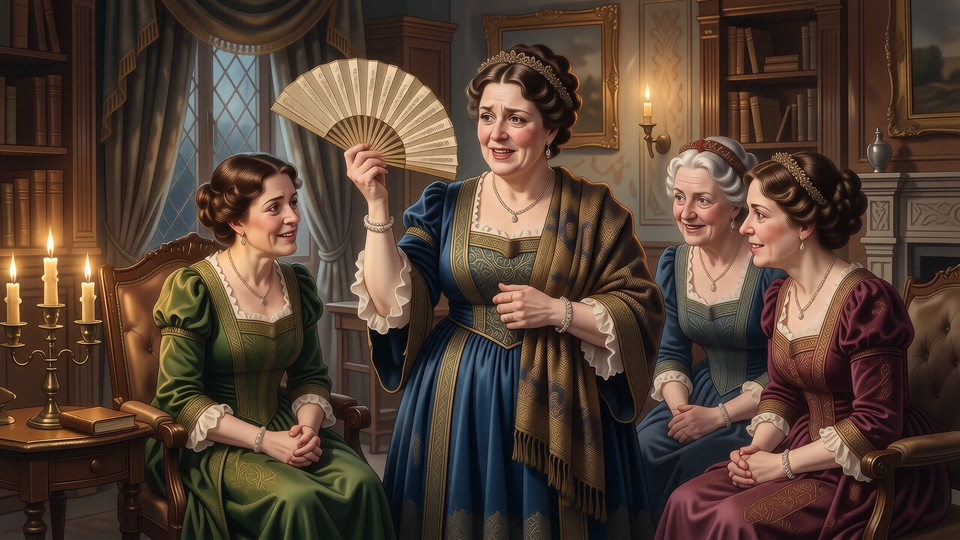
“I beg you will not put it into Lizzy’s head to be vexed by his ill-treatment, for he is such a disagreeable man that it would be quite a misfortune to be liked by him. Mrs. Long told me last night that he sat close to her for half an hour without once opening his lips.”
Mrs. Bennet 的”安慰”自带笑点: “求你别把这事往 Lizzy 心里去——他那么讨厌,被他喜欢才是倒了八辈子霉。Mrs. Long 告诉我,他昨晚在她旁边坐了半小时,一句话都没说。”
Austen 用 Mrs. Bennet 的嘴,完成了三件事:
1. “put it into one’s head”(往某人脑子里灌输)—— 她担心 Elizabeth 真把侮辱往心里去。
2. “it would be quite a misfortune to be liked by him”(被他喜欢是倒霉)—— 吃不到葡萄说葡萄酸,但说得如此理直气壮。
3. “he sat close to her for half an hour without once opening his lips”(坐她旁边半小时不吭声)—— 这细节来自 Mrs. Long 的”情报网”,精准得像监控。
🔤 单词 1️⃣1️⃣ vexed UK /vekst/ US /vekst/ —— 恼怒的、心烦的
释义: Annoyed, frustrated, or worried(被惹恼、心烦意乱)
“I beg you will not put it into Lizzy’s head to be vexed by his ill-treatment”
“vexed” 是 Austen 最喜欢的”恼怒”词之一: 它不是暴怒,是“被小事反复折磨的那种烦躁”—— 一种绵长的、无法发作的不快。Mrs. Bennet 用的这词很准:Darcy 的侮辱不会让 Elizabeth 暴跳如雷,但会让她心里一直疙疙瘩瘩——这就是 “vexed”。
E.G.1:He was vexed by the constant noise from the street below.
参考翻译:他被楼下街道上持续的噪音弄得心烦意乱。E.G.2:She grew vexed at the repeated delays to her flight.
参考翻译:航班一再延误,她越来越恼火。
🎨 段落赏析:谣言生产线——”ate up with pride”是如何炼成的
“But I can guess how it was; every body says that he is ate up with pride, and I dare say he had heard somehow that Mrs. Long does not keep a carriage, and had come to the ball in a hack chaise.”
Mrs. Bennet 的”推理”是全书最精彩的一段谣言生产现场:
- 前提一(听说): “every body says that he is ate up with pride”——人人都说他被骄傲吃掉了。
- 前提二(猜测): “I dare say he had heard somehow that Mrs. Long does not keep a carriage”——我敢说他八成听说 Mrs. Long 家没马车。
- 结论(定罪): “and had come to the ball in a hack chaise”——所以他不理她,是因为她坐出租马车来。
“ate up with pride”(被骄傲吃掉了)是个极其生动的俗语。 而 Austen 的讽刺在于:Mrs. Bennet 用两个”听说的前提”,推出一个”确凿的结论”——她不是不聪明,她是太急着给 Darcy 定罪。 因为”他傲慢”这个结论,能同时满足她的两种心理:解气(他伤了我女儿)+ 解恨(有钱人果然没教养)。
🎨 创新视角 · “谣言三段论”: Mrs. Bennet 的推理,可以提炼成一条”谣言公式”:(听说的事实)+(我敢说的猜测)+(坚定的语气)=(无法证伪的定罪)。 谣言最可怕的地方,不是”内容虚假”,而是”结构完整”——它看起来像三段论,每一步都”说得通”,唯独每步都”站不住”。破解谣言的方法,就是 Austen 教你的一招:找到那个”我敢说”。 下次再听到”大家都说……”,立刻问一句:”这句是事实,还是他猜的?”
🏛️ 文化背景 · Hack Chaise 的”马车阶级学”: “come to the ball in a hack chaise”(坐出租马车来舞会)——在摄政时代,”交通工具”是行走的阶级身份证:自有马车(carriage) 代表”养得起马和车夫”的体面;出租马车(hack chaise) 按次付费,代表”寒酸”或”临时”。Mrs. Bennet 的推理逻辑是:Darcy 看见 Mrs. Long 坐出租马车来,就断定她”不配”被搭理——Austen 用一辆马车,写透了”以物取人”的势利逻辑:不是看人,是看”装备”。
🎬 现代镜像 · 微信群里的”据说”: Mrs. Bennet 用”听说+我敢说+实锤”给 Darcy 定罪——这就是现代版的”吃瓜推理”:“我听人说他背景不干净””据说他家是拆迁的””实锤了,他肯定看不起我们”。 Austen 把造谣的心理机制写得如此清晰,以至于你可以在任何八卦群里把它对号入座:先有结论,再找证据;每个”我听说”都在免责,每个句号都在定罪。
💡 灵感闪现 · “被骄傲吃掉”的被动性: “被骄傲吃掉”这个俗语藏着一个深刻的洞察:傲慢者不是”选择”傲慢,而是”被”傲慢吞噬——这是一种失去自我控制的状态,就像酗酒者被酒精控制,傲慢者被自我形象控制。 Austen 让 Mrs. Bennet 说出这个粗俗的比喻,却让读者看见一个真相:Darcy 的”傲慢”其实也是一种”失控”——他被自己的家世、财富、教养绑架,以至于无法正常与人交往。傲慢不是强者的姿态,是弱者的铠甲。
📐 模板 · The Gossip Reconstruction(谣言重构): [Everyone says X]; and I dare say [conjecture]; and [conclusion].
现代版: “Everyone says she’s cold; and I dare say she heard we were all gossiping; and so she never joins our lunches.” / “They say he’s arrogant; and I dare say he noticed we never invited him; and so he stopped saying hello.”
经验分享: 这个模板的反向用法更有威力——当你听到一句”大家都说……”,立刻在脑内补出它的”猜测”环节和”结论”环节,谣言的骨架就现形了。 Austen 教你:听八卦时,先找”我敢说”在哪。🔗 短语快取:
hack chaise—— 出租马车(阶级符号)。在 Austen 时代,”有没有自家马车”是阶级的硬指标: 有马车 = 体面;坐出租(hack chaise)= 寒酸。Mrs. Bennet 用一个”交通工具”,给 Mrs. Long 判了阶级死刑——而她要证明的,其实是 Darcy 的傲慢。
两百年后,”他肯定是因为我们没背景才不搭理我们”——这种”先定罪、后找证据”的推理,依然是社交媒体上最流行的思维模式。Austen 用一段客厅闲谈,预演了完整的”道德审判生产线”。
✍️ 仿写练习 2 · 谣言三段论——Mrs. Bennet 的”定罪推理”
📜 选段(本章第五段,约 97 词):
“I beg you will not put it into Lizzy’s head to be vexed by his ill-treatment, for he is such a disagreeable man that it would be quite a misfortune to be liked by him. Mrs. Long told me last night that he sat close to her for half an hour without once opening his lips. But I can guess how it was; every body says that he is ate up with pride, and I dare say he had heard somehow that Mrs. Long does not keep a carriage, and had come to the ball in a hack chaise.”
【技法提炼】Austen 的”谣言三段论”——三步里没有一步站得住,连起来却像铁证如山:
- 大前提(听说):”every body says that he is ate up with pride”——用”人人都说”给谣言盖上”民意”的章,仿佛不是一个人在说,是全人类在说。
- 小前提(猜测):”I dare say he had heard somehow that…”——”我敢说 + 不知从哪儿听说”,每个词都在免责,语气却无比笃定。
- 结论(定罪):”and had come to the ball in a hack chaise”——一个”所以”,把猜测钉成事实。
全部机关在中间那句”我敢说”:它偷换了逻辑,把”我猜的”包装成”他肯定”。这就是一切谣言的骨架——破谣不必逐句反驳,找到那个”我敢说”,大厦就塌了。
✍️ 场景一 · 部门小群里吃瓜新总监(职场):
Everyone says the new director is eaten up with self-importance; and I dare say he had got wind somehow that our department is all rented flats and takeout lunches, and so he never greets us in the lift, not even a nod.
参考翻译:”人人都说新来的总监眼睛长在头顶上;我敢说他不知从哪儿听说咱们部门都是租房子住、午饭吃外卖的,所以电梯里碰见连个招呼都不打。”
✍️ 场景二 · 家庭婚事饭局(家庭领域):
Everyone says the girl’s parents think our family is beneath them; and I dare say they had got wind somehow that our son is still just a taxi driver, and so they keep putting off the engagement dinner.
参考翻译:”人人都说女方家瞧不上咱们家;我敢说他们不知从哪儿听说咱儿子还在开出租车,所以订亲饭一拖再拖。”
🔍 句法骨架对照(原文 → 仿写):
| 原文(Austen) | 仿写(场景一 · 部门小群) |
|---|---|
| every body says that he is ate up with pride | Everyone says the new director is eaten up with self-importance |
| I dare say he had heard somehow that Mrs. Long does not keep a carriage | I dare say he had got wind somehow that our department is all rented flats and takeout lunches |
| and had come to the ball in a hack chaise | and so he never greets us in the lift, not even a nod |
给英语学习者的话: 这条公式的全部功力在中间那个”I dare say“——它是逻辑的”榫头”:前面借 every body 免责,后面借它把猜测焊成结论。要掌握的不是这个词,而是它的语用功能:先退后进,退是为了进得更狠。 对照表里你只需换三个槽位(罪名 / 小道消息 / 定罪动作),骨架原封不动——换个领域(公司、家庭)它照样能造谣。
🎯 技法套路(可复用公式):
[Every body says X]; and I dare say [he/she] had [heard/got wind] somehow that [unflattering fact]; and [so/thus] [conclusion that damns him/her].
破解法: 听到”大家都说……”时,立刻在脑内找出那个”我敢说”——单独拎出来问一句”这句是事实还是他猜的?” 部门小群、家庭饭局、邻里街坊里,Austen 两百年前的防骗指南就该在耳边响起。
🎬 逐句叙事 · 第六段——Elizabeth 的”不舞宣言”

“I do not mind his not talking to Mrs. Long,” said Miss Lucas, “but I wish he had danced with Eliza.”
“Another time, Lizzy,” said her mother, “I would not dance with him, if I were you.”
“I believe, ma’am, I may safely promise you never to dance with him.”
这一小段对话,是全章”性格密码”的浓缩:
- Charlotte:”我倒不在乎他没理 Mrs. Long,我只希望他跟 Eliza 跳支舞。”—— 注意:Charlotte 是全场唯一”对事不对人”的。她不站队,她只表达遗憾:这么好的舞伴,可惜了。
- Mrs. Bennet:”下次他要是请你,我要是你,我可不跳。”—— 妈妈式”报复性嘴硬”。
- Elizabeth:”我向您保证,我永远不会跟他跳舞。”—— “I may safely promise you”(我可以放心地向您保证)——这句承诺带着 Austen 标志性的反讽: Elizabeth 此刻的”永远不”,是真心实意的。而读者知道,后文她会跟 Darcy 跳两支舞,最后还嫁给了他。
Austen 用一句”永远不”,埋下全书最长的一根反讽引线。 承诺越坚决,命运的打脸越响亮。这不是 Elizabeth 的错,这是所有”话不能说死”的人生教训。
🎨 段落赏析:戏剧性反讽——”never to dance with him”
“I believe, ma’am, I may safely promise you never to dance with him.”
Austen 让 Elizabeth 说”永远不跳”,读者知道她会跳——这就是”戏剧性反讽(dramatic irony)”的教科书现场: 人物蒙在鼓里,读者心知肚明。
而 Austen 更狠的一层: Elizabeth 说这话时,带着”我很有骨气”的骄傲。而全书的最大反转,恰恰是这个”最有骨气的姑娘”,爱上一个她发誓”永远不跳”的男人。 这种反讽不是嘲笑 Elizabeth,而是 Austen 对”年轻人的绝对化誓言”最温柔的嘲弄:人生很长,”永远不”三个字,往往只是”还没到时候”。
💡 灵感闪现 · 立 flag 的心理学: Elizabeth 的”永远不”,是全书最响的 flag。而心理学上有个有趣的现象:人对某件事反应越激烈,越说明它在心里占了越大的位置。 Elizabeth 如果真不在乎 Darcy,她根本不会发这个誓——她发毒誓,是因为 Darcy 已经”进来”了。 “我永远不原谅他””我永远不回那个地方””我永远不……”——强烈的否定,往往是强烈情感的伪装。 下一次当你(或身边的人)把”永远不”说得斩钉截铁时,不妨多想一层:这里面,是不是藏着一个”还没承认的在意”?
📐 模板 · The Ironic Promise(立 flag 式承诺): I may safely promise you never to [do X].
现代版: “I can safely promise you I will never move back to that town.”(然后命运让你搬回去)/ “I may safely promise you I’ll never date a coworker again.”
经验分享: 这个模板最适合”写故事”和”回忆往事”:一切”永远不”的开头,都是”命运转折”的预告。 生活中用它自嘲:”我当年信誓旦旦地说……”——一句话,就能让听众会心一笑。Austen 教你:誓言是好的文学素材,因为命运最爱跟誓言开玩笑。
🎬 逐句叙事 · 第七段——Charlotte 的”右岸辩护”

“His pride,” said Miss Lucas, “does not offend me so much as pride often does, because there is an excuse for it. One cannot wonder that so very fine a young man with family, fortune, every thing in his favour, should think highly of himself. If I may so express it, he has a right to be proud.”
Charlotte 的”为 Darcy 辩护”,是全书最重要的”价值观声明”之一:
“His pride does not offend me… because there is an excuse for it.”(他的骄傲不那么让我反感,因为他的骄傲有理由。)
她给出的逻辑链条:
1. “One cannot wonder”(谁也不能怪)—— 站在全人类同理心的高度。
2. “so very fine a young man with family, fortune, every thing in his favour”(一个家世、财富、样样占全的出色青年)—— 条件清单。
3. “should think highly of himself”(当然会高看自己)—— 因果推论。
4. “he has a right to be proud”(他有权利骄傲)—— 结论。
Austen 的深意: Charlotte 说的是”公平逻辑”,但读者能感到一丝凉意——她把”骄傲”从道德问题降维成了”概率问题”:条件这么好,当然会傲。 这不是原谅傲慢,这是“看透人性后的容忍”——而 Charlotte 之所以能容忍,正是因为她对”人”不抱幻想。
📚 旁证(YouTube 学者 · Charlotte 专论): “Charlotte’s defining trait is pragmatism. She tells Elizabeth outright: ‘I’m not romantic, you know. I never was. I ask only a comfortable home.’ So, unlike Elizabeth, who dreams of love, Charlotte accepts the harsh reality of her world: a woman of her standing must marry for security, not passion.”——学者点破 Charlotte 的核心:她的”不浪漫”不是缺陷,是”被现实校准过的理性”。 27 岁、无嫁妆、弟妹成群——她的”务实”,是用整个青春期的焦虑换来的。这解释了她为何能如此冷静地为 Darcy 辩护:她看人,从来不问”我喜不喜欢”,只问”划不划算”。
🎬 现代镜像 · 相亲市场上的”务实派军师”: Charlotte 的婚姻观是”我不浪漫,我只要一个舒服的家”——她是 Elizabeth 身边最清醒、也最”凉薄”的军师。现代版的 Charlotte,是那个劝你”别挑了,再挑就剩下了”的闺蜜;是《欢乐颂》里劝樊胜美”找个能给你安全感的”的旁观者;是《三十而已》里劝王漫妮”安稳比爱情实在”的人。 Austen 两百年前就写透了这种”务实派”:她们不是不爱,是爱不起。
🔤 单词 1️⃣2️⃣ mortified UK /ˈmɔːtɪfaɪd/ US /ˈmɔːrtɪfaɪd/ —— 自尊受挫的、羞愧难当的
释义: Extremely embarrassed or humiliated; having one’s pride wounded(极度难堪、自尊受损)
“That is very true,” replied Elizabeth, “and I could easily forgive his pride, if he had not mortified mine.”
Elizabeth 的回应是全章最锋利的对仗: “您说得太对了——他的骄傲,我本来很容易原谅,只要他没伤到我的骄傲。”
“mortify” 的拉丁词根是 “mort-“(死亡)——字面是”把某样东西弄死”。 Elizabeth 说 Darcy “mortified mine”,翻译过来就是:他把我那份骄傲”弄死”了。 这句话的重量在于:Elizabeth 承认 Charlotte 说得对(”That is very true”),但随即用一个 “if” 把逻辑扳回自己这边——“你的道理我都懂,但我也是人,我有我的自尊。”
这是 Elizabeth 第一次在读者面前”情绪裸奔”: 她不像平时那样机锋四射,她承认自己”介意了”。Austen 让最骄傲的女主角,说出自己最脆弱的软肋——而这句话,正是全书爱情故事真正的起点。
E.G.1:She was mortified to realize she had called her boss by the wrong name.
参考翻译:她发现叫错了老板的名字,羞愧得无地自容。E.G.2:He felt mortified when his proposal was rejected in front of the whole team.
参考翻译:当他的提案当着全组的面被否决时,他感到自尊大受打击。🏆 金句时刻: “I could easily forgive his pride, if he had not mortified mine.”——这是 Elizabeth 一生中少有的”示弱时刻”,也是她与 Darcy 之间真正的开始: 所有的爱情,都是从”你伤到了我”这一刻萌芽的。Austen 用一句话,把”偏见”和”傲慢”同时点燃。
💡 灵感闪现 · “凉薄是看透还是妥协?”: Charlotte 的”有资格骄傲论”值得你停下来想一想:她说的有道理——条件好的人当然容易傲。但这句话的代价是:它把”傲慢”从”可以改的毛病”降格成”理所当然的现状”。 一个 27 岁、等不起的姑娘,学会”接受傲慢”,是她对世界最大的妥协——也是最有效的自我保护。 现实里,你有没有遇到过那种”什么都想通了、也什么都不争了”的人?Charlotte 的清醒,一半是智慧,一半是心灰。Austen 不评判,她只让你看见:有些人的”通透”,是被生活磨出来的茧。
📐 模板 · The Ego-Confession(自尊宣言): I could easily forgive [X’s fault], if [he/she] had not [hurt mine].
现代版: “I could easily forgive his bluntness, if he had not embarrassed me in front of everyone.” / “I’d have no problem with her ambition, if she hadn’t thrown me under the bus.”
经验分享: 这个模板的威力在于”先让步,再反击”——它先用”I could easily forgive”表明你不是小心眼,再用”if he had not”亮出底线。 比直接说”我生气”高级得多:它既讲理,又护尊严。
🎨 段落赏析:全书第一场”价值观对谈”——Charlotte vs Elizabeth
这场对话之所以是”全书定调”,是因为它第一次把两条人生道路摆上桌面:
| Charlotte 的”现实派” | Elizabeth 的”理想派” | |
|---|---|---|
| 对傲慢的态度 | 有理由就可以原谅 | 伤到我就不行 |
| 婚姻观 | 务实、可计算 | 浪漫、讲感觉 |
| 看人的方式 | 看条件(family, fortune) | 看人品(是否有礼) |
| 自我保护 | 降低期待 | 守住自尊 |
Austen 的深意: 她不让 Charlotte 显得”市侩”,也不让 Elizabeth 显得”天真”——她让 Charlotte 的话听起来如此合理,以至于你几乎要点头;再让 Elizabeth 的话如此动人,以至于你立刻倒戈。 这两种声音,会伴随全书不断交战——而这场战争的胜负,要到很多章之后才有分晓。
🔬 修辞显微镜 · Charlotte 的”资格论证”: 表面是一句”通情达理”的辩护;深挖是“资格三件套”(family, fortune, every thing in his favour)→ 必然结论(should think highly of himself)→ 权利声明(has a right to be proud)——她把”傲慢”从道德问题,重构成”概率问题”:条件到了,反应必然发生。 Charlotte 用的是”自由间接引语”式的冷静——她没有情绪,只有逻辑。而 Austen 让这种”冷静”本身成为反讽:一个 27 岁、随时可能嫁不出去的姑娘,用”绝对理性”谈论”高傲的男人”——她的冷静,恰恰是被现实打磨出来的。
欧文式文采演绎: 这让我想起相亲市场上的一句老话:”条件那么好,傲一点很正常。”——Charlotte 就是那个把”委屈”换算成”概率”的人。 她不是不心疼 Elizabeth,她是早就学会了”不把心疼当饭吃”。Austen 写 Charlotte,不是为了让你讨厌她,是为了让你看见:现实把一个聪明的姑娘,逼成了逻辑学家。
🎨 创新视角 · “价值观光谱”: 把这一章的发言摆成一张坐标系:对傲慢的态度(Charlotte”有理由即可原谅” ↔ Elizabeth”伤到我就不行”);对婚姻的期待(安全感第一 ↔ 爱情第一);看人的方式(看条件 ↔ 看人品);表达的方式(Mary 讲理论 ↔ 小 Lucas 讲大实话)。Austen 不让任何一端”获胜”,而是让整张图”自己说话”——每个读者都能在坐标上找到自己的位置,然后看见:原来我的”理所当然”,在别人眼里是”不可理喻”。
🎬 逐句叙事 · 第八段——Mary 的”掉书袋时刻”
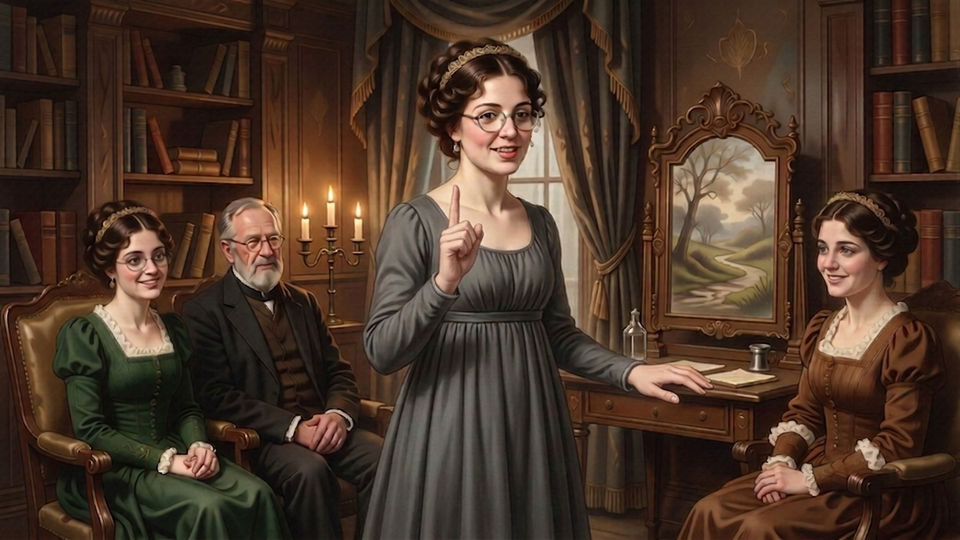
“Pride,” observed Mary, who piqued herself upon the solidity of her reflections, “is a very common failing, I believe. By all that I have ever read, I am convinced that it is very common indeed, that human nature is particularly prone to it, and that there are very few of us who do not cherish a feeling of self-complacency on the score of some quality or other, real or imaginary. Vanity and pride are different things, though the words are often used synonymously. A person may be proud without being vain. Pride relates more to our opinion of ourselves; vanity to what we would have others think of us.”
Mary 的出场自带”官方认证”: “Mary, who piqued herself upon the solidity of her reflections“(Mary 素以自己”见解的深刻”而自傲)——Austen 用一句旁白,先给 Mary 贴了标签:这是个以”深刻”自居的人。
Mary 的”论文”其实说得不差:
1. “Pride is a very common failing”(骄傲是一种非常常见的毛病)—— 开题。
2. “human nature is particularly prone to it”(人性特别容易染上它)—— 立论。
3. “very few of us… do not cherish a feeling of self-complacency”(我们中很少有人不珍视一份自我满足感)—— 展开。
4. “A person may be proud without being vain”(人可以骄傲而不虚荣)—— 辨析。
5. “Pride relates more to our opinion of ourselves; vanity to what we would have others think of us”(骄傲关乎我们对自己的看法;虚荣关乎我们希望别人怎么看我们)—— 定义。
Austen 的反讽在于: Mary 说的话本身是对的——但 Austen 让一个”掉书袋”说出来,就显得可笑。 内容正确,场合错误,动机可疑(她想显摆)。这就是 Austen 最拿手的”不可靠发言”:说话人自以为在贡献智慧,读者只觉得她在卖弄。
🎬 现代镜像 · 朋友圈里的”学术人设”: Mary “以见解深刻自傲”,却在最不该发言的场合发表论文——这就是现代版的”知识型尴尬”:大家在群里聊八卦,有人突然甩出一篇社会学论文链接;饭局上聊明星,有人开始讲”从传播学角度……”。 Austen 两百年前就写了:内容正确,场合错误,动机可疑——三错合一,就是”掉书袋”。 而 Mary 和 Mr. Collins 的”般配说”(见下),更是给所有”以读书为表演”的人一记温柔的反讽。
📚 旁证(YouTube 学者 · Mary Bennet 专论): “Both characters exhibit a seriousness and piety that could have made them compatible partners… They both pride themselves in their intellectual pursuits, although they are often seen as pedantic and insincere by others.”——学者指出 Mary 与 Mr. Collins 的”理论般配”:一个爱掉书袋,一个爱打官腔——”两人都以自己的’智识追求’为傲,却被别人视为迂腐与虚伪”。 这印证了 Austen 写 Mary 的深层意图:她不是用来被嘲笑的,是用来提醒读者——”以深刻自傲”本身,就是一种虚荣。
🔤 单词 1️⃣3️⃣ self-complacency UK /ˌself kəmˈpleɪsnsi/ US /ˌself kəmˈpleɪsnsi/ —— 自我满足
释义: A feeling of satisfaction with oneself, often uncritical(自我满足、自鸣得意)
“very few of us who do not cherish a feeling of self-complacency on the score of some quality or other, real or imaginary”
“self-complacency”(自我满足)——Austen 用这个词精准刻画了一种心理: 我们几乎人人都会”因为某个优点(真实或想象的)而暗自得意”。注意 “real or imaginary”(真实的或想象的)——Austen 补的这一刀,把”自我满足”从”有理有据”降格成”可能只是幻觉”。
E.G.1:His self-complacency about his cooking skills was not shared by his guests.
参考翻译:他对自己厨艺的自鸣得意,客人们可不敢苟同。
🔤 单词 1️⃣4️⃣ synonymously UK /sɪˈnɒnɪməsli/ US /sɪˈnɑːnɪməsli/ —— 作为同义词地
释义: In a way that treats two words as having the same meaning(当作同义词使用)
“Vanity and pride are different things, though the words are often used synonymously.”
Mary 的辨析从这里开始显功力: “虚荣和骄傲是两回事,尽管这两个词常被当作同义词用。”——她的论点是:日常用语混淆了它们,但它们在”精确的意义上”应该分开。
E.G.1:In everyday speech, “disinterested” and “uninterested” are often used synonymously.
参考翻译:在日常口语中,”disinterested” 和 “uninterested” 常被当作同义词使用。
🔤 单词 1️⃣5️⃣ prone UK /prəʊn/ US /proʊn/ —— 易于……的、有……倾向的
释义: Likely to suffer from or do something; having a tendency(倾向于、易于)
“human nature is particularly prone to it”
“prone to”(易于)——Austen 用这个词把”骄傲”写成”人性的普遍弱点”: 不是少数人的毛病,是”人类出厂设置”。“prone” 的意象来自”俯卧”(脸朝下),引申为”被某种力量按倒”—— 骄傲不是我们主动选择的,是人性被它按着。
E.G.1:He is prone to making hasty decisions under pressure.
参考翻译:他在压力下容易仓促决策。E.G.2:The region is prone to earthquakes in late summer.
参考翻译:这个地区在夏末容易发生地震。
🔤 单词 1️⃣6️⃣ cherish UK /ˈtʃerɪʃ/ US /ˈtʃerɪʃ/ —— 珍视、怀抱(情感)
释义: To hold something dear; to keep a feeling in one’s heart(珍惜、怀有某种情感)
“there are very few of us who do not cherish a feeling of self-complacency”
“cherish”(珍视)本是个温暖的词——Austen 用它搭配”self-complacency”(自我满足),制造微妙的反差: 我们像宝贝一样”珍藏着”对自己的满意。Austen 的讽刺:人对自己”优点”的珍爱,往往比对别人的爱更忠诚。
E.G.1:She cherishes the memory of summers spent at her grandmother’s house.
参考翻译:她珍视在祖母家度过的那些夏天的回忆。E.G.2:He cherishes the hope of one day returning to his hometown.
参考翻译:他怀着重返故乡的希望。
🔤 单词 1️⃣6️⃣+ piqued herself upon —— 以……自傲(短语)
释义: To pride oneself on a particular quality(以……而自负/自傲)
“Mary, who piqued herself upon the solidity of her reflections”
“pique oneself upon”(以……自傲)是古典英语的固定搭配——Austen 用它给 Mary 盖了个”自恋”的章: 她最得意的事,就是自己”想得深刻”。而 Austen 的讽刺在于:Mary 的”深刻”,恰恰是她最不深刻的地方—— 她把书上的道理背得滚瓜烂熟,却完全没有自己的生活。
E.G.1:She piqued herself upon her ability to quote classical poetry from memory.
参考翻译:她素以能凭记忆引用古典诗歌而自傲。
🔧 文法机关 2:Mary 的”定义二段式”——Pride vs Vanity 的对照结构
“Pride relates more to our opinion of ourselves; vanity to what we would have others think of us.”
这句话是全书被引用最多的”定义”之一,它的结构堪称修辞学标本:
- A 对 A’: “Pride relates more to our opinion of ourselves“(骄傲关乎我们对自己的看法)
- B 对 B’: “vanity to what we would have others think of us“(虚荣关乎我们希望别人怎么看我们)
Austen 用 “X relates to A; Y to B” 的平行结构,把两个近义词切成两块截然不同的心理版图:
| 指向 | 心理机制 | |
|---|---|---|
| Pride(骄傲) | 内在(自己怎么看自己) | 自足,不需要观众 |
| Vanity(虚荣) | 外在(希望别人怎么看自己) | 依赖,必须有观众 |
Austen 的深意: 这个定义的含金量远超 Mary 的”掉书袋”——它是全书主题的”钥匙”:Darcy 是”骄傲”(他不在乎别人怎么看,他在乎自己配不配),Mrs. Bennet 是”虚荣”(她需要别人的掌声)。 而 Elizabeth 的成长,就是从”虚荣地在意别人眼光”走向”骄傲地认识自己”的过程。
📐 模板 · The Bookish Definition(二段式定义): [Word A] relates to [internal reality]; [word B] to [external reality].
现代版: “Confidence relates to what you know you can do; arrogance to what you want others to believe.” / “Loyalty relates to what you do when no one’s watching; reputation to what others say you did.”
经验分享: 二段式定义的秘诀是”切维度”:把两个近义词分成”内/外”、”过程/结果”、”本质/表现”。 这种定义一旦成形,几乎无法反驳——因为它不是观点,是”分析框架”。适合在讨论、写作、汇报中用作”定音锤”。🎨 创新视角 · 现代”朋友圈心理学”: Mary 的定义放到今天依然锋利:骄傲 = 我自己怎么看自己(内在,不需要观众);虚荣 = 我希望别人怎么看我(外在,必须有观众)。 刷朋友圈时,你发的每条内容都在这两端之间滑动——发读书笔记是”骄傲”(我觉得我进步了),发度假照是”虚荣”(我希望你们羡慕我)。 而最微妙的,是那种”假装骄傲的虚荣”:“我不在乎别人怎么看”——发这句话的人,恰恰最在乎。 读懂 Mary 的定义,你就读懂了朋友圈的潜台词。
🎯 完整例句:
E.G.1:Confidence relates to what you think of yourself; vanity to what you hope others think.
参考翻译:自信关乎你对自己的看法;虚荣关乎你希望别人怎么看你。E.G.2:True dignity is internal; mere display is external.
参考翻译:真正的尊严是内在的;纯粹的炫耀是外在的。
🎨 段落赏析:Austen 的”不可靠发言人”——内容正确 vs 场合错误
Mary 这段”演讲”是全书最精妙的反讽案例之一,因为它”内容全对,效果全错”:
- 内容正确: 她对 pride 和 vanity 的区分,是全书最准确的心理学洞察。
- 场合错误: 她在一场”闲聊八卦”里突然发表论文,像在麻将桌上背诵《论语》。
- 动机可疑: 她发言的动机不是想帮助大家,是”piqued herself upon”——想证明自己深刻。
Austen 的机关: 她让 Mary 说的话”本身是对的”,却让读者发笑——这证明了一个残酷的社交真理:正确的话,用错误的时机、错误的动机说出来,就成了笑柄。 Austen 不是反对”读书”,她是反对”用读书来表演”。
💡 灵感闪现 · “正确的话”与”正确的场合”: Mary 的悲剧不是”说得不对”,是”说错了时机”。这让人想到一句老话:”话不投机半句多“——不是话不好,是”不投机”。人际沟通里,”对错”只占一半,另一半是”场合”和”关系”。 同一个道理,在书房里是洞见,在客厅里是扫兴。而 Mary 最让人同情的地方在于:她读书越多,越不懂这个道理——她以为”正确”可以通行无阻,却不知道”得体”才是社交的货币。
🔬 修辞显微镜 · Mary 的”正确废话”: Austen 用一句插入语(”who piqued herself upon the solidity of her reflections”)给 Mary 贴了标签,然后让 Mary 发表“内容完全正确、效果完全失败”的演讲。她故意让 Mary 说得对,因为”对”在这里不是加分项: 在”客厅闲谈”这个场合,Mary 的正确是”不合时宜的正确”,是”表演出来的正确”。Austen 用内容正确、场合错误、动机可疑的三重错位,制造了一种”越正确越可笑”的喜剧效果。
欧文式文采演绎: 这就像今天饭局上,大家正聊某明星的八卦,有人突然放下筷子说:”从心理学角度讲,我们对他人的评判,本质上是一种投射机制。”——话没错,但全场安静,气氛尴尬。 Austen 两百年前就写了:正确的废话,在错误的场合,比废话更让人难受。
而更深的一层: 全书主题(骄傲 vs 虚荣)恰恰是由最不受欢迎的 Mary 点破的——Austen 让真理从最意想不到的嘴里说出来,这本身就是对”真理垄断”的嘲弄:谁说的不重要,对不对才重要。
🔥 爽点时刻: 把 Mary 翻译成现代版——家庭聚会上,大家正聊八卦聊得火热,你那位”读书人”亲戚突然清了清嗓子:”从哲学上讲,骄傲和虚荣有本质区别……”——全场安静三秒,然后该干嘛干嘛。 Austen 两百年前就把这种”掉书袋式尴尬”写绝了。
🏆 金句时刻: Mary 的悲剧在于——她读了很多书,却不知道什么时候该闭嘴。 而 Austen 用她的”正确”,反手给全书主题(骄傲)作了个注脚:以深刻自傲的人,往往最经不起追问。
🎬 逐句叙事 · 第九段——小 Lucas 的”豪言”与 Mrs. Bennet 的”收瓶子”
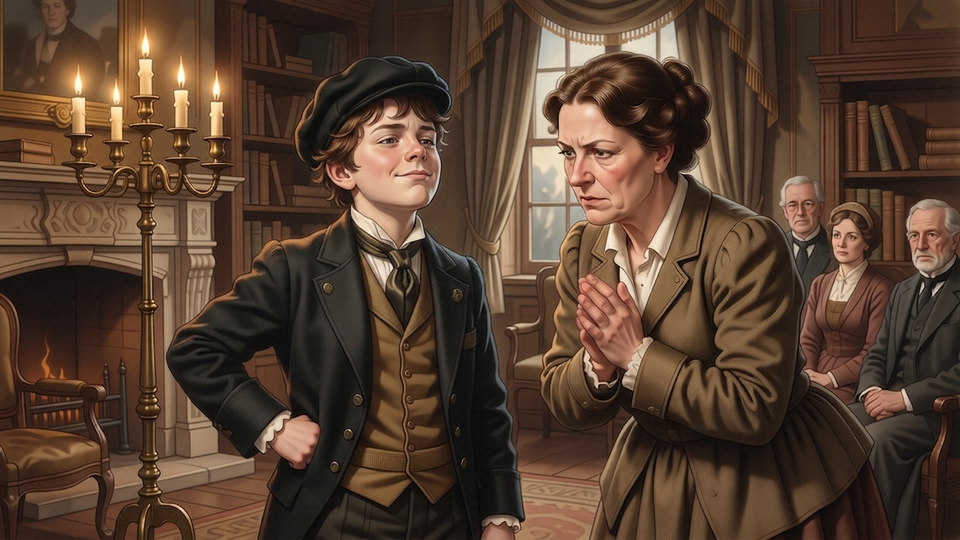
“If I were as rich as Mr. Darcy,” cried a young Lucas, who came with his sisters, “I should not care how proud I was. I would keep a pack of foxhounds, and drink a bottle of wine every day.”
“Then you would drink a great deal more than you ought,” said Mrs. Bennet; “and if I were to see you at it, I should take away your bottle directly.”
全章以一场”孩子气辩论”收尾: 小 Lucas 高喊:”我要是像 Darcy 那么有钱,我才不管自己多骄傲呢!我要养一群猎狐犬,每天喝一瓶葡萄酒!”——Mrs. Bennet 立刻回击:”那你可喝得比该喝的多多了——要是让我看见,我直接把你的瓶子没收!”
Austen 用这个”孩子话”场景,给全章的”骄傲辩论”画了个句号:
- 小 Lucas 的”豪言”: 把”骄傲”降维成”有钱后的摆谱”——孩子的理解,把大人一整个上午的哲学讨论瞬间拉回地面。
- Mrs. Bennet 的”没收”: 从一个”教育者”的姿态出现——而 Austen 的反讽在于:Mrs. Bennet 自己才是全场最虚荣的人,她却忙着管教别人。
- “The argument ended only with the visit”(这场争论直到客人告辞才结束)—— 平淡的收尾,Austen 连”结论”都不给。
Austen 的深意: 全章从 Sir William 的”头衔虚荣”开始,到小 Lucas 的”孩子式虚荣”结束——首尾都是”虚荣”的两端:一端是大人用头衔包装,一端是孩子用酒和猎狗直说。 中间的 Charlotte 和 Mary,则提供了两种”理性化”的处理。Austen 没有裁判谁对谁错,她只是把人性摆成一桌菜,让你自己挑着吃。
🎨 段落赏析:从”骄傲”到”虚荣”——第五章的完整光谱
把第五章所有”发言”排成一排,你会看到一条完整的”人性光谱”:
| 人物 | 对”骄傲/虚荣”的态度 | 动机 |
|---|---|---|
| Sir William | 用头衔包装虚荣 | 想显得体面 |
| Mrs. Bennet | 攻击别人的傲慢,掩饰自己的虚荣 | 想赢 |
| Charlotte | 原谅骄傲(有理由即可) | 务实、不抱幻想 |
| Elizabeth | 不能原谅”伤我自尊的骄傲” | 理想、护住自我 |
| Mary | 把骄傲/虚荣讲成理论 | 想显得深刻 |
| 小 Lucas | 有钱就可以骄傲 | 孩子式直白 |
Austen 的天才: 她让每个角色都在”谈同一件事”,却没有一个真正”懂同一件事”——这就像一个家族围着”钱”字各说各话:有人想它、有人骂它、有人算计它、有人假装不在意它。 第五章的”骄傲之辩”,其实就是一场”人性观”的暗战。
🎯 直击人心的三重共鸣(随文收束):
共鸣一 · 关于”现实派”闺蜜与”理想派”自我。 Charlotte 说 Darcy “有权利骄傲”,Elizabeth 说”他伤了我的自尊”——你有没有过一个 Charlotte 式的朋友,用一句”现实点吧”让你心里发凉,多年后却发现她说得对? Austen 的答案是:理想主义需要现实主义来兜底,但现实主义也需要理想主义来守住底线——她们互为对方的镜子。
共鸣二 · 关于”正确的话”与”正确的场合”。 Mary 的”骄傲与虚荣之辨”内容全对,却成了笑柄——你有没有在饭局上”掉过书袋”,事后懊悔”我明明说得对啊”? Austen 提醒你:沟通的成败,一半在内容,一半在场合与动机。
共鸣三 · 关于”年轻人发的誓”。 Elizabeth 发誓”永远不跟 Darcy 跳舞”——你有没有说过”我永远不……”? Austen 用戏剧性反讽告诉你:“永远不”三个字,往往只是”还没到时候”。别把话说死,给命运留点余地。
🔗 短语精选(本章随文已见,此处速查)
| 短语 | 含义 | 原文 | 现代用法 |
|---|---|---|---|
| beyond a doubt | 毫无疑问 | “the eldest Miss Bennet, beyond a doubt” | 现代通用:She’s beyond a doubt the best |
| more to the purpose | 更切中要害 | “My overhearings were more to the purpose than yours” | 正式语:more to the point |
| with civil self-command | 强作客气 | “said Mrs. Bennet, with civil self-command” | 文学用语,指勉强按捺 |
| put it into one’s head | 往某人脑子里灌输 | “I beg you will not put it into Lizzy’s head” | 现代通用:Who put that idea into your head? |
| ate up with pride | 被骄傲吃掉 | “every body says that he is ate up with pride” | 俗语,= eaten up with pride |
| hack chaise | 出租马车 | “come to the ball in a hack chaise” | 历史用语,= hired carriage |
| pique oneself upon | 以……自傲 | “who piqued herself upon the solidity of her reflections” | 文学用语,= pride oneself on |
| on the score of | 因为、出于 | “on the score of some quality or other” | 正式语,= on account of |
| have a right to do | 有权利做 | “he has a right to be proud” | 现代通用 |
| be prone to | 易于、倾向于 | “human nature is particularly prone to it” | 现代通用 |
| I dare say | 我敢说、大概 | “I dare say he had heard somehow” | 英式口语,表推测 |
| end only with the visit | 直到散场才结束 | “the argument ended only with the visit” | 文学句式 |
重点赏析:ate up with pride
“every body says that he is ate up with pride”
“ate up with pride”(被骄傲吃掉了)是 Austen 时代非常生动的俗语, 字面是”整个人被骄傲从里到外啃食干净”——Austen 特意用 Mrs. Bennet 的嘴说出这个粗俗而形象的说法,符合她”村妇式精明”的人设。
注意语法: 严格说来应为 “eaten up”,但 Austen 让 Mrs. Bennet 说 “ate up”——这个”语法瑕疵”恰恰是 Austen 的精细:她让不同阶层的角色说不同”纯度”的英语。 Mrs. Bennet 的英语,和 Elizabeth 的英语,是两套系统。
E.G.1:He was eaten up with pride after his promotion.
参考翻译:升职之后,他整个人被骄傲冲昏了头。💡 经验分享: 中文里”得意忘形””飘飘然””被胜利冲昏头脑”都是同一意象——“被某种情绪吃掉”是全世界共通的比喻。 Austen 用 “ate up with pride” 五个词,写尽了一个傲慢者的”被动性”:他不是选择傲慢,他是被傲慢吞噬。
💬 双语评论 Bilingual Commentary
English:
Chapter 5 is where Austen quietly installs the novel’s moral gyroscope. The ball is over, and on the morning after, the Lucas and Bennet families gather to “talk over a ball” — the ritual that turns gossip into social reality. In Regency England, a ball was never merely an evening’s entertainment; it was a public market of reputations, and the conversation that followed it was where those reputations were priced, sorted, and filed. What was said at the assembly matters far less than what everyone now agrees to say about it — and Austen knows that nothing is more socially real than a story the whole room is willing to repeat.
Here, for the first time, we meet Charlotte Lucas: twenty-seven, unmarried, intelligent, and utterly unromantic. When she declares that Darcy “has a right to be proud,” she is not defending arrogance; she is confessing that she has learned to live without illusions. Hers is the voice of a woman who has counted her own chances and found them few. She does not resent pride in others because she has long since stopped expecting the world to be fair to her — and that settled, practical calm is at once her strength and her tragedy.
Against her stands Elizabeth, whose reply — “I could easily forgive his pride, if he had not mortified mine” — is the novel’s first glimpse of the wound that will become its central plot. It is also Austen’s quiet announcement that this love story begins not with attraction but with injury. The sentence is a perfect little machine of concession and counterattack: it grants Charlotte’s logic in full, then reclaims the ground with a single “if.” Elizabeth is not arguing with Charlotte at all; she is defending the one thing she cannot afford to lose — her sense of herself.
The chapter’s centerpiece is Mary’s lecture on pride and vanity: “Pride relates more to our opinion of ourselves; vanity to what we would have others think of us.” It is the novel’s most quoted definition — and it is given to its most comic character, in the most inappropriate moment, for the most self-serving motive. This is Austen’s great joke: that the truth can be perfectly correct and perfectly useless at the same time. Mary is not wrong; she is merely performing. And in that gap between correctness and performance, Austen locates a whole theory of social failure — being right is cheap, being heard is hard, and being wanted is rarer still.
And around it all, Mrs. Bennet spins her conspiracy theory about Darcy’s pride and Mrs. Long’s hack chaise — a masterpiece of gossip mechanics. “Every body says he is ate up with pride,” she declares, and we watch a rumor being manufactured in real time: a fact, a guess, and a verdict stitched together so smoothly that the seams disappear. Reputation, Austen reminds us, is not a possession. It is a vote.
And this is the chapter’s deepest irony: everyone speaks of pride — Sir William’s titled vanity, Charlotte’s forgiving realism, Elizabeth’s wounded dignity, Mary’s bookish definition, even young Lucas’s boyish boast — yet no one truly hears the others. They are five people discussing the same word in five different languages. Austen does not adjudicate. She simply lays the whole spectrum before us and lets the reader’s own years decide where the sympathy falls. That, in the end, is why we read her differently at sixty than at twenty: she does not tell us what to think; she shows us what we already know.
中文:
第五章是 Austen 悄悄安装全书”道德罗盘”的一章。舞会结束了,第二天早上,Lucas 家和 Bennet 家聚在一起”复盘舞会”——这个把闲谈变成社交现实的仪式。在摄政时代的英国,一场舞会远不止是一夜的消遣;它是名声的公开市场,而舞会后的闲谈,才是给这些名声定价、分类、归档的地方。舞会上说了什么,远不如事后大家复述什么重要——Austen 深知:没有哪种现实,比一个所有人都愿意重复的故事更”真实”。
在这里,我们第一次遇见 Charlotte Lucas:27 岁,未婚,聪明,而且完全不浪漫。当她说 Darcy”有权利骄傲”时,她不是在为傲慢辩护;她是在承认,自己已经学会了没有幻想地活着。这是一个数过自己手中筹码、发现所剩无几的女人发出的声音。她不怨恨别人的骄傲,因为她早已不再指望世界对她公平——这份安顿下来的、务实的平静,既是她的力量,也是她的悲剧。
与她相对的是 Elizabeth,她的回应——”他的骄傲,我本可轻易原谅,只要他没伤到我的骄傲”——是全书第一次瞥见那道伤口,而这道伤口将成为全书的中心情节。这也是 Austen 的一次安静宣告:这个爱情故事,不是始于吸引,而是始于伤害。 这句话是一台精密的”让步与反扑”机器:它完整地承认 Charlotte 的逻辑,再用一个”只要”夺回阵地。Elizabeth 不是在与 Charlotte 争辩;她在守护自己唯一输不起的东西——对自己的判断。
本章的核心是 Mary 关于骄傲与虚荣的演讲:”骄傲关乎我们对自己的看法;虚荣关乎我们希望别人怎么看待我们。”这是全书被引用最多的定义——而它被安在最滑稽的角色嘴里,出现在最不合时宜的时刻,出于最自我服务的动机。 这就是 Austen 最大的玩笑:真理可以同时完全正确,又完全无用。 Mary 没有说错,她只是在表演。而在这”正确”与”表演”的缝隙里,Austen 安放了一整部社交失败的学说:说得对很便宜,被人听进去很难,被人需要更是稀有。
而环绕这一切的,是 Mrs. Bennet 关于 Darcy 的傲慢和 Mrs. Long 的出租马车的阴谋论——一部谣言机器美学的杰作。”人人都说他被骄傲吃掉了,”她宣布——而我们眼睁睁看着一条谣言被实时生产出来:一个事实,一个猜测,一个定论,针脚细密得看不见接缝。Austen 提醒我们:名声不是财产,是一场投票。
而全章最深的反讽在于:每个人都在谈”骄傲”——Sir William 顶着爵位的虚荣、Charlotte 原谅一切的务实、Elizabeth 受伤的自尊、Mary 掉书袋的定义,连小 Lucas 的童言无忌——却没有一个人真正听见别人。五个人用五种语言谈论同一个词。Austen 不下裁判,她只是把整条光谱铺开,让读者用自己几十年的阅历去决定同情落在哪一端。说到底,这就是为什么我们六十岁读她,和二十岁读她,读到的是两本书:她从不告诉我们该怎么想;她只是让我们看见,自己其实早就知道。
📋 Chapter 5 速查卡
| 类别 | 内容 |
|---|---|
| 核心单词(16) | knighthood / mayoralty / supercilious / elated / obliging / unshackled / denominated / intimate / civil / overhearing / vexed / mortified / self-complacency / synonymously / prone / cherish |
| 核心短语(12) | beyond a doubt / more to the purpose / with civil self-command / put it into one’s head / ate up with pride / hack chaise / pique oneself upon / on the score of / have a right to / be prone to / I dare say / end only with the visit |
| 文法机关(2) | not too clever to be…(双重否定恭维式贬低)/ Pride relates to…; vanity to…(二段式定义) |
| 修辞手法(8) | 反讽(双重否定)/ 戏剧性反讽 / 平行对仗 / 自由间接引语 / 低调陈述 / 因果倒置 / 三重错位反讽 / 首尾呼应 |
| 随文模板(5) | 恭维式贬低 / 自尊宣言 / 二段式定义 / 谣言重构 / 立flag式承诺 |
| 仿写练习(2) | 社会档案式速写(Sir William 升职记·两场景:空降高管/鸡娃妈妈)/ 谣言三段论(Mrs. Bennet·两场景:部门小群/婚事饭局)——均随文嵌入第一、五段,各含句法骨架对照表 |
| 文化密码(4) | Knighthood 新钱阶级电梯 / Lucas Lodge 自封庄园 / 27岁未婚警戒线 / Hack Chaise 马车阶级学 |
| 旁证博引(4) | YouTube 学者论 Charlotte 务实 / YouTube 学者论 Sir William 头衔中毒 / 欧文版论 her turn 第三人称调侃 / YouTube 学者论 Mary 与 Collins 般配 |
| 现代镜像(4) | Charlotte=相亲市场务实派军师 / Sir William=退休局长综合征 / Mary=朋友圈学术人设 / Mrs. Bennet=微信群”据说” |
| 灵感闪现(4) | 凉薄是看透还是妥协 / 永远不跳舞的立flag心理学 / 正确的话与正确的场合 / 被骄傲吃掉的被动性 |
| 创新视角(5) | 头衔经济学 / 等得起与等不起 / 谣言三段论 / 价值观光谱 / 现代朋友圈心理学 |
📺 结语话术(直播间收尾):
“第五章没有舞会,没有求婚,没有一句惊天动地的台词——但 Austen 用一场’舞会复盘’,给整部小说安上了道德罗盘:Charlotte 教你把婚姻看成一门生意,Elizabeth 教你守住自己的自尊,Mary 教会你骄傲与虚荣的区别,而 Mrs. Bennet 教你识别一条谣言是如何诞生的。”**记住 Charlotte 那句’他有权利骄傲’,和 Elizabeth 那句’可他伤了我的骄傲’——一个用现实武装自己,一个用理想护住自己。她们是全书最重要的两个女人,也是彼此最深的镜子。下一章,Netherfield 的信件开始往来,Bingley 对 Jane 的好感正式升温,而 Elizabeth 与 Darcy 之间那根扎了根的刺,还远没有拔出来。记住 Elizabeth 的誓言:’我永远不会跟他跳舞。’——记住这句话,因为命运最爱听年轻人发这样的誓。”
🎯 直播互动作业(彩蛋): 上面的 ✍️ 仿写练习是”照着 Austen 的机关写”;这个作业是”拆你自己的对话”。用这一章”客厅对谈”的骨架,写一段 100 词的现代对话:① 一个”务实派”先为某人开脱;② 一个”理想派”承认大道理但亮出底线;③ 一个”掉书袋”的插话被冷场;④ 一个”孩子”说大实话;⑤ 一个”阴谋论者”用”听说”收尾。 场景自选——聊新同事、聊亲戚、聊明星八卦……写完你才知道,Austen 的客厅,就是你家客厅。