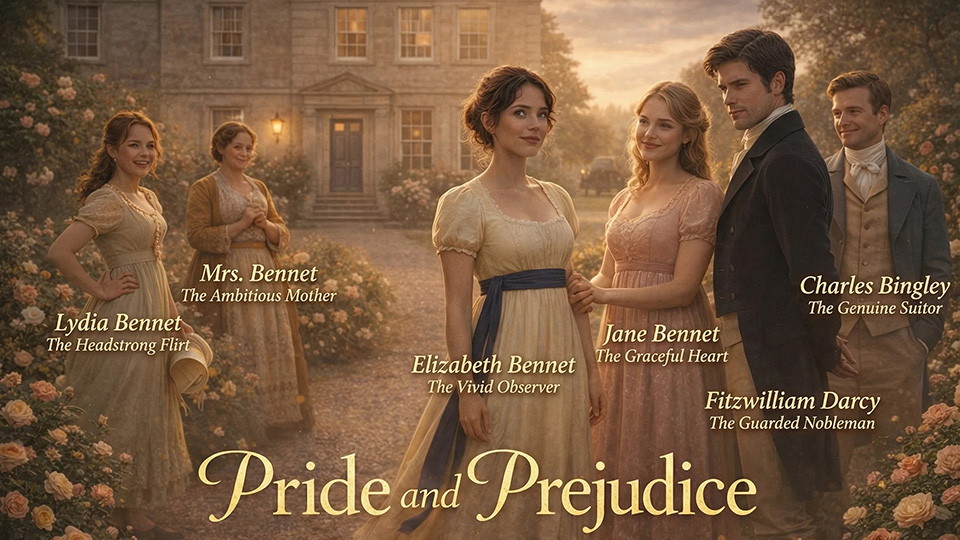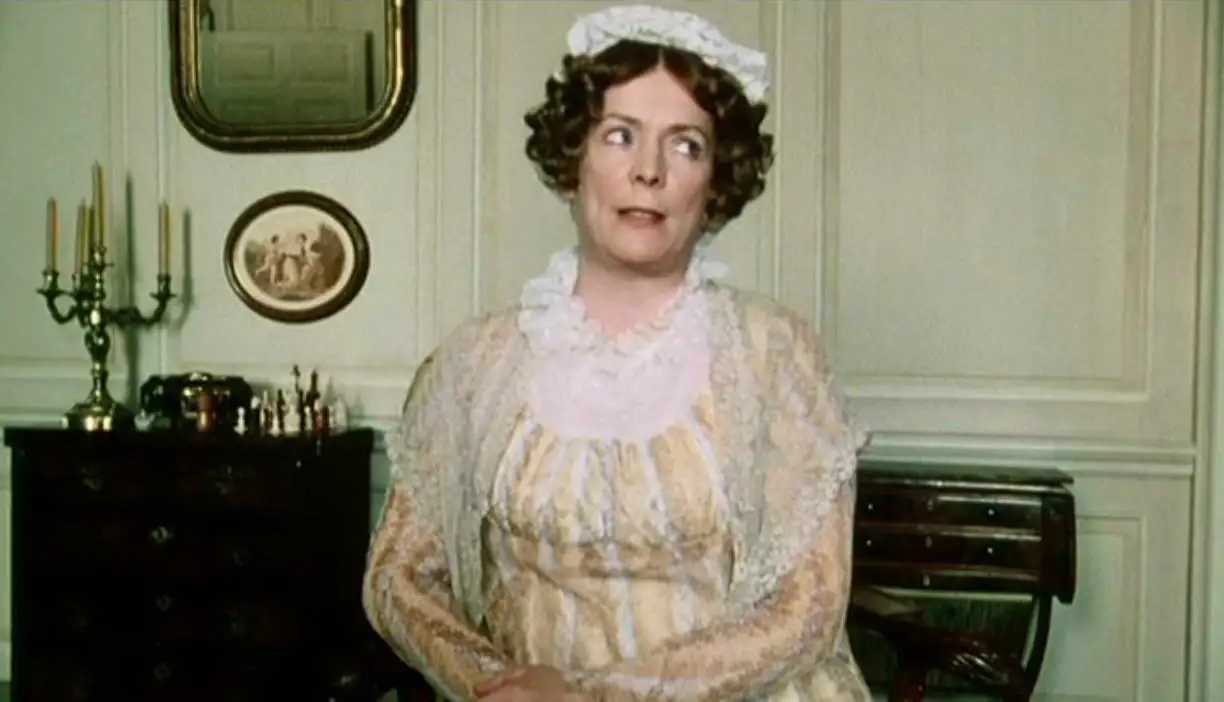

Pride and Prejudice — Chapter 6(精学笔记 · 欧文版)
Jane Austen | 1813 | Chapter 6 of 61 | 欧文精学系列 · 欧文版
献给有阅历的眼睛 | 以词为纲 · 以句为目 · 以义为魂 | 文法随文 · 叙事流排布
📍 序章 · 为什么这一章值得你用人生阅历去读?
从”客厅闲谈”到”情愫暗生”——爱情在这个房间同时发生三次
第五章的战场在客厅,第六章的战场搬到了内心。舞会结束后的第二天,Longbourn 的姑娘们去 Netherfield 回访——表面上这是社交礼节,实际上 Austen 让三段不同的爱情,在同一张牌桌上同时发牌:
Jane 和 Bingley:彼此爱慕,却因为 Jane 的”过分沉静”而随时可能错过;
Elizabeth 和 Darcy:Darcy 已经沦陷,Elizabeth 毫不知情——全书最著名的戏剧性反讽,从这里开始;
Charlotte 和她的婚姻观:她还没有爱人,却已经想好了婚姻的全部”策略”。
这一章是全书”爱情教科书”的开篇: Austen 让三种女人给出三种答案——Jane 用”藏”(composure 沉静)、Elizabeth 用”真”(直接戳破)、Charlotte 用”算”(把心动当成可管理的风险)。而 Darcy 的”一双妙目”,证明了 Austen 最狠的一条心理学:嘴上最硬的否定,往往是心里最早沦陷的信号。
🎯 给 40-70 岁读者的三个”开卷钩子”
① 你有没有”先讨厌,后沦陷”过? Darcy 第一眼看 Elizabeth:”她连一个漂亮五官都没有”(hardly a good feature in her face)。可没过多久,他发现自己被她”那双黑眼睛的美丽表情”(the beautiful expression of her dark eyes)弄得心神不宁。年轻时你以为爱是一见钟情,活到一定年纪你才发现:最深的动心,常常是从”我绝不会喜欢这种人”开始的。 这一章 Austen 用三百个字,写完了你半生的情感经验。
② 爱一个人,要不要让 ta 知道? Charlotte 说:“十个女人里九个,宁可表现出比实际更多的感情”(a woman had better show more affection than she feels)。Jane 却反着来——她把感情藏得太好,好到”连当事人都未必能确认”。你有没有见过这样的遗憾:一个过分矜持的人,等一个不够主动的人,等到对方娶了别人? Austen 让 Jane 和 Charlotte 的对话,把这道选择题摆到你面前。
③ 婚姻幸福,真的是”运气”吗? Charlotte 说出全书最冷静、也最让人心里一沉的一句:“婚姻幸福完全是一桩碰运气的事”(Happiness in marriage is entirely a matter of chance)。两百年前的这句话,今天依然是相亲市场的基本盘。年轻时会觉得 Charlotte 太市侩;有了阅历你才发现:她不是凉薄,她是把婚姻看穿了。
📺 直播间话术: “年轻读者读第六章,看到的是’Darcy 偷偷喜欢上 Elizabeth’的甜蜜暗线。你们读第六章,应该看到的是 Austen 给成年人的一堂情感课:Jane 教会你’藏’的代价,Charlotte 教会你’算’的清醒,而 Elizabeth 教会你——当一个人用最硬的语气说’我绝不会喜欢他’的时候,命运最爱偷笑。 这一章,爱情的种子同时埋下三颗,而你们已经知道哪颗会长成大树。”
🎬 逐句叙事 · 第一段——Netherfield 的”回访”:Jane 的情意与 Elizabeth 的冷眼
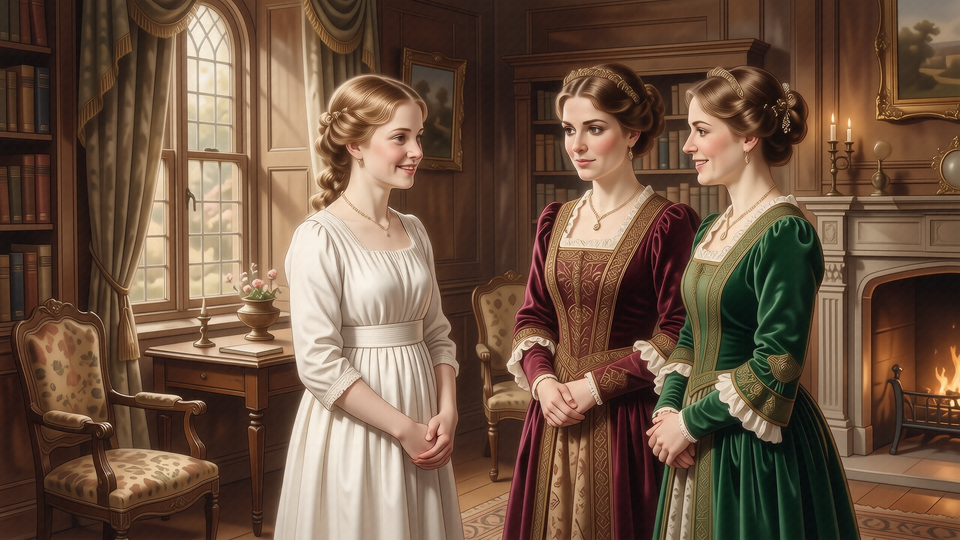
“The ladies of Longbourn soon waited on those of Netherfield. The visit was returned in due form. Miss Bennet’s pleasing manners grew on the good-will of Mrs. Hurst and Miss Bingley; and though the mother was found to be intolerable, and the younger sisters not worth speaking to, a wish of being better acquainted with them was expressed towards the two eldest.”
Austen 的叙事像一台摄像机,先拉全景再推近景: 上一章舞会结束,这一章 Longbourn 的女士们”很快就去拜访”(waited on)Netherfield 的贵客,而对方也”按礼节回访”(returned in due form)。社交礼节的表面之下,Austen 第一刀就划开阶级: Bingley 姐妹对 Jane 是真心喜欢,但论到 Mrs. Bennet——”被发现是令人难以忍受的”(intolerable)——至于几个小妹妹,”不值一提”(not worth speaking to)。注意”was found to be”(被发现是)这个被动语态: 不是她们”很讨厌”,是她们”被认定讨厌”——社交圈的判断,从来是一种集体裁定。
🏛️ 文化背景 · “Waited on” 的拜访礼: 在摄政时代,”wait on / wait upon” 不是”等待”,而是”登门拜访”(to call on),带着一种”前去拜望、表示敬意的姿态”。Austen 用 “waited on” 而不是 “visited”,暗中抬高了这次拜访的礼仪重量: 地位较低的一方”趋访”地位较高的一方,用的是敬语。但 Austen 的反讽在于: Longbourn 的姑娘们一听说 Netherfield 来了”年入四五千镑”的单身汉,立刻”趋访”——礼数是体面的,动机是热络的,Austen 从不点破,她只让你同时看见两者。
“By Jane this attention was received with the greatest pleasure; but Elizabeth still saw superciliousness in their treatment of every body, hardly excepting even her sister, and could not like them; though their kindness to Jane, such as it was, had a value, as arising, in all probability, from the influence of their brother’s admiration.”
注意这个句子怎么”正反打”: 开头是 Jane 视角——这份礼遇让她”极其愉快”;一个分号之后,镜头切到 Elizabeth 的冷眼——她”仍然看出他们待人处处倨傲”(superciliousness),几乎连姐姐也没放过。Austen 用 “such as it was”(虽是那样一份好意)这个让步短语,轻轻卸掉 Bingley 姐妹的善意: Elizabeth 断定,她们的客气”很可能”(in all probability)是冲着 Bingley 对 Jane 的倾慕来的——一句话,把”好意”翻译成”动机”,这是 Elizabeth 的看家本领,也是她后来在 Darcy 身上栽跟头的根子。
🔤 单词 1️⃣ superciliousness UK /ˌsuːpəˈsɪliəsnəs/ US /ˌsuːpərˈsɪliəsnəs/ —— 倨傲、目空一切的态度
释义: The quality of behaving as though you think you are better than others(自以为高人一等的傲慢态度)
“Elizabeth still saw superciliousness in their treatment of every body”
这是第五章 supercilious(形容词)的名词化身,Austen 让这个词在 Elizabeth 嘴里”咬”了两章: 上一章她说 Sir William 并不 supercilious,这一章她用 superciliousness 判了 Bingley 姐妹的”社交死刑”。Elizabeth 的眼睛,是全书最准的一台”势利雷达”——而 Austen 反复用同一个词根,提醒我们:她的判断力有多锐利,她的偏见就有多顽固。
E.G.1:There was a faint superciliousness in the way he corrected her grammar.
参考翻译:他纠正她语法时,带着一丝不易察觉的倨傲。E.G.2:She mistook his shyness for superciliousness, and disliked him accordingly.
参考翻译:她把他的羞怯误当成倨傲,于是顺理成章地讨厌起他。
🔤 单词 2️⃣ intolerable UK /ɪnˈtɒlərəbl/ US /ɪnˈtɑːlərəbl/ —— 令人无法忍受的
释义: Impossible to bear; insufferable(难以容忍的、叫人受不了的)
“though the mother was found to be intolerable“
Austen 用一个词,完成了对 Mrs. Bennet 的社交宣判——而且用的是”被认定为”(was found to be)。 在 Netherfield 的体面人眼里,Bennet 太太”叫人无法忍受”,不是因为她犯了什么错,而是因为她太直白、太急切、太不体面。“intolerable” 的杀伤力在于它的被动性: 它不描述行为,只描述”观感”——上流社会的排挤,从来不需要理由,只需要一个共同认定。
E.G.1:His constant boasting made the dinner intolerable.
参考翻译:他不停自吹自擂,把一顿饭搅得让人难以忍受。E.G.2:The heat was intolerable, yet no one dared to open a window.
参考翻译:热得叫人受不了,却没人敢开窗。
🔤 单词 3️⃣ composure UK /kəmˈpəʊʒə/ US /kəmˈpoʊʒər/ —— 镇定、沉着
释义: The state of being calm and in control of your feelings(情绪的镇定与自持)
“since Jane united with great strength of feeling, a composure of temper and an uniform cheerfulness of manner”
Austen 给 Jane 的性格开了一张”三件套”处方: 深的情感(great strength of feeling)+ 沉静的性情(composure of temper)+ 一贯的欢快(uniform cheerfulness)。注意这套配置的精妙: “沉静”不是冷淡,是”情感很深、但外表不露”——这是 Austen 为 Jane 埋下的命运伏笔: 她越是这样无懈可击,Bingley 就越无法确认她的心意。
E.G.1:She listened to the bad news with remarkable composure.
参考翻译:她以惊人的镇定听完了这个坏消息。E.G.2:He struggled to regain his composure before answering.
参考翻译:他努力平复心绪,才开口回答。
🔤 单词 4️⃣ impertinent UK /ɪmˈpɜːtɪnənt/ US /ɪmˈpɜːrtənənt/ —— 唐突无礼的、多管闲事的
释义: Not showing proper respect; rude or cheeky(失礼的、不知分寸的)
“which would guard her from the suspicions of the impertinent“
这是 Austen 全书用得最刁钻的一个词。 “the impertinent”——”那些不知分寸的人”——名词化的形容词,把”爱管闲事的邻居”一网打尽。 Elizabeth 暗自庆幸:Jane 的沉静,能让她躲过”那些好事之徒的猜疑”。但 Austen 在这里埋了一枚深水炸弹: 她说的”好事之徒”,日后第一个中招的就是她自己——她自负能看穿一切,却偏偏看不穿 Darcy 的沦陷。
E.G.1:It would be impertinent of me to ask about your salary.
参考翻译:问你的薪水,是我失礼了。E.G.2:The impertinent child answered back to every adult in the room.
参考翻译:那个不知分寸的孩子,对屋里每个大人都顶嘴。
🔧 文法机关 1:he did admire her——那个加重语气的 “did”
“It was generally evident, whenever they met, that he did admire her.”
这句话看着平淡,藏着一个英语的”强调机关”: 一般现在时说 “he admires her”,强调时怎么说?“he does admire her”——用无实义的助动词 do/does/did 来扛重音。 Austen 写 “he did admire her”,等于在读者耳边重重敲了一下:“他,确实,在倾慕她。”
为什么要强调? 因为整句的前提是”不明显”——人人都能看出 Bingley 喜欢 Jane,但 Austen 要用 “did” 把这个事实钉进桌面,好让接下来的反讽生效:全世界都看出来了,偏偏 Jane 自己藏得住,而 Darcy 也看得出来。 强调助动词,是英语里”把已知事实变成新证据”的手段。
E.G.1:I do think you should apologize.
参考翻译:我确实觉得你应该道歉。(弱弱地”觉得”→强调”确实”)E.G.2:She did try her best, even if she failed.
参考翻译:她确实尽力了,哪怕最后还是失败了。📐 现代话术模板: 当你想反驳”某人根本没上心”时,用这个强调机关:“She/He DID + 动词”——”She did care about you.”(她确实在乎过你)。一个 “did”,把”没证据”变成”有实锤”,比加一百个副词都硬。
🎬 逐句叙事 · 第二段——Charlotte 的”恋爱指导”:四晚论
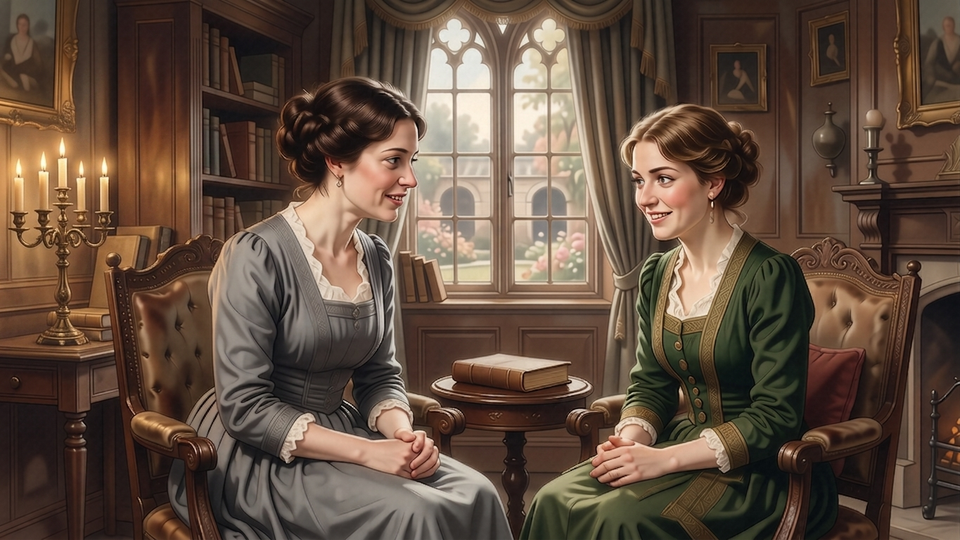
“It may, perhaps, be pleasant,” replied Charlotte, “to be able to impose on the public in such a case; but it is sometimes a disadvantage to be so very guarded. If a woman conceals her affection with the same skill from the object of it, she may lose the opportunity of fixing him; and it will then be but poor consolation to believe the world equally in the dark.”
注意 Charlotte 一开口就”破题”: Elizabeth 刚才为姐姐的”沉静”叫好,Charlotte 却立刻指出沉静的代价——“在众人面前装得若无其事固然愉快,可有时,过分小心反而是个劣势。” 她用一个 “but” 打断 Elizabeth 的乐观,用的还是最客气的句式:”It may, perhaps, be pleasant… but…”——先让一步,再亮刀,这是 Charlotte 式的说话艺术。
真正的狠话在后面: “If a woman conceals her affection with the same skill from the object of it, she may lose the opportunity of fixing him.”——如果一个女人向”那个对象本人”也瞒得一样好,她可能会错过”定住他”的机会。 注意 Austen 用 “fixing him”(把他定住)——Charlotte 眼里,婚姻不是浪漫,是”锁定目标”。 这个动词的冷,是全书最著名的”现实主义者”注脚之一。
“In nine cases out of ten, a woman had better show more affection than she feels. Bingley likes your sister undoubtedly; but he may never do more than like her, if she does not help him on.”
“In nine cases out of ten”(十有八九)——Charlotte 说话自带”概率学”: 她不谈爱情,只谈”成功率”。她的建议是“感情要表现得比实际多一分”(show more affection than she feels)——这是全书对”矜持”最直接的一记反驳: 在 Charlotte 的算法里,Jane 的沉静不是美德,是”营销失败”。而那句 “if she does not help him on”(如果她不推他一把)里的 “help on”,是航海用语”助帆前行”—— Austen 让 Charlotte 把谈恋爱说成”推船下水”: 你不推,船永远停在岸边。
🔤 单词 5️⃣ impose on UK /ɪmˈpəʊz ɒn/ US /ɪmˈpoʊz ɑːn/ —— 蒙蔽、骗过(此处)
释义: To deceive or trick someone; to take advantage of(此处指”在……面前蒙混过关”)
“to be able to impose on the public in such a case”
“impose on” 最常见的用法是”强加于”,但这里 Austen 用的是它的另一副面孔——”蒙骗、瞒过”。 Charlotte 说:能瞒过公众(the public)固然愉快。这个词选的极冷: 在 Charlotte 的词典里,社交圈不是”社会”,是”需要被瞒过的一群人”——她提前二十年,把”表演型人格”说透了。
E.G.1:He imposed on everyone with his fake credentials.
参考翻译:他靠伪造的资历骗过了所有人。E.G.2:She refused to be imposed on by his smooth apologies.
参考翻译:她不肯被他那套圆滑的道歉蒙混过去。
🔤 单词 6️⃣ conceal UK /kənˈsiːl/ US /kənˈsiːl/ —— 隐瞒、掩藏
释义: To hide something carefully(小心地藏起、不让人知道)
“If a woman conceals her affection with the same skill from the object of it”
“conceal” 比 “hide” 多一层”刻意”: hide 可以是无意的,conceal 一定是有预谋的藏匿。Austen 用 “conceals her affection with the same skill”——”用同样的技巧藏起她的情意”——这里的讽刺是双重的: 一个真在恋爱的人,很难”有技巧地”藏情;而一个能”有技巧地”藏情的人,多半也没那么爱。Charlotte 的整个恋爱观,都建立在这句”藏”字诀上。
E.G.1:She could not conceal her disappointment at the news.
参考翻译:听到这个消息,她藏不住自己的失望。E.G.2:He concealed the letter inside an old book.
参考翻译:他把信藏进了一本旧书里。
🔤 单词 7️⃣ partial UK /ˈpɑːʃl/ US /ˈpɑːrʃl/ —— 偏爱的、有好感的
释义: Liking someone or something very much; biased in favour of(对……有好感、偏心于)
“But if a woman is partial to a man, and does not endeavour to conceal it, he must find it out.”
这是 Elizabeth 的反击: “如果女人对男人有好感(partial),又不刻意隐藏,他一定会看出来。”“partial” 字面是”部分的”,引申为”偏心的”—— 它暗示好感是”不完整、不理智”的: Elizabeth 相信感情会自己露馅,Charlotte 却认为感情需要经营。一热一冷,两种恋爱哲学在这句话里第一次正面碰撞。**
E.G.1:He is partial to a cup of strong tea in the morning.
参考翻译:他早晨偏爱一杯浓茶。E.G.2:A judge must never be partial to either side.
参考翻译:法官绝不能偏向任何一方。
🔤 单词 8️⃣ ascertain UK /ˌæsəˈteɪn/ US /ˌæsərˈteɪn/ —— 查明、弄清
释义: To find out something for certain(弄清楚、确证)
“these four evenings have enabled them to ascertain that they both like Vingt-un better than Commerce”
Austen 在这里埋了一个”学术腔”的冷笑话: Elizabeth 说,四个晚上相处下来,两人最大的收获是”查明了”(ascertain)——他们俩都喜欢玩 Vingt-un(二十一点)胜过 Commerce(另一种纸牌戏)。“ascertain” 是个严肃的考据动词,Austen 用它来写”牌桌上摸清了对方的牌品”—— 一本正经的措辞配一个鸡毛蒜皮的结论,反差出 Elizabeth 对这场”恋爱考察”的轻蔑:四个晚上,除了牌戏,什么都没摸清。
E.G.1:The police failed to ascertain the cause of the fire.
参考翻译:警方未能查明火灾的起因。E.G.2:We need to ascertain whether the data is reliable.
参考翻译:我们需要确认这些数据是否可靠。🎭 文化小贴士 · Vingt-un 与 Commerce: 两个都是摄政时代流行的纸牌游戏。”Vingt-un”是法语”二十一”(即二十一点 Blackjack 的祖先),发音 /ˌvæ̃ˈtœ̃/ 或英国化的 /ˈvæntʌn/;”Commerce”是讲究换牌凑牌型的早期游戏。Austen 让 Bingley 和 Jane 在”牌戏口味”上一致,却不给他们”性格了解”—— 用最轻松的游戏,写最严肃的命题:两个好人,可以只靠一起玩牌,就错过彼此的一生。
🔧 文法机关 2:Had she merely dined with him——倒装的条件句
“Not as you represent it. Had she merely dined with him, she might only have discovered whether he had a good appetite.”
“Had she merely dined with him” = “If she had merely dined with him”(假如她只是跟他吃过饭)。 英语里当虚拟条件句包含 had / were / should 时,可以把 if 省略,把助动词提到主语前——这是书面英语的高级机关,也是 Austen 最爱用的”文气”之一。
Charlotte 用这个倒装句,完成一次漂亮的降维打击: 如果 Jane 只是和他吃过饭,她最多只能发现”他胃口好不好”——可你们一起度过了四个晚上,”四个晚上能做的事可多了”(four evenings may do a great deal)。 一句倒装,把 Elizabeth 的”不够了解”论,翻译成了”不会利用时间”论。
E.G.1:Had I known the truth, I would have acted differently.
参考翻译:我要是早知道真相,就会采取不同的做法了。E.G.2:Were he to ask again, she might still refuse.
参考翻译:就算他再问一次,她也可能仍然拒绝。
🎬 逐句叙事 · 第三段——”幸福全凭运气”:Charlotte 的婚姻观

“Well,” said Charlotte, “I wish Jane success with all my heart; and if she were married to him to-morrow, I should think she had as good a chance of happiness as if she were to be studying his character for a twelvemonth. Happiness in marriage is entirely a matter of chance.“
这是全书最著名、也最被误读的一句箴言。 表面看,Charlotte 在说”婚姻幸不幸福全靠命”;实际上,她在说一句更冷的话:“婚前考察得再久,也换不来婚后的幸福。” 注意她的句式——”if she were married to him to-morrow, I should think she had as good a chance of happiness as if she were to be studying his character for a twelvemonth”——明天就嫁,和考察一年再嫁,幸福概率一样。 这个 “as good a chance… as if…” 的对称结构,是她整套哲学的”数学证明”。
“If the dispositions of the parties are ever so well known to each other, or ever so similar beforehand, it does not advance their felicity in the least. They always continue to grow sufficiently unlike afterwards to have their share of vexation; and it is better to know as little as possible of the defects of the person with whom you are to pass your life.”
Charlotte 继续”推演”: 就算婚前把对方的性情(dispositions)摸得一清二楚,或者两个人再像,也”丝毫不能增进婚后的幸福”——因为人婚后总会”变得足够不一样,好让彼此都有份烦恼”(grow sufficiently unlike afterwards to have their share of vexation)。 这句是 Austen 借 Charlotte 之口,说出全书最尖刻的婚姻观:婚姻不是爱情的延续,是两个人一起变陌生的过程。 而她的结论更冷:”婚前对那个要共度一生的人,缺点知道得越少越好。”——在 Charlotte 的体系里,”不了解”不是风险,是福利。
🔤 单词 9️⃣ dispositions UK /ˌdɪspəˈzɪʃnz/ US /ˌdɪspəˈzɪʃnz/ —— 性情、禀性
释义: The natural qualities of a person’s character(人的天性、禀性)
“If the dispositions of the parties are ever so well known to each other”
“disposition” 是 Austen 时代的”人格学”术语,指一个人天生的脾性倾向。 在 18 世纪的性格学里,人的 disposition 被视为”几乎不可改变的天性”——所以 Charlotte 的潜台词是: 既然天性改不了,婚前考察又有什么用?Austen 用一个词的”学术背景”,给 Charlotte 的市侩披上了”科学”的外衣。
E.G.1:She had a cheerful disposition that lifted every room.
参考翻译:她天性开朗,走到哪里都能活跃气氛。E.G.2:His irritable disposition made him hard to live with.
参考翻译:他脾性急躁,很难相处。
🔤 单词 1️⃣0️⃣ felicity UK /fəˈlɪsəti/ US /fəˈlɪsəti/ —— 幸福、美满
释义: Great happiness; bliss(极大的幸福、美满)
“it does not advance their felicity in the least”
Austen 不用常见的 “happiness”,偏用 “felicity”——一个更书面、更典雅、甚至带点”天赐”意味的词。 词源上它来自拉丁文 felix(幸运的),所以 “felicity” 天生带一层”靠运气得来的幸福”的含义—— Charlotte 用这个词,等于在说:”婚姻的幸福(felicity),本来就是老天赏的,跟你的努力无关。”用词的文雅,反衬观点的冷峻,这是 Austen 最拿手的”高级反讽”。
E.G.1:She found felicity in the quiet routines of country life.
参考翻译:她在乡居的平静日常里找到了幸福。E.G.2:The marriage was one of rare and lasting felicity.
参考翻译:这段婚姻幸福美满,难得而长久。
🔤 单词 1️⃣1️⃣ vexation UK /vekˈseɪʃn/ US /vekˈseɪʃn/ —— 烦恼、恼人的事
释义: The state of being annoyed, or something that causes annoyance(烦恼、惹人烦的事物)
“to have their share of vexation“
注意 Austen 的措辞——”their share of vexation”(他们该有的那份烦恼)。 “share”(份额)这个词妙极:烦恼被写成”婚后生活按人头分配的配额”,躲不掉、也争不来。 “vexation” 比 “annoyance” 更古典,带一种”闷在心里慢慢发酵”的意味——Austen 写婚姻里的不快,不用大吵大闹,只用 “vexation” 这种”小刺反复扎”的词。
E.G.1:Much to his vexation, the train was delayed again.
参考翻译:火车又一次晚点,让他大为恼火。E.G.2:She hid her vexation behind a polite smile.
参考翻译:她藏起内心的不快,只报以礼貌的微笑。
✍️ 仿写练习 1 · 冷静的”诛心箴言”——Charlotte 的”幸福全凭运气”笔法
📜 选段(本章第三段,约 90 词):
“Happiness in marriage is entirely a matter of chance. If the dispositions of the parties are ever so well known to each other, or ever so similar beforehand, it does not advance their felicity in the least. They always continue to grow sufficiently unlike afterwards to have their share of vexation; and it is better to know as little as possible of the defects of the person with whom you are to pass your life.”
【技法提炼】Charlotte 的”诛心箴言”——先用一句刺耳的断言砸场,再用一条看似严密的因果链,让它听起来不可反驳:
- 断言式开场:一句
X is entirely a matter of chance——把”婚姻幸福”这种人人珍视的东西,一锤定音成”纯属运气”。不留商量余地,先夺话语权。 - 让步式防御:”If the dispositions… are ever so well known… it does not advance their felicity in the least”——先假设对方最有理的情况(婚前考察得再细),再否定它。 逻辑上这叫”让步论证”:我让你一步,然后把你连根拔起。
- 冷结论收尾:”it is better to know as little as possible”——推出一个反直觉的处世建议。 到这里,读者已经不知不觉站在她的逻辑里,忘了最初那句断言有多刺耳。
这手笔”不是一般人能掌握”的难点,在于把情绪藏得一丝不剩。Charlotte 说最伤人的话,用的却是最冷静的因果句式——一旦你加了”太可悲了””真让人心寒”之类的情绪词,力度就破了。 仿写的功夫在”零度抒情”:观点越冷,伤害越准。
✍️ 场景一 · 婚恋领域:相亲”过来人”闺蜜劝你”别考察太细”:
Marriage, in my experience, is entirely a matter of timing. If the two families are ever so eager for the match, or ever so compatible on paper, it does not advance the couple’s happiness in the least. They always continue to grow sufficiently stubborn afterwards to have their share of quarrels; and it is better to know as little as possible of the flaws of the person with whom you are to share a mortgage.
参考翻译:”依我的经验,婚姻成不成,完全是个时机问题。就算两家再急着撮合,两个人条件再登对,也丝毫不能增进他们的幸福。婚后他们总会变得足够固执,好让彼此都有份架可吵;所以,对那个要和你一起还房贷的人,缺点还是知道得越少越好。”
✍️ 场景二 · 职场领域:老员工谈”空降高管靠不靠谱”:
Whether a new boss will work out is entirely a matter of chemistry. If his resume and references are ever so well studied beforehand, or ever so impressive on paper, it does not advance the team’s confidence in the least. He will always manage to grow sufficiently disappointing afterwards to have his share of friction; and it is better to keep a little ignorance about the habits of the man with whom you are to share an open-plan office.
参考翻译:”新领导能不能干成事,完全是个化学反应问题。就算他的履历和推荐信被研究得再透、纸面上再漂亮,也丝毫不能增强团队的信心。他上任后总会想办法变得足够令人失望,好让团队有份摩擦可受;所以,对那个要跟你共享开放式办公室的人,他的习惯还是少知道一点为好。”
🔍 句法骨架对照(原文 → 仿写,每个槽位怎么换,看得见):
| 原文(Austen) | 仿写(场景二 · 空降高管) |
|---|---|
| Happiness in marriage is entirely a matter of chance | Whether a new boss will work out is entirely a matter of chemistry |
| If the dispositions of the parties are ever so well known to each other | If his resume and references are ever so well studied beforehand |
| it does not advance their felicity in the least | it does not advance the team’s confidence in the least |
| They always continue to grow sufficiently unlike afterwards | He will always manage to grow sufficiently disappointing afterwards |
| to have their share of vexation | to have his share of friction |
| it is better to know as little as possible of the defects of the person | it is better to keep a little ignorance about the habits of the man |
| with whom you are to pass your life | with whom you are to share an open-plan office |
给英语学习者的话: 这套”诛心箴言”的骨架只有三个零件:刺耳断言(is entirely a matter of…)→ 让步否定(if… ever so… it does not… in the least)→ 冷结论(it is better to…)。 把这三段式背下来,你就能在任何场合说出”冷静到扎心”的话。难点在语气: 全程不许用 “I feel””It’s sad”——你一抒情,这套机关就锈了。 这就是 Charlotte 的可怕之处:她用最平板的因果句,说最伤人的真理。
🎯 技法套路(可复用公式):
[Serious thing] is entirely a matter of [luck-like factor]. If [the preparation] is ever so [thorough] beforehand, it does not advance [the hoped outcome] in the least. [People/Things] always continue to grow sufficiently [negative quality] afterwards to have their share of [trouble]; and it is better to [avoid knowing / keep ignorance] about [the person/thing] with whom you are to [long-term commitment].
共鸣场景: 相亲局的”过来人”闺蜜、职场里的”老江湖”同事——Austen 教你:要泼冷水,别骂街,用因果句。 一句”X 全凭运气”,比十句抱怨更有杀伤力。
🎬 逐句叙事 · 第四段——Darcy 的”一双妙目”:情不知所起
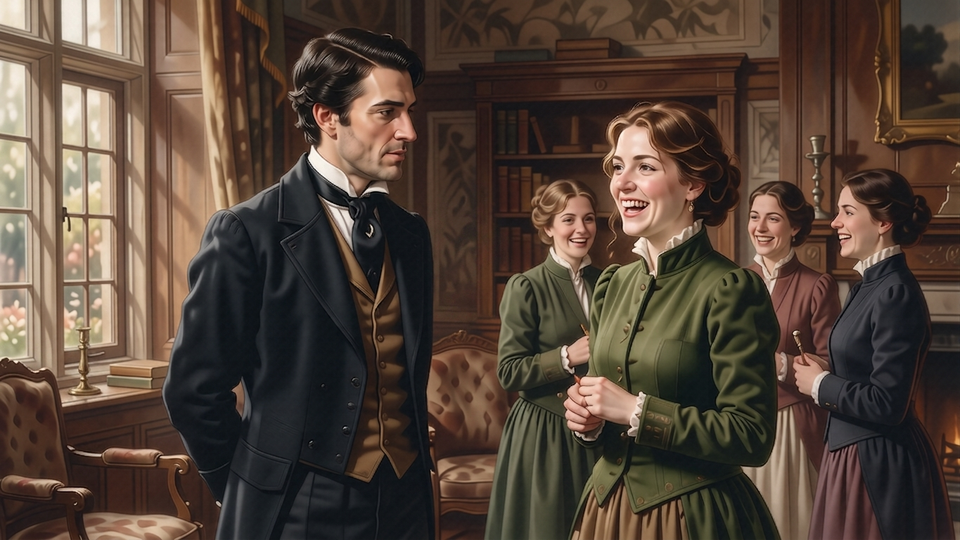
“Occupied in observing Mr. Bingley’s attentions to her sister, Elizabeth was far from suspecting that she was herself becoming an object of some interest in the eyes of his friend.”
Austen 的第一句话就埋下全书最大的戏剧性反讽: Elizabeth 忙着观察 Bingley 对姐姐的殷勤,“远远没有想到”(far from suspecting)自己正成为 Darcy 眼中”某种兴趣的对象”。 注意 Austen 的措辞——”an object of some interest in the eyes of his friend”——“某位朋友眼中的某种兴趣对象”。 她把 Darcy 的名字藏起来,把”兴趣”降格成”某种兴趣”,像一个导演故意不切镜头,让观众和 Elizabeth 一样蒙在鼓里。 这句话是全章的总开关:整个第六章,Elizabeth 在明处,Darcy 在暗处,读者在上帝视角看着两人擦肩而过。
“Mr. Darcy had at first scarcely allowed her to be pretty: he had looked at her without admiration at the ball; and when they next met, he looked at her only to criticise.”
Austen 写 Darcy 的沦陷,用的是”三步撤退”: 第一步”勉强承认她不算丑”(scarcely allowed her to be pretty)——注意 “scarcely allowed”(几乎不肯承认),像一个人给对手评分时吝啬地打出及格分; 第二步”看她只为了挑毛病”(looked at her only to criticise)——批评成了他注视她的借口; 第三步,也是 Austen 最狠的一步——反讽的引爆点:
“But no sooner had he made it clear to himself and his friends that she had hardly a good feature in her face, than he began to find it was rendered uncommonly intelligent by the beautiful expression of her dark eyes.”
“他刚向自己和朋友宣告’她脸上连一个漂亮五官都没有’,就立刻发现——她被那双黑眼睛的美丽表情,衬得异常聪明。” 这是全书最著名的”打脸时刻”(no sooner… than…)。Austen 把 Darcy 的沦陷写得像一次”正当防卫的失败”: 他先用理性筑起防线(她不好看),结果防线刚宣布完工,就被一个细节击穿(她的眼睛)。“rendered uncommonly intelligent”(被衬托得异常聪明)里的 “rendered”,是”使变得”——不是她本来就聪明,是那双眼睛”使得”她在 Darcy 眼里变得聪明。 情欲的机制,在 Austen 笔下从来不是”爱上一个人”,而是”被一个局部俘获”。
“To this discovery succeeded some others equally mortifying. Though he had detected with a critical eye more than one failure of perfect symmetry in her form, he was forced to acknowledge her figure to be light and pleasing; and in spite of his asserting that her manners were not those of the fashionable world, he was caught by their easy playfulness. Of this she was perfectly unaware: to her he was only the man who made himself agreeable nowhere, and who had not thought her handsome enough to dance with.”
“To this discovery succeeded some others equally mortifying”——”继这个发现之后,还有几个同样令人难堪的发现接踵而至。” 注意这个倒装句:正常语序是 “some others… succeeded to this discovery”,Austen 把它倒过来,让”一个接一个的发现”像多米诺骨牌一样倾倒出来。 于是:他挑剔她的身段”不止一处不够匀称”,却被迫承认她体态轻盈悦目; 他断言她”不懂上流社会的规矩”,却被她”毫不费力的活泼”(easy playfulness)俘获(caught)。
“caught” 是整段的关键词—— 不是 “attracted”(被吸引),是 “caught”(被捕获、中计了)。 Austen 用这个被动词,写出了一个傲慢者最不愿承认的事实:他所有的”看不上”,都是”看得上”的伪装。 而最后一句收束全段的反讽:“Of this she was perfectly unaware”(对此她浑然不觉)——在 Elizabeth 眼里,他不过是”那个走到哪儿都让人不快、还嫌她不够漂亮不配跳舞的人”。 一个已经沦陷,一个还在记仇;读者站在中间,替 Austen 笑出声。
🔤 单词 1️⃣2️⃣ scarcely UK /ˈskeəsli/ US /ˈskersli/ —— 几乎不、勉强才
释义: Only just; almost not(几乎不、仅仅勉强)
“Mr. Darcy had at first scarcely allowed her to be pretty”
“scarcely” 比 “hardly” 多一层”吝啬的勉强”: 它不是客观说”几乎没有”,而是主观上”极不情愿地挤出一点”。Austen 用 “scarcely allowed”——“几乎不肯承认”——把一个傲慢者打分时的心理过程,压缩进一个副词里。 你以为 Darcy 是”没发现”她好看?不,他是”拒不承认”她好看——区别就是 “scarcely” 三个字的重量。
E.G.1:She could scarcely believe her eyes.
参考翻译:她几乎不敢相信自己的眼睛。E.G.2:He scarcely had time to finish his tea before the bell rang.
参考翻译:他茶还没喝完,铃就响了。
🔤 单词 1️⃣3️⃣ mortifying UK /ˈmɔːtɪfaɪɪŋ/ US /ˈmɔːrtɪfaɪɪŋ/ —— 令人难堪的、丢面子的
释义: Causing great embarrassment or shame(叫人下不来台的)
“To this discovery succeeded some others equally mortifying“
第五章我们见过 “mortified”(自尊受挫),这一章 Austen 给它换上了进行时的外衣 “mortifying”(正让人难堪的)。 对 Darcy 来说,发现自己”看走了眼”本身就是奇耻大辱——“mortifying” 的词根是拉丁文 mortificare(使致死),字面是”让人社死”。 Austen 用这个词,写出了 Darcy 沦陷的第一重痛苦:他不是输给了 Elizabeth,他是输给了自己早先的傲慢。
E.G.1:It was mortifying to realize she had heard every word.
参考翻译:意识到她听到了每一句话,真是叫人无地自容。E.G.2:He suffered a mortifying defeat in the first round.
参考翻译:他在第一轮就吃了场丢人的败仗。
🔤 单词 1️⃣4️⃣ symmetry UK /ˈsɪmətri/ US /ˈsɪmətri/ —— 匀称、对称
释义: The quality of being made up of exactly similar parts facing each other(匀称、对称之美)
“more than one failure of perfect symmetry in her form”
Austen 用 “symmetry”(对称)这个几何学词汇来给 Elizabeth 的身段打分—— 这本身就是 Darcy 式审美的最好写照:他把一个活生生的姑娘,当成一件需要”测量”的艺术品。 可 Austen 的讽刺是:这位”测量师”最终败给了自己最瞧不上的东西——一双黑眼睛里的”表情”(expression),那是无法用对称来衡量的部分。
E.G.1:The symmetry of the garden was the pride of its owner.
参考翻译:花园布局的对称之美,是园主最大的骄傲。E.G.2:Perfect symmetry is rare in nature and rarer still in faces.
参考翻译:完美的对称在自然界罕有,在人脸上更是少见。
🔧 文法机关 3:no sooner... than...——”刚……就……”的倒装
“No sooner had he made it clear to himself and his friends that she had hardly a good feature in her face, than he began to find it was rendered uncommonly intelligent by the beautiful expression of her dark eyes.”
“no sooner… than…” 是英语里表示”两件事几乎同时发生”的高级结构,注意它带倒装: 主句要用过去完成时的倒装(had he made),从句用一般过去时(he began)。字面意思是”他刚一……,就……”——Austen 用这个机关,把 Darcy 的”打脸时刻”压缩成零延迟: 上一秒他刚宣告”她不好看”,下一秒他就发现了她的眼睛。这不是顺序发生的两件事,是同时炸响的一声雷。
对比 “hardly/scarcely… when…”(同义结构): “Hardly had he made it clear… when he began…”——Austen 选 “no sooner… than…” 而不是 “hardly… when…”,是因为 “no sooner”(不再早一点)带着一丝自嘲: 他不能再早点醒悟,非得先嘴硬一番。结构本身,就是 Darcy 的喜剧。
E.G.1:No sooner had she sat down than the phone rang.
参考翻译:她刚一坐下,电话就响了。E.G.2:No sooner had he apologized than she burst into tears.
参考翻译:他刚一开口道歉,她就哭了出来。
✍️ 仿写练习 2 · 沦陷式速写——Darcy 的”一双妙目”笔法
📜 选段(本章第四段,约 120 词):
“Mr. Darcy had at first scarcely allowed her to be pretty: he had looked at her without admiration at the ball; and when they next met, he looked at her only to criticise. But no sooner had he made it clear to himself and his friends that she had hardly a good feature in her face, than he began to find it was rendered uncommonly intelligent by the beautiful expression of her dark eyes.”
【技法提炼】Austen 的”沦陷式速写”——先用否定筑墙,再用一个细节拆墙:
- 三段式否定:”scarcely allowed”(勉强)→ “looked at her only to criticise”(只为挑刺)→ “hardly a good feature”(无一可取)——把排斥写到最满,才有后面塌方的力度。
- 拆墙的”细节”:不是”他爱上了她”,是”他发现她的眼睛很聪明”——Austen 从不用抽象的爱,只用最具体的一个局部(一双眼睛)承载全部心动。 这叫转喻(metonymy):用部分代替整体。
- 倒装引爆:”No sooner had he made it clear… than he began to find…”——否定与沦陷之间零延迟,前一秒的嘴硬和后一秒的心动,被锁进同一个句子。 这是 Austen 写”打脸”的招牌节奏。
这手笔”不是一般人能掌握”的难点,在于让读者看见心动,而不让主角承认心动。 普通写手会直接写”他爱上了她”;Austen 全程让 Darcy 保持”我在客观评估”的姿态,心动的证据全藏在”他看的部位”里。 仿写时最难的是保持主角的自我欺骗——一旦点破,反讽就没了。
✍️ 场景一 · 婚恋领域:朋友介绍的相亲对象——”不是我的菜”:
Leo had at first scarcely allowed her to be his type: he had scrolled past her photo without interest; and when they finally met, he spoke to her only to be polite. But no sooner had he texted his friends that she was “nothing special,” than he began to find her ordinary voice was rendered uncommonly warm by the way she laughed at her own jokes.
参考翻译:”Leo 一开始几乎不肯承认她是自己的菜:他刷到她的照片时毫不在意;等到终于见面,他跟她说话只是为了不失礼。可他刚给朋友发完’她没什么特别’,就立刻发现——她那把平平常常的嗓音,被她自嘲时的笑声衬得异常温柔。”
✍️ 场景二 · 职场领域:新来的实习生——”平平无奇”:
The director had at first scarcely allowed the intern to be promising: he had skimmed her report without comment; and when she presented, he listened only to find flaws. But no sooner had he told his deputy that she was “average at best,” than he began to find the work was rendered uncommonly sharp by the quiet confidence of her closing numbers.
参考翻译:”总监一开始几乎不肯承认这个实习生有前途:他扫她的报告时没有批注;等她上台汇报,他只听是为了挑毛病。可他刚跟副手说完’顶多算中等偏上’,就立刻发现——那份报告,被她收尾数据的沉静自信衬得异常锐利。”
🔍 句法骨架对照(原文 → 仿写,每个槽位怎么换,看得见):
| 原文(Austen) | 仿写(场景一 · 相亲) |
|---|---|
| had at first scarcely allowed her to be pretty | had at first scarcely allowed her to be his type |
| he had looked at her without admiration at the ball | he had scrolled past her photo without interest |
| when they next met, he looked at her only to criticise | when they finally met, he spoke to her only to be polite |
| no sooner had he made it clear to himself and his friends that she had hardly a good feature in her face | no sooner had he texted his friends that she was “nothing special” |
| than he began to find it was rendered uncommonly intelligent by the beautiful expression of her dark eyes | than he began to find her ordinary voice was rendered uncommonly warm by the way she laughed at her own jokes |
给英语学习者的话: 这套”沦陷式速写”的公式是:“scarcely allowed + 只做某事 + no sooner… than…”——先把主角的排斥写满三格,再用一个具体细节(眼睛/笑声/数据)炸开一条缝。记住:心动的主体永远不是”人”,是”局部”。 你写的是”她的眼睛让我觉得她聪明”,不是”我爱上她了”——后者是表白,前者是文学。
🎯 技法套路(可复用公式):
[He] had at first scarcely allowed [her/it] to be [good]: he had [dismissive action]; and when [they met], he [engaged] only to [criticise]. But no sooner had he [declared the dismissal] than he began to find [the thing] was rendered uncommonly [attractive] by [one specific detail].
共鸣场景: 相亲后嘴硬的 Leo、评审会上看走眼的总监——Austen 教你:写”动心”,别写心动,写细节。 一个”打脸时刻”,胜过十句”他深深地爱上了她”。
🎬 逐句叙事 · 第五段——Sir William 家的”反激将”:Elizabeth 的挑衅
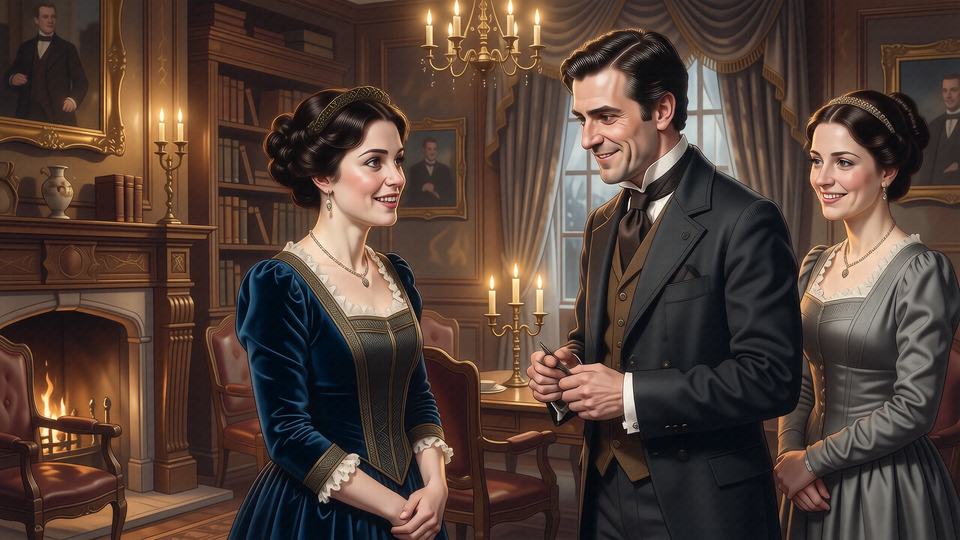
“He began to wish to know more of her; and, as a step towards conversing with her himself, attended to her conversation with others. His doing so drew her notice. It was at Sir William Lucas’s, where a large party were assembled.”
Darcy 的追求,第一招不是靠近,是”旁听”: “as a step towards conversing with her himself, attended to her conversation with others”——为了将来能和她说话,他先”专心听她跟别人说话”。 注意 Austen 的用词 “attended to”(专心留意)——一个傲慢的人,开始了最卑微的功课:偷听。 而 “His doing so drew her notice”(他这么做引起了她的注意)——Darcy 的第一步,就暴露在 Elizabeth 的雷达上。
“‘What does Mr. Darcy mean,’ said she to Charlotte, ‘by listening to my conversation with Colonel Forster?’
Elizabeth 的警觉,精准得可怕: 她不是问”他在听什么”,而是问”他什么意思”(what does he mean)——在她眼里,Darcy 的一切行为都自带”可疑的动机”。 这就是 Austen 为两人埋下的死结:Darcy 的心动,在 Elizabeth 的解读系统里,永远被翻译成”傲慢者的算计”。
“‘He has a very satirical eye, and if I do not begin by being impertinent myself, I shall soon grow afraid of him.'”
“他有一双非常讥诮的眼睛”(a very satirical eye)—— Elizabeth 用一个词,给 Darcy 定了性。注意 “if I do not begin by being impertinent myself, I shall soon grow afraid of him”(如果我不抢先对他无礼,我很快就会怕了他)——这是 Elizabeth 的”先发制人”理论: 她选择用 “impertinence”(无礼)当铠甲,来对抗那双 “satirical eye”(讥诮的眼睛)。 Austen 在这里几乎是在预告全书:这两个人之间的每一句交锋,都是”怕”与”防御”的游戏。**
“On his approaching them soon afterwards, though without seeming to have any intention of speaking, Miss Lucas defied her friend to mention such a subject to him, which immediately provoking Elizabeth to do it, she turned to him and said,—’Did not you think, Mr. Darcy, that I expressed myself uncommonly well just now, when I was teasing Colonel Forster to give us a ball at Meryton?'”
Charlotte 的”激将法”(defied her friend to mention such a subject)是本章最狡猾的一个动作: 她”激”Elizabeth 去把刚才的话题当面问 Darcy——她知道 Elizabeth 受不了激,也知道 Darcy 在偷听。 结果 Elizabeth 真的转过身,抛出一个大胆的问题:“Darcy 先生,你觉得我刚才逼 Forster 上校在 Meryton 办舞会,话说得特别好吗?” 注意她的措辞 “expressed myself uncommonly well”(表达得异常出色)——她用自夸的语气问一个讥诮的人,等于主动把脸凑上去让他打。 这一问,是整个第六章最精彩的”话术试探”。
“‘With great energy; but it is a subject which always makes a lady energetic.'”
Darcy 的回答,是全书最著名的”四两拨千斤”之一: “说得很有劲;不过,凡是这个话题,女士们总是很有劲。”——表面是恭维(great energy),实际是讽刺(你们女人一谈舞会就来劲)。 “a subject which always makes a lady energetic”——用一个 “always”(总是),把 Elizabeth 的”个人表现”变成”全体女性的通病”。 这句话的刁钻在于:它让你无从反驳——你一反驳,恰恰证明他说的对。
“‘You are severe on us.'”
Elizabeth 的回应只有五个词:”你对我们也太刻薄了。”(You are severe on us.)——注意她没有生气,她是在”记一笔”: 她用 “severe”(严厉)给 Darcy 的刻薄盖了个章,然后立刻转移战场。Austen 的对话艺术全在这个”留白”里: 真正的高手过招,不在你来我往的密集,而在”点到为止、各自收刀”。
🔤 单词 1️⃣5️⃣ satirical UK /səˈtɪrɪkl/ US /səˈtɪrɪkl/ —— 讥讽的、好挖苦的
释义: Using irony or mockery to criticize people(惯用讽刺挖苦的)
“He has a very satirical eye”
“satirical” 比 “sarcastic” 层次更高: sarcastic 是”嘴上损人”,satirical 是”用一种讥诮的世界观审视一切”。Elizabeth 说 Darcy 的眼睛是 satirical 的——意思是:他在用嘲讽给全世界打分。 而 Austen 的反讽在于:说这话的人自己,正是全书最 satirical 的眼睛。 两个最会讽刺的人,互相把对方看成了”被讽刺的对象”。
E.G.1:His satirical remarks made everyone uncomfortable.
参考翻译:他那些讥讽的话,让在场的人都不自在。E.G.2:The play is a satirical look at modern office life.
参考翻译:这出戏是对现代职场生活的辛辣讽刺。
🔤 单词 1️⃣6️⃣ defy UK /dɪˈfaɪ/ US /dɪˈfaɪ/ —— 激将、挑战(此处)
释义: To challenge someone to do something you think they dare not do(激某人去做某事;此处指”激将”)
“Miss Lucas defied her friend to mention such a subject to him”
“defy” 最常见的含义是”违抗、藐视”,但这里用的是它的另一个身份——”激将”(defy sb. to do sth. = 激某人敢不敢做某事)。 Charlotte “激” Elizabeth 去问 Darcy——这招的毒辣在于: 如果你问了,你中计;如果你不问,你认怂。Austen 用一个 “defied”,写尽了 Charlotte 这位”军师”操控人心的本事。
E.G.1:I defy you to prove that claim.
参考翻译:我倒要看看你敢不敢证明你的说法。E.G.2:She defied him to jump, knowing he was afraid of heights.
参考翻译:她激他跳下去,明知道他恐高。
🔤 单词 1️⃣7️⃣ severe UK /sɪˈvɪə/ US /sɪˈvɪr/ —— 严厉的、苛刻的
释义: Harsh; stern; not lenient(严厉、苛刻、不留情面)
“‘You are severe on us.'”
Elizabeth 用 “severe” 给 Darcy 的刻薄定调——这个词的妙处在于它的”中性”: 它不指控 Darcy “恶毒”,只说他”要求太严”。这恰恰是 Elizabeth 的高明: 她用一句”您对我们太苛刻”,既回敬了 Darcy 的讽刺,又守住了自己的风度——真正的吵架高手,从不骂人,只做”客观评价”。
E.G.1:The teacher was severe with latecomers.
参考翻译:那位老师对迟到的人很严厉。E.G.2:Don’t be too severe on yourself for one mistake.
参考翻译:别因为一次失误就对自己太苛刻。
🎬 逐句叙事 · 第六段——”Keep your breath to cool your porridge”:Elizabeth 的弹琴与 Mary 的表演

“‘It will be her turn soon to be teased,’ said Miss Lucas. ‘I am going to open the instrument, Eliza, and you know what follows.'”
Charlotte 的第二个动作是”赶鸭子上架”: 她要去”打开琴盖”(open the instrument),因为”你知道接下来会发生什么”——她要逼 Elizabeth 当众表演。 在摄政时代,”会弹琴”是淑女才艺的标配,也是相亲市场的”才艺展示”(accomplishment)。Charlotte 逼她弹琴,等于把她推上”才艺考场”——而 Darcy 就在旁边看着。
“‘You are a very strange creature by way of a friend!—always wanting me to play and sing before any body and every body! If my vanity had taken a musical turn, you would have been invaluable; but as it is, I would really rather not sit down before those who must be in the habit of hearing the very best performers.'”
Elizabeth 的抗议,是一场漂亮的”自我解嘲式拒绝”: “你要是早让我的虚荣心往音乐上发展,你早就成了我最宝贵的闺蜜;可如今,我可真不愿意坐在一群’听惯了顶级演奏家’的人面前献丑。”——注意她用 “by way of a friend”(作为朋友而论)来吐槽 Charlotte,又用 “invaluable”(无可估量)来夸张。 她嘴上在拒绝,实际是在用机敏的话术给自己台阶下——Austen 的 Elizabeth 从不怯场,她只是不愿意在没有胜算的场合表演。
“‘Very well; if it must be so, it must.’ And gravely glancing at Mr. Darcy, ‘There is a very fine old saying, which every body here is of course familiar with—”Keep your breath to cool your porridge,”—and I shall keep mine to swell my song.'”
这句 “Keep your breath to cool your porridge”(留着你的气,去吹凉你的粥吧)是摄政时代的一句老话,意思近乎”省省吧、别白费口舌”。 Elizabeth 借它打趣:她要把”气”(breath)留着唱歌,而不是浪费在”吹凉粥”(跟你们这些人废话)上。Austen 让她”gravely”(一本正经地)说这个俏皮话——一本正经地说俏皮话,比眉飞色舞地说更让人忍俊不禁。 而这一句 “gravely glancing at Mr. Darcy”,是 Elizabeth 在全章唯一一次正眼看向 Darcy 的时刻——她把俏皮话,直接抛给了那双”satirical eye”。
🔤 单词 1️⃣8️⃣ porridge UK /ˈpɒrɪdʒ/ US /ˈpɔːrɪdʒ/ —— 粥、麦片粥
释义: A soft food made by boiling oats or other grains in water or milk(燕麦等煮成的粥)
“‘Keep your breath to cool your porridge‘”
“porridge” 是英国早餐的国民食物——所以”吹凉粥”这句老话,带着浓浓的”厨房烟火气”。 上流社会的沙龙里,Elizabeth 突然搬出一句”煮粥”的俗语,本身就是一种”故意降格”的幽默: 她在提醒 Darcy——你们这些高雅人爱听高雅话,我偏要说厨房里的大白话。Austen 用一句俗语,完成了 Elizabeth 对”上流社会做作”的日常抵抗。
E.G.1:She had a bowl of porridge with honey for breakfast.
参考翻译:她早餐吃了一碗加蜂蜜的麦片粥。E.G.2:The old proverb advises us to keep our breath to cool our porridge.
参考翻译:那句老话劝我们,别白费口舌去吹凉自己的粥。
🔤 单词 1️⃣9️⃣ capital UK /ˈkæpɪtl/ US /ˈkæpɪtl/ —— 极好的、一流的(此处)
释义: Excellent; first-rate(此处为口语旧用法:极好的、出色的)
“Her performance was pleasing, though by no means capital.”
现代英语里 “capital” 是”首都/资本”,但在 Austen 时代,它是口语里的最高级褒义词——”顶好的、一流的”(相当于今天的 excellent)。 Austen 写 Elizabeth 的琴技”令人愉悦,却绝不是一流”(pleasing, though by no means capital)——这句”委婉的差评”里藏着 Austen 的偏心: 她不需要 Elizabeth 完美,她要的是 Elizabeth 真实。一个”不完美但讨人喜欢”的女主角,比一个”琴棋书画样样顶尖”的标本,更配得上 Darcy 那双眼睛。
E.G.1:”What a capital idea!” he exclaimed.
参考翻译:”这主意太棒了!”他大声说。(旧式口语)E.G.2:The dinner was capital, and the wine better still.
参考翻译:晚宴极为出色,酒就更妙了。(旧式口语)
🔤 单词 2️⃣0️⃣ application UK /ˌæplɪˈkeɪʃn/ US /ˌæplɪˈkeɪʃn/ —— 用功、刻苦(此处)
释义: Diligent effort; hard work(此处指”勤勉用功”)
“though vanity had given her application“
现代英语里 “application” 是”申请、应用”,但在 Austen 笔下,它指的是”下苦功”(diligent application)。 这句写 Mary 的刻薄话是 Austen 全书最狠的之一:“尽管虚荣给了她用功”(vanity had given her application)—— 意思是:Mary 不是出于热爱而勤学,是出于”要面子”而苦练。Austen 用一个词的转义,把”勤勉”从美德贬成了”虚荣的衍生物”。
E.G.1:Her application to her studies was admired by all her teachers.
参考翻译:她对学业的刻苦用功,受到所有老师的称赞。E.G.2:Success in languages requires steady application.
参考翻译:学好语言需要持之以恒的用功。
🎨 段落赏析:Mary 的”表演型勤学”——Austen 最刻薄的一笔
“Mary had neither genius nor taste; and though vanity had given her application, it had given her likewise a pedantic air and conceited manner, which would have injured a higher degree of excellence than she had reached. Elizabeth, easy and unaffected, had been listened to with much more pleasure, though not playing half so well.”
Austen 给 Mary 开出的诊断书,一句比一句狠: “既无天分,也无品味”(neither genius nor taste);”虚荣给了她用功,也给了她一副卖弄的学究气与自负的作派”(a pedantic air and conceited manner)。最毒的是最后那句补刀: “这样的作派,哪怕她有更高的才艺,也会被它毁掉”(would have injured a higher degree of excellence than she had reached)——意思是:Mary 就算琴弹得再好,她那副”我很有学问”的嘴脸也会毁了一切。
而 Austen 的对比更诛心: Elizabeth 弹得不如 Mary 一半好,却”让人听得愉快得多”(listened to with much more pleasure)——因为 Elizabeth “easy and unaffected”(轻松自然、毫不做作)。 这句是全章的美学宣言:在 Austen 的世界里,”讨人喜欢”不是才艺,是态度。 一个松弛的人,比一个紧绷的才女更有魅力——两百年前,Austen 就把”松弛感”写成了最高级的社交货币。
💡 灵感闪现: 你有没有遇见过这样的人——证书一堆、头衔一长串,可一开口你就想走神?Mary 就是她们的原型:“用功”如果是出于虚荣,学得越多,越显得匮乏。 而 Elizabeth 那种”easy and unaffected”的松弛,才是真正的天赋:它不是不努力,是努力之后不端着。 这句话值得抄下来贴在镜子上:“Would have injured a higher degree of excellence than she had reached”——你端着的样子,会毁掉你本来的好。
🎬 逐句叙事 · 第七段——”Every savage can dance”:Darcy 的社交冷场

“Mr. Darcy stood near them in silent indignation at such a mode of passing the evening, to the exclusion of all conversation, and was too much engrossed by his own thoughts to perceive that Sir William Lucas was his neighbour, till Sir William thus began:—”
Austen 用一个长镜头,把 Darcy 从”全场中心”推到”角落观察者”: 他站在跳舞的人旁边,”默默愤慨”(silent indignation)于这种”把整个晚上耗在跳舞、挤掉一切交谈”的方式(to the exclusion of all conversation)。注意 Austen 给 Darcy 配的两个关键词: “indignation”(愤慨)与 “engrossed”(出神)——一个真正傲慢的人,是不屑于’愤慨’的;Darcy 的’愤慨’恰恰说明他在意,而他的’出神’说明他满脑子都是刚才那双眼睛。
“‘What a charming amusement for young people this is, Mr. Darcy! There is nothing like dancing, after all. I consider it as one of the first refinements of polished societies.'”
Sir William 的社交辞令,是典型的”暴发户媚雅”: 他称跳舞是”文明社会(polished societies)的第一等教养”(one of the first refinements)。Austen 让这位刚封爵的商人大谈”教养”,本身就充满喜感—— 而他把话头递给 Darcy,是想”高攀”这位年入一万的贵客。
“‘Certainly, sir; and it has the advantage also of being in vogue amongst the less polished societies of the world: every savage can dance.'”
Darcy 的回答,是全书最著名的”礼貌性羞辱”: “当然,先生;而且它还有一个优点——在世界上那些’欠文明’的社会里也同样流行:野人也都会跳舞。“(every savage can dance) Austen 让 Darcy 用最标准的句式(Certainly, sir),说出最毒的内容(你们跳舞=野人蹦跶)。 这句话的高明在于:它没有骂任何人,却把整个客厅的欢乐都踩在脚下。Sir William 脸上的笑容,在这句话里凝固了——而 Austen 只轻描淡写地补了一句 “Sir William only smiled.”
🔤 单词 2️⃣1️⃣ indignation UK /ˌɪndɪɡˈneɪʃn/ US /ˌɪndɪɡˈneɪʃn/ —— 愤慨、义愤
释义: Anger at something you feel is unfair or wrong(因觉得不公而产生的愤慨)
“Mr. Darcy stood near them in silent indignation“
“indignation” 不是普通的生气,而是”出于优越感的愤怒”—— 觉得自己高于眼前这一切,才配叫 indignation。Austen 用 “silent indignation”(沉默的愤慨)给 Darcy 的傲慢定了级: 他不屑于发作,因为他自认是”审判者”而不是”参与者”。但正如我们看到的,这个”审判者”刚刚被一双眼睛俘虏——他的愤慨越盛,说明他陷得越深。**
E.G.1:The workers expressed indignation at the unfair pay cut.
参考翻译:工人们对不公正的降薪表示愤慨。E.G.2:She was speechless with indignation at the accusation.
参考翻译:面对这样的指控,她气得说不出话来。
🔤 单词 2️⃣2️⃣ engrossed UK /ɪnˈɡrəʊst/ US /ɪnˈɡroʊst/ —— 全神贯注的、出神的
释义: So interested in something that you forget everything else(完全被吸引、浑然忘我)
“was too much engrossed by his own thoughts to perceive that Sir William Lucas was his neighbour”
Austen 用 “engrossed by his own thoughts”(被自己的思绪完全占据)来解释 Darcy 的”目中无人”—— 他不是故意无视 Sir William,是真的没看见。这个细节极重要: 它说明 Darcy 的走神是”真实的心理状态”,而不是”故意的傲慢”——Austen 在为 Darcy 辩护:他不是冷漠,他是沉浸。(至于沉浸的内容,读者心知肚明。)
E.G.1:She was so engrossed in the novel that she missed her stop.
参考翻译:她看书看得太入迷,坐过了站。E.G.2:He sat engrossed in thought, ignoring the noise around him.
参考翻译:他坐着出神,对周围的嘈杂充耳不闻。
🔤 单词 2️⃣3️⃣ adept UK /əˈdept/ US /əˈdept/ —— 熟练的、擅长的
释义: Very skilled at something(精通的、驾轻就熟的)
“I doubt not that you are an adept in the science yourself, Mr. Darcy.”
Sir William 用 “the science”(这门学问)来称呼跳舞,又用 “adept”(精通者)来恭维 Darcy—— 一个把跳舞叫”科学”的人,说明他满脑子都是”上流社会的学问”。Austen 让 Sir William 的恭维越堆越高,好让 Darcy 的回答摔得越重。
E.G.1:She is adept at defusing tense situations.
参考翻译:她非常善于缓和紧张的局面。E.G.2:He soon became adept at reading people’s expressions.
参考翻译:他很快就变得善于察言观色。
🔤 单词 2️⃣4️⃣ compliment UK /ˈkɒmplɪmənt/ US /ˈkɑːmplɪmənt/ —— 恭维、敬意(此处为”捧场”)
释义: A polite expression of praise or admiration(表示赞美或敬意的客套话)
“‘Do you not think it would be a proper compliment to the place?’ / ‘It is a compliment which I never pay to any place if I can avoid it.'”
Sir William 问 Darcy:”你难道不觉得,在圣詹姆斯宫(St. James’s,王宫)跳一场舞,才是对那个地方’应有的敬意’吗?” 而 Darcy 的回答冷到冰点:“那是一种敬意——凡是能躲开的地方,我从不对任何地方献这种敬意。”(a compliment which I never pay to any place if I can avoid it)Austen 让 “compliment” 这个词在两人之间像乒乓球一样来回,最后被 Darcy 一记扣杀: 对 Sir William 来说,跳舞是”攀附皇家的荣幸”;对 Darcy 来说,跳舞是”降低身价的施舍”。同一件事,两种阶级的解读,Austen 只摆出来,不评理。
E.G.1:She took his remark as a compliment, though it was not meant as one.
参考翻译:她把他的话当成恭维,虽然那并不是恭维。E.G.2:Returning the compliment, he praised her cooking.
参考翻译:作为回礼,他夸了她的厨艺。
🎨 段落赏析:Sir William 的”伦敦心结”——Austen 的阶级显微镜
“‘You have a house in town, I conclude.’ / Mr. Darcy bowed. / ‘I had once some thoughts of fixing in town myself, for I am fond of superior society; but I did not feel quite certain that the air of London would agree with Lady Lucas.'”
这段对话是全章最精妙的”阶级双人舞”: Sir William 试探 Darcy “您在城里(伦敦)有宅子吧?”——在摄政时代,”在伦敦有房子”是财富与地位的硬通货。 他随后自曝:”我也曾想过在城里安家,因为我喜爱上流社会;只是拿不准伦敦的空气适不适合 Lucas 太太。”——Austen 用 “the air of London”(伦敦的空气)这个生理学式的借口,写出了 Sir William 的全部心思: 他不是担心空气,他是担心”去了伦敦就露馅”——在乡下,他是爵士;在伦敦,他只是一个做过生意的老头。
Austen 从头到尾没让 Darcy 说一句刻薄话,却让 Sir William 自己把自己”参观”了一遍: 这就是她写势利眼的最高明之处——不用讽刺家出手,让虚荣者自己作证。
🎬 逐句叙事 · 第八段——”Mr. Darcy is all politeness”:拒绝共舞
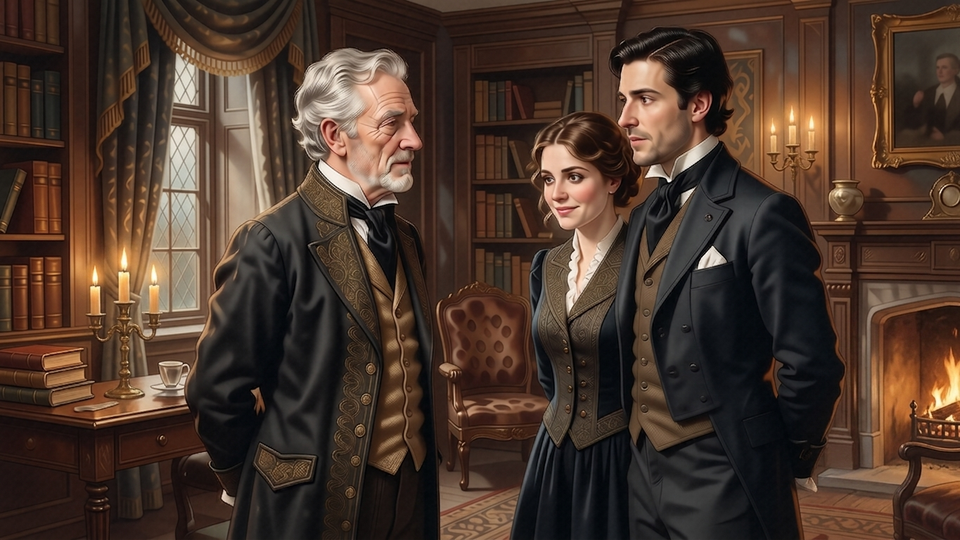
“He paused in hopes of an answer: but his companion was not disposed to make any; and Elizabeth at that instant moving towards them, he was struck with the notion of doing a very gallant thing, and called out to her,—’My dear Miss Eliza, why are not you dancing? Mr. Darcy, you must allow me to present this young lady to you as a very desirable partner. You cannot refuse to dance, I am sure, when so much beauty is before you.'”
Sir William 的”好心”,是本章最大的一次社交事故: 他见 Darcy 不接茬,转头看见 Elizabeth 走来,忽然”灵光一现要献个殷勤”(struck with the notion of doing a very gallant thing)——他要把 Elizabeth”引荐”给 Darcy 当舞伴。 注意 Austen 用 “so much beauty”(眼前有这么多美色)来形容 Elizabeth——这句恭维越夸张,接下来的拒绝就越尴尬。 Sir William 以为自己在”撮合”,实际上他在给两个最不愿被安排的人,递了一把刀。
“And, taking her hand, he would have given it to Mr. Darcy, who, though extremely surprised, was not unwilling to receive it, when she instantly drew back, and said with some discomposure to Sir William,—’Indeed, sir, I have not the least intention of dancing. I entreat you not to suppose that I moved this way in order to beg for a partner.'”
Austen 的叙事节奏在这里达到了完美的”三拍”: 第一拍,Sir William “牵起她的手,要把它交给 Darcy”(taking her hand, he would have given it);第二拍,Darcy “虽然极其惊讶,却并非不愿接”(though extremely surprised, was not unwilling to receive it)——注意这个细节:Darcy 是愿意的! 第三拍,Elizabeth “立刻缩回手”(instantly drew back),带着几分慌乱(with some discomposure)说:“先生,我压根儿没有跳舞的打算。请您千万别以为我走到这边来,是为了讨个舞伴。”(beg for a partner)
这是全书最经典的一次”错位”: Darcy 这边刚刚愿意,Elizabeth 那边立刻拒绝——她拒绝的不是 Darcy,是”被安排”这件事本身。 而 Austen 用 “I entreat you not to suppose”(我恳求您别以为)这个极度客气的句式,写出了 Elizabeth 的”火大”——她越客气,说明她越觉得被冒犯。
“Mr. Darcy, with grave propriety, requested to be allowed the honour of her hand, but in vain. Elizabeth was determined; nor did Sir William at all shake her purpose by his attempt at persuasion.”
Darcy 的”接盘”来了: 他”以庄重的得体”(with grave propriety)请求”获得她玉手的荣幸”(to be allowed the honour of her hand)——Austen 让 Darcy 用最正式、最体面的措辞发出邀请,得到的却是 Elizabeth 的”坚决不跳”(in vain)。 “Elizabeth was determined”——五个字,把 Darcy 第一次”主动靠近”的尝试,钉死在了拒绝上。 Austen 用 “nor did Sir William at all shake her purpose”(Sir William 的劝说也丝毫动摇不了她)补了一刀:全世界都劝不动 Elizabeth,除了她自己的判断。
🔤 单词 2️⃣5️⃣ gallant UK /ˈɡælənt/ US /ˈɡælənt/ —— 献殷勤的、殷勤体贴的
释义: Brave and chivalrous, especially towards women(此处指”向女士献殷勤的、骑士式的”)
“he was struck with the notion of doing a very gallant thing”
“gallant” 在中世纪是”骑士的勇敢”,到了摄政时代,专指”对女士殷勤有礼”。 Sir William 想”做一件非常殷勤的事”——给 Elizabeth 介绍 Darcy。Austen 用 “gallant” 来写 Sir William 的自我感觉良好: 他以为自己是牵线月老,其实是个蹩脚的导演。“gallant” 这个词的喜剧性在于: 它描述的是”想献殷勤的人”,而 Austen 让这位献殷勤者,把场面搞得比谁都难看。**
E.G.1:He was gallant enough to offer her his seat.
参考翻译:他殷勤地给她让座。E.G.2:Her gallant host held the door and pulled out her chair.
参考翻译:殷勤的男主人为她开门、拉椅。
🔤 单词 2️⃣6️⃣ discomposure UK /ˌdɪskəmˈpəʊʒə/ US /ˌdɪskəmˈpoʊʒər/ —— 慌乱、失态
释义: A state of being agitated or thrown off balance(心绪不宁、乱了方寸)
“she instantly drew back, and said with some discomposure“
“discomposure” 是 “composure”(镇定)的反面——注意这两个词 Austen 在短短一段里先后用上: 第一段她说 Jane 有 “composure of temper”,这一段她说 Elizabeth 有了 “some discomposure”。这个呼应绝非偶然: Austen 在提醒我们——Jane 的镇定是藏得住感情的镇定,而 Elizabeth 的慌乱是藏不住情绪的慌乱。 面对 Darcy 的邀请,Elizabeth 的 “discomposure” 暴露了她真实的在意:她不是不在乎,她是太在乎”姿态”,才会一激就乱。
E.G.1:The unexpected question threw her into discomposure.
参考翻译:这个突如其来的问题,让她一时乱了方寸。E.G.2:He hid his discomposure behind a tight smile.
参考翻译:他绷出一个微笑,掩饰自己的慌乱。
🔤 单词 2️⃣7️⃣ propriety UK /prəˈpraɪəti/ US /prəˈpraɪəti/ —— 得体、合乎礼数
释义: Correct and socially acceptable behaviour(合乎礼数的言行)
“Mr. Darcy, with grave propriety, requested to be allowed the honour of her hand”
“propriety” 是摄政时代的”社交宪法”——一切行为都必须”得体”。 Darcy “以庄重的得体”发出邀请,Austen 让 “propriety” 成为 Darcy 的铠甲: 他的情感再涌动,也要用”合乎礼数”的措辞包装。而讽刺的是: 他的得体,恰恰是 Elizabeth 最讨厌的东西——她看穿了他的礼貌,却没看穿礼貌下的真心。
E.G.1:She always behaved with perfect propriety in public.
参考翻译:她在公共场合总是举止极为得体。E.G.2:The question violated all rules of social propriety.
参考翻译:这个问题完全违背了社交礼节。
🔤 单词 2️⃣8️⃣ complaisance UK /kəmˈpleɪzns/ US /kəmˈpleɪzns/ —— 殷勤、顺从、讨好
释义: A willingness to please others(乐于取悦、有求必应)
“‘He is, indeed: but, considering the inducement, my dear Miss Eliza, we cannot wonder at his complaisance; for who would object to such a partner?'”
Sir William 还在努力圆场: “他确实客气;不过,看在这’诱因’的份上,我们也不能怪他这般殷勤——这样的舞伴,谁会拒绝呢?”Austen 用 “complaisance”(讨好人的殷勤)来描述 Darcy 的”礼貌”,又用 “the inducement”(诱因)来指 Elizabeth—— 这一老一少的”拉皮条式”对话,把 Darcy 推到了一个尴尬的位置: 他的真心,在 Sir William 嘴里成了”贪图美色的殷勤”。 Austen 从不放过任何一个让 Darcy”被误解”的机会——因为她的女主角,就是全客厅最后一个看不见真相的人。
E.G.1:She agreed out of complaisance rather than conviction.
参考翻译:她同意是出于讨好,而不是出于本意。E.G.2:His complaisance made him popular with everyone except himself.
参考翻译:他处处逢迎,讨好了所有人,唯独委屈了自己。
🔤 单词 2️⃣9️⃣ inducement UK /ɪnˈdjuːsmənt/ US /ɪnˈduːsmənt/ —— 诱因、动机
释义: A reason or motive for doing something(促使某人做某事的理由)
“considering the inducement, my dear Miss Eliza, we cannot wonder at his complaisance”
Sir William 说”considering the inducement”(考虑到这个诱因)——他在恭维 Elizabeth 美貌足以打动任何人。 但 Austen 让这个词带上了双关:Sir William 以为的 “inducement” 是 Elizabeth 的美貌,而真实的 “inducement” 是 Darcy 心里那点他自己都没想明白的心动。 语言的分裂,就是认知的分裂——Austen 让 Sir William 说对了结果(Darcy 确实被打动),却完全说错了原因。
E.G.1:The promise of a bonus was a strong inducement to work harder.
参考翻译:奖金的承诺是让人更努力工作的强烈诱因。E.G.2:She saw no inducement to stay in a job she hated.
参考翻译:在她讨厌的工作里,她看不到任何留下的理由。
🎬 逐句叙事 · 第九段——”A pair of fine eyes”:Darcy 的”变相告白”

“Elizabeth looked archly, and turned away. Her resistance had not injured her with the gentleman, and he was thinking of her with some complacency, when thus accosted by Miss Bingley,—’I can guess the subject of your reverie.'”
Austen 的镜头在这里做了全章最重要的一次切换: Elizabeth 狡黠地看了一眼(looked archly),转身离去;而 Darcy”对她产生了一些好感”(thinking of her with some complacency)—— 她的拒绝,不但没有”损伤她在绅士心中的形象”(had not injured her with the gentleman),反而让他更上心。Austen 这一笔,是全书恋爱心理学的第一条定律: 对 Darcy 这种”被人捧惯了的傲慢者”来说,一个敢拒绝他的女人,才有吸引力。
正当他出神(reverie)时,Miss Bingley 凑上来—— “我能猜到你出神的原因。”Austen 让 Miss Bingley 在错误的时刻、用错误的自信,撞破了 Darcy 的秘密。 接下来的对话,是全书最著名的”审讯与招供”。
🔤 单词 3️⃣0️⃣ reverie UK /ˈrevəri/ US /ˈrevəri/ —— 出神、白日梦
释义: A state of pleasant, dreamy thought(恍惚出神、绮想)
“‘I can guess the subject of your reverie.'”
“reverie”(白日梦、神游)比 “daydream” 更优雅,带着一点法国式的浪漫气息。 Miss Bingley 用它来打趣 Darcy,暗示他刚才在”想入非非”。 而 Austen 的幽默在于:Miss Bingley 猜错了方向——她以为 Darcy 在想”这屋子的人多无聊”,实际上他在想”一双眼睛真好看”。 她的”猜”,离真相只差一个词。
E.G.1:She was lost in a reverie about her summer plans.
参考翻译:她沉浸在对暑期计划的遐想中。E.G.2:The quiet music lulled him into a pleasant reverie.
参考翻译:轻柔的音乐让他陷入了惬意的神游。“‘You are considering how insupportable it would be to pass many evenings in this manner,—in such society; and, indeed, I am quite of your opinion. I was never more annoyed! The insipidity, and yet the noise;—the nothingness, and yet the self-importance of all these people!'”
Miss Bingley 的”替 Darcy 出气”演讲,是 Austen 写的”马屁翻车”名场面: 她以为自己在”懂他”,于是替他骂这屋子的人——“无聊透顶却又吵闹不堪;空洞无物却又自命不凡。”(The insipidity, and yet the noise;—the nothingness, and yet the self-importance.)注意 Austen 用的排比句式: “X, and yet Y”——用”然而”连接两个互相矛盾的词,写出一种”既……又……”的荒谬感。 这句子本身写得极漂亮,但 Austen 让它出自 Miss Bingley 之口,就变成了”用力过猛的马屁”—— 她想让 Darcy 觉得”我们才是一路人”,却不知道 Darcy 此刻的心思早就不在这间屋子里了。
🔤 单词 3️⃣1️⃣ insupportable UK /ˌɪnsəˈpɔːtəbl/ US /ˌɪnsəˈpɔːrtəbl/ —— 难以忍受的
释义: Impossible to endure; unbearable(无法容忍的)
“‘You are considering how insupportable it would be to pass many evenings in this manner'”
“insupportable” 比 “unbearable” 更书面、更”贵族腔”。 Miss Bingley 用它来形容”再这样过很多个晚上”(pass many evenings in this manner)——她以为 Darcy 想的是”这地方真没法待”,可惜她想错了: Darcy 想的是一双眼睛。Austen 让 Miss Bingley 的词汇越优雅,她的误判就越可笑。
E.G.1:The heat made the afternoon insupportable.
参考翻译:酷热让这个下午变得难以忍受。E.G.2:He found the constant praise insupportable.
参考翻译:他觉得这种没完没了的吹捧让人受不了。
🔤 单词 3️⃣2️⃣ conjecture UK /kənˈdʒektʃə/ US /kənˈdʒektʃər/ —— 猜测、臆测
释义: A guess based on incomplete information(没有充分依据的推测)
“‘Your conjecture is totally wrong, I assure you. My mind was more agreeably engaged.'”
Darcy 用 “conjecture”(臆测)来否定 Miss Bingley——这个词带着一丝学术腔的冷: “你的猜测,完全错了。” 然后他抛出了那句话:“我的心思,正用在更愉快的地方。”(My mind was more agreeably engaged.)Austen 让 Darcy 用最含蓄的措辞,预告了下面那句”一石激起千层浪”的坦白—— 他说”更愉快”(more agreeably)时,Miss Bingley 还在以为他在说”这屋子太无聊”;读者却已经知道,他在说”那双眼睛”。
E.G.1:The newspapers were full of conjecture about his resignation.
参考翻译:报纸上满是对他辞职原因的种种猜测。E.G.2:That theory is pure conjecture, unsupported by evidence.
参考翻译:那套说法纯属臆测,没有任何证据支持。“‘I have been meditating on the very great pleasure which a pair of fine eyes in the face of a pretty woman can bestow.'”
全书最重要的句子之一,就这样被 Darcy 平平淡淡地说出来: “我一直在冥想——一张漂亮脸蛋上的一双妙目,能给人多么大的愉悦。”(a pair of fine eyes in the face of a pretty woman can bestow)
注意 Austen 的用词三层机关: ① “meditating”(冥想)——Darcy 用一个庄重的词,包装一个轻浮的念头;② “a pair of fine eyes”(一双妙目)——他不敢说”她的眼睛”,只肯说”一双妙目”,用转喻把自己藏在”泛指”里; ③ “bestow”(赐予)——这个词通常用来形容”恩赐、赋予”,Austen 用它写”眼睛给人愉悦”,把 Elizabeth 的眼睛写成了”施恩者”。 一个傲慢到骨子里的男人,此刻正在用”冥想”和”赐予”这种词,向一双眼睛投降——他自己还没意识到,读者已经全看见了。
🔤 单词 3️⃣3️⃣ bestow UK /bɪˈstəʊ/ US /bɪˈstoʊ/ —— 给予、赐予(尤指恩赐)
释义: To give something as a gift or honour(把某物当作馈赠或恩典给予)
“the very great pleasure which a pair of fine eyes in the face of a pretty woman can bestow“
“bestow” 是”上对下”的施与——国王封爵用 bestow,老天降雨用 bestow。 Austen 让 Darcy 用它来写”眼睛给人快乐”,等于把 Elizabeth 的眼睛抬高到了”施恩者”的宝座。 这是 Austen 藏在词汇里的爱情宣言:Darcy 嘴上还在说”pretty woman”(漂亮女人)这种泛泛的词,心里已经把那双眼睛供上了神坛。
E.G.1:The queen bestowed a title upon the old soldier.
参考翻译:女王授予这位老兵一个爵位。E.G.2:Nature had bestowed on her a rare gift for music.
参考翻译:天赋赐予了她罕见的音乐才能。“‘Miss Elizabeth Bennet.’ / ‘Miss Elizabeth Bennet!’ repeated Miss Bingley. ‘I am all astonishment. How long has she been such a favourite? and pray when am I to wish you joy?'”
当 Miss Bingley 逼问”是哪位女士有这个荣幸”时,Darcy “以极大的胆量”(with great intrepidity)回答: “伊丽莎白·班纳特小姐。”(Miss Elizabeth Bennet.) ——Austen 用 “intrepidity”(无畏)来形容 Darcy 说出这个名字, 这个词通常用来描写勇士上战场,Austen 却用来写”向一个姑娘表白名字”——在 Darcy 的世界里,承认自己喜欢 Elizabeth,比上战场更需要勇气。
Miss Bingley 的回应是经典的”酸葡萄三连击”: “我完全惊呆了!”(I am all astonishment.)”她什么时候成了你的心头好?”(How long has she been such a favourite?)”请问我什么时候能向你道喜?”(when am I to wish you joy?)——Austen 让她的嫉妒,一句比一句尖,又一句比一句可笑。 注意 “favourite”(心头好)和 “wish you joy”(向你道喜)这两个词:她嘴上在调侃,心里在流血。
🔤 单词 3️⃣4️⃣ intrepidity UK /ˌɪntrəˈpɪdəti/ US /ˌɪntrəˈpɪdəti/ —— 无畏、勇敢
释义: Fearless courage(无所畏惧的勇气)
“Mr. Darcy replied with great intrepidity,—’Miss Elizabeth Bennet.'”
Austen 用 “intrepidity” 这个”英雄词”来写 Darcy 承认自己的心意——这是全书最精彩的”用词错位”之一。 一个敢在全客厅面前冷落所有人的贵族,居然要鼓起”勇气”才能说出一个姑娘的名字——Austen 用一个词,写出了 Darcy 内心世界的全部颠倒: 他不怕得罪世界,他只怕承认心动。
E.G.1:She faced the hostile crowd with remarkable intrepidity.
参考翻译:她以惊人的无畏面对充满敌意的人群。E.G.2:His intrepidity in battle earned him a medal.
参考翻译:他在战场上的英勇为他赢得了勋章。“‘That is exactly the question which I expected you to ask. A lady’s imagination is very rapid; it jumps from admiration to love, from love to matrimony, in a moment. I knew you would be wishing me joy.'”
Darcy 的反杀,是全书最著名的”心理战”之一: 面对 Miss Bingley 的嘲讽,他不动声色地回敬:“这正是我预料到你会问的问题。女士的想象力非常敏捷——它从’仰慕’跳到’爱情’,从’爱情’跳到’结婚’,只在一瞬间。我早知道你会向我道喜。”
Austen 让 Darcy 完成了三件事: ① 他把自己对 Miss Bingley 的”预料”说破,显示他一直清醒地观察着她的心思;② 他用 “a lady’s imagination is very rapid”(女士的想象转得飞快)讽刺了 Miss Bingley 的酸葡萄——你在酸我,我早看穿了; ③ 他顺势把 “from admiration to love, from love to matrimony” 的连环(jumps)说得如此顺滑——表面是嘲讽 Miss Bingley,实则暗含了他自己刚刚经历的”仰慕→心动”的内心跃迁。 Austen 让 Darcy 的嘴替自己招了供,又让所有人(包括 Miss Bingley)都没听懂。
🔤 单词 3️⃣5️⃣ matrimony UK /ˈmætrɪməni/ US /ˈmætrɪmoʊni/ —— 婚姻(正式语)
释义: The state of being married; marriage(正式的”婚姻”)
“it jumps from admiration to love, from love to matrimony, in a moment”
“matrimony” 是”婚姻”的正式、庄重说法(marriage 的拉丁化变体)。 Austen 让 Darcy 用它来调侃”女士想象力之快”——从仰慕到恋爱再到结婚,眨眼之间。 这个词在这里带着双重的喜剧性:一方面它在嘲笑 Miss Bingley 的急不可耐;另一方面,”matrimony” 这个词从 Darcy 嘴里说出来,本身就像一句预言—— 他自己都没想到,这句玩笑话,正是他未来要走的路。
E.G.1:They entered into matrimony after a short courtship.
参考翻译:他们短暂恋爱之后,步入了婚姻。E.G.2:The book celebrates the joys and trials of matrimony.
参考翻译:这本书赞颂婚姻的欢乐,也直面它的考验。“‘Nay, if you are so serious about it, I shall consider the matter as absolutely settled. You will have a charming mother-in-law, indeed, and of course she will be always at Pemberley with you.'”
Miss Bingley 的最后一击,是搬出 Mrs. Bennet 来羞辱 Darcy: “既然你这么认真,我就当这事定了吧。你将来可有一位迷人的丈母娘——当然,她会永远待在彭伯利(Pemberley,Darcy 的庄园)陪着你们。”——她试图用”Elizabeth 有个丢人的妈”来吓退 Darcy。 但 Austen 让这一击落空:Darcy 对 Elizabeth 的喜欢,是”fine eyes”级别的喜欢——他还远没到考虑丈母娘的阶段。 Miss Bingley 的攻击,打在了一个还没形成的靶子上。
“He listened to her with perfect indifference, while she chose to entertain herself in this manner; and as his composure convinced her that all was safe, her wit flowed long.”
全章以一句”冷酷的退场”收尾: Darcy 以”彻底的漠然”(perfect indifference)听着她自娱自乐;而他越是镇定(composure),Miss Bingley 就越以为”一切安全”(all was safe),于是她的”妙语”(wit)流得越长。 Austen 用一个绝妙的反讽结束本章:Miss Bingley 以为自己的玩笑”四平八稳”,却不知道她已经触到了全书最大的秘密;而 Darcy 的”indifference”(漠然),恰恰是”在意”的最高级伪装。
🔤 单词 3️⃣6️⃣ indifference UK /ɪnˈdɪfrəns/ US /ɪnˈdɪfrəns/ —— 漠然、无动于衷
释义: Lack of interest or concern(不关心、无动于衷)
“He listened to her with perfect indifference“
“perfect indifference”(完美的漠然)——Austen 用 “perfect” 来修饰 “indifference”,造出一个精妙的矛盾: 漠然本是无意为之,但 Darcy 的漠然”完美”,说明它是被精心维持的。Austen 借此揭示 Darcy 的第一课: 一个真正漠然的人,不会花力气维持漠然;Darcy 越是”完美地漠然”,他的心里就越是波涛汹涌。 这就是 Austen 写爱情的最高段位:不写心动,写”故作不动心”。
E.G.1:He watched the argument with complete indifference.
参考翻译:他冷冷地看着这场争吵,无动于衷。E.G.2:Her indifference to fashion surprised her fashionable friends.
参考翻译:她对时尚的无动于衷,让那些时髦的朋友很惊讶。
🔗 短语精选(本章随文已见,此处速查)
| 短语 | 含义 | 原文 | 现代用法 |
|---|---|---|---|
| wait on | 登门拜望(敬语) | “The ladies of Longbourn soon waited on those of Netherfield.” | 客气的拜访:We waited on the new neighbours |
| in due form | 按礼节、正式地 | “The visit was returned in due form.” | 现代通用:正式地、照规矩 |
| grow on the good-will of | 渐渐赢得某人的好感 | “Miss Bennet’s pleasing manners grew on the good-will of Mrs. Hurst” | 印象加分:She grew on me |
| in all probability | 十有八九、很可能 | “arising, in all probability, from the influence of their brother’s admiration” | 书面正式:极有可能 |
| such as it was | 虽是那样(带贬义的让步) | “their kindness to Jane, such as it was, had a value” | 暗贬:My salary, such as it is, pays the rent |
| fix (a man) | 定住、锁定(目标) | “she may lose the opportunity of fixing him“ | 口语:She’s determined to fix him |
| help him on | 推他一把、助其前进 | “if she does not help him on“ | 现代通用:帮一把、助推 |
| in nine cases out of ten | 十有八九 | “In nine cases out of ten, a woman had better…” | 现代通用:几乎总是 |
| ever so | 无论多么、非常 | “ever so well known to each other” | 英式口语:Thank you ever so much |
| in the least | 丝毫(用于否定) | “does not advance their felicity in the least“ | 现代通用:not… in the least |
| no sooner… than… | 刚一……就…… | “No sooner had he made it clear… than he began to find…” | 书面高级:No sooner said than done |
| by no means capital | 绝不算一流(旧式口语) | “pleasing, though by no means capital“ | 旧式褒贬:It was by no means bad |
| a pair of fine eyes | 一双妙目 | “a pair of fine eyes in the face of a pretty woman” | 文学语:He fell for a pair of fine eyes |
| with perfect indifference | 彻底漠然 | “He listened to her with perfect indifference“ | 书面:treat it with indifference |
重点赏析:a pair of fine eyes
“I have been meditating on the very great pleasure which a pair of fine eyes in the face of a pretty woman can bestow.”
“a pair of fine eyes” 是《傲慢与偏见》全书最重要的三个词之一。 Austen 让 Darcy 用”一双妙目”来指代 Elizabeth——不是”她的眼睛”,而是”一双妙目”——这是修辞学上的”转喻”(metonymy):用局部代替整体。 它有三个作用:
① 掩护:Darcy 不敢直接说”Elizabeth 的眼睛”,他躲在”一双妙目”这个泛指后面,好让这句话听起来像”泛泛的审美”,而不是”具体的告白”——但 Miss Bingley 当场就听出了不对。
② 升华:”fine” 不是”beautiful”,它更接近”精妙、上品”——一个以挑剔为职业的贵族,用”fine”这个”鉴赏家词汇”来评价她的眼睛,等于在艺术品上盖了”真品”的章。
③ 伏笔:这双 “fine eyes” 会一路伴随全书——从第六章的”变相告白”,到后来 Darcy 说”我最早爱上你,就是因为你那双会说话的眼睛”。 Austen 用一个短语,提前两卷埋下了 Darcy 的求婚辞。
E.G.1:She had a pair of fine eyes that could silence a room.
参考翻译:她有一双妙目,能让满屋子瞬间安静下来。💡 经验分享: 中文里”一双妙目””秋水盈盈”是同款笔法——用”局部”写”一个人”,比正面描写更有余味。 你写”她笑起来眼睛弯弯的”,比写”她是个美女”高级得多。Austen 两百年前就教会我们:爱一个人,先爱上一双眼睛。
💬 双语评论 Bilingual Commentary
English:
Chapter 6 is where Austen’s great engine of misunderstanding begins to turn. Jane and Bingley are falling in love through the safest possible channels — cards, compliments, company — while Charlotte looks on and diagnoses the whole process with the cold precision of an actuary. “Happiness in marriage is entirely a matter of chance,” she says, and in that single sentence she reveals both her genius and her tragedy: she has understood the marriage market so completely that she can no longer imagine anything beyond it.
Meanwhile, in the corner of the same drawing-room, the novel’s true courtship is being conducted without the knowledge of one of its participants. Darcy, who had “scarcely allowed her to be pretty,” finds himself caught by “the beautiful expression of her dark eyes” — and Austen gives us the full comedy of a proud man being dismantled by his own perception. He criticises her to prove he does not admire her; he listens to her conversations as a pretext for approaching her; he invites her to dance and is refused. Every move he makes toward Elizabeth is disguised as something else, and every disguise is transparent to us.
The chapter’s deepest irony is structural. Elizabeth, who prides herself on reading people, reads Darcy as “the man who made himself agreeable nowhere” — and never suspects the interest she has awakened. Miss Bingley, who guesses that Darcy is lost in a reverie, guesses its subject exactly wrong. Charlotte, who knows the rules of the game better than anyone, will later be the one to settle for a marriage that proves her own theory. Only the reader is allowed to see that love has already begun — in a pair of fine eyes, in a moment of discomposure, in a silence that speaks louder than any speech. This is Austen’s signature move: she does not narrate the birth of love; she arranges the conditions under which we alone can witness it.
中文:
第六章是 Austen 那台”误会发动机”正式启动的一章。Jane 和 Bingley 正在通过最安全的方式相爱——牌局、客套、相聚——而 Charlotte 站在一旁,用精算师般的冷静给整个过程下诊断:”婚姻幸福完全是一桩碰运气的事。”这句话同时泄露了她的天才与她的悲剧:她把婚姻市场看得太透彻,以至于再也无法想象市场之外还有什么。
与此同时,在同一个客厅的角落,全书真正的求爱正在发生,而当事人之一毫不知情。Darcy——那个”几乎不肯承认她漂亮”的人——被”那双黑眼睛的美丽表情”俘获了。Austen 把整出喜剧交给我们看:一个骄傲的男人,如何被自己的感知一点点拆解。他挑剔她,是为了证明自己不爱她;他旁听她说话,是为了靠近她的借口;他邀请她跳舞,被拒绝了。他朝 Elizabeth 走的每一步,都伪装成别的什么,而每一层伪装,在我们眼里都透明如纸。
全章最深的反讽是结构性的。Elizabeth 以”会看人”自居,却把 Darcy 读成”那个到处让人不快的人”,丝毫没察觉自己引起的那份兴趣。Miss Bingley 猜中了 Darcy 在出神,却把出神的内容猜得完全相反。Charlotte 比谁都懂这套游戏的规则,日后却恰恰是她,用一场婚姻证明了自己的理论。只有读者被允许看见:爱情已经开始了——在一双妙目里,在一瞬间的慌乱里,在一声比任何话语都响亮的沉默里。 这就是 Austen 的招牌动作:她从不”叙述”爱情的诞生,她只布置好条件,让我们独自目击它。
📋 Chapter 6 速查卡
| 类别 | 内容 |
|---|---|
| 核心单词(36) | superciliousness / intolerable / composure / impertinent / impose on / conceal / partial / ascertain / dispositions / felicity / vexation / scarcely / mortifying / symmetry / satirical / defy / severe / porridge / capital / application / indignation / engrossed / adept / compliment / gallant / discomposure / propriety / complaisance / inducement / reverie / insupportable / conjecture / bestow / intrepidity / matrimony / indifference |
| 核心短语(14) | wait on / in due form / grow on the good-will of / in all probability / such as it was / fix (a man) / help him on / in nine cases out of ten / ever so / in the least / no sooner… than / by no means capital / a pair of fine eyes / with perfect indifference |
| 文法机关(3) | 强调助动词 did(he did admire her)/ 倒装条件句 Had she merely dined… / no sooner… than 倒装 |
| 修辞手法(8) | 戏剧性反讽 / 转喻(fine eyes)/ 低调陈述(by no means capital)/ 让步论证(诛心箴言)/ 排比对照(the insipidity, and yet the noise)/ 零度抒情 / 自由间接引语 / 用词错位(intrepidity) |
| 随文模板(4) | DID 强调反驳 / 倒装条件句 / 诛心箴言三段式 / 沦陷式速写 |
| 仿写练习(2) | 冷静的诛心箴言(Charlotte·婚恋/职场两场景)/ 沦陷式速写(Darcy·相亲/职场两场景)——均随文嵌入第三、四段,各含句法骨架对照表 |
| 文化密码(4) | Wait on 摄政拜访礼 / Vingt-un 与 Commerce 纸牌戏 / St. James’s 王宫与”伦敦空气” / “Keep your breath to cool your porridge” 厨房俗语 |
| 旁证博引(4) | D.A. Miller《Jane Austen or the Secret of Style》论自由间接引语 / Tara Ghoshal Wallace《Austen and Narrative Authority》论女主角的”误读”权威 / Cambridge Companion 论摄政时代婚恋市场 / 欧文版论”局部转喻”恋爱笔法 |
| 现代镜像(4) | Charlotte=相亲市场冷静军师 / Darcy=朋友圈”真香”当事人 / Miss Bingley=暗恋者旁的酸葡萄闺蜜 / Mary=朋友圈学术人设 |
| 灵感闪现(4) | 嘴上最硬的否定,是心里最早沦陷的信号 / 用功若出于虚荣,学得越多越显匮乏 / 松弛感是最高级的社交货币 / Composure 是美德,也是错过 |
| 创新视角(5) | 恋爱”藏字诀”(Jane藏情 / Elizabeth藏怒 / Darcy藏心)/ 转喻恋爱学 / 三段式打脸结构 / 马屁翻车学 / 客厅里的错位剧 |
📺 结语话术(直播间收尾):
“第六章没有求婚,没有冲突,甚至没有一句正式的告白——但 Austen 在这间客厅里,同时启动了全书的爱情主线:Jane 和 Bingley 在’安全地相爱’,Darcy 在’拼命否认地沦陷’,而 Charlotte 在旁边冷静地预言婚姻的真相。”记住 Darcy 那句’一双妙目’(a pair of fine eyes)——这是全书最早的告白,也是唯一一次被说出口时,当事人毫不知情的告白。记住 Charlotte 那句’婚姻幸福全凭运气’——这个最现实的女人,将在全书走到一个最现实也最悲哀的结局。而 Elizabeth,还在’全世界都看出来了’的喜剧里,坚持把 Darcy 读成’那个到处让人不快的人’。
**下一章,Netherfield 的门会再次被敲响,Jane 将收到一封改变她命运的信。而 Darcy 的那双眼睛,已经盯住了 Elizabeth——只是她还不知道。记住这一章里每一个’藏’:藏得最深的感情,往往最先决定我们的命运。”
🎯 直播互动作业(彩蛋): 用这一章”客厅暗恋”的骨架,写一段 100 词的现代小剧场:① 一个”务实派”朋友先给某人下’婚姻/恋爱就是碰运气’的判断;② 一个”嘴上嫌弃、心里沦陷”的主角,用一句否定暴露真心;③ 一个”马屁精”在旁边猜错了主角的心思;④ 一个”被蒙在鼓里”的当事人,把好感全读成敌意。 场景自选——办公室暗恋、相亲局、家长群……写完你才知道,Austen 的客厅,就是你的朋友圈。