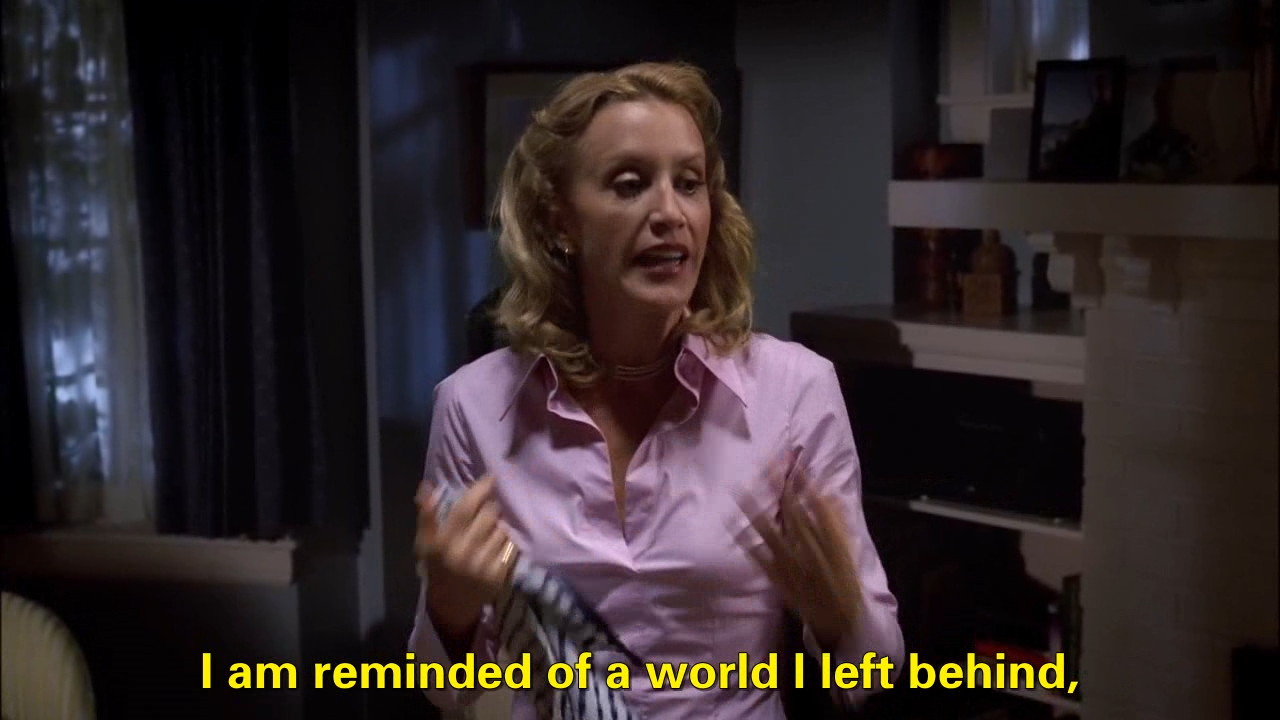

该剪辑出自美剧《欲望都市》第六季第八集,捕捉了凯莉、萨曼莎、夏洛特和米兰达四人的一场经典群聊——那种亲密无间、毫无保留的对话正是这部剧的标志性风格。她们聚在一起,可能是在餐厅或某个人的公寓里,用标志性的机智、冷嘲和毫不掩饰的诚实剖析她们感情生活中的荒诞时刻。
对话以快速节奏推进。每一句台词都是笑点、铺垫或转折。节奏几乎是音乐性的:抱怨、玩笑、反讽、升级,然后硬切到新话题。这种结构让该剧能够探索严肃主题而不变得沉重。女人们不断地用幽默 消解 彼此的戏剧,而正是这种幽默让这部剧既真实又令人向往。她们是破碎的,但她们一起破碎。
Miranda: She bought me a fucking candle. 她给我买了尼玛个蜡烛。
——>> And it was an aromatherapy [əˌrəʊmə’θerəpi] candle, for serenity and calm. 还是个香薰蜡烛,为了宁静和平和。
——>> I was much more serene and calm before the fucking candle. 没这破蜡烛之前我倒宁静平和得多。
米兰达的开场抱怨——“她尼玛给我买了个蜡烛”——是潜台词的教科书级示范。表面上看,一支蜡烛是件无害甚至贴心的礼物。但米兰达将其解读为一份 宣战书。这支蜡烛是为了“宁静与平和”,暗示米兰达两者都缺乏。潜台词是:“你是个烂摊子。给你点东西治治你。”
Samantha: Women with candles replace women with cats as the new sad thing. 玩蜡烛的女人取代了养猫的女人,成为新的悲催物种。
萨曼莎的回应——“玩蜡烛的女人取代了养猫的女人,成为新的悲催物种”——是典型的萨曼莎式风格:她用一句冷嘲式的俏皮话将整件事重新定义为一个文化刻板印象。好笑,但也暴露了她的哲学:永远不要让任何人觉得你可悲。
Miranda: Oh! And get this: He thinks I should meet her. 你听听这个:他觉得我应该见见她。
——>> I sense that he wants us to become friends. 我感觉他想让我们俩成为朋友。
Carrie: No…no…Forget it. You do not need to become friends with the new girlfriend. 不…不…算了吧。你没必要和新女友做朋友。
——>> It’s unnatural, uncomfortable, insincere… 这既不自然,又不舒服,还不真诚……
——>> and rife with ulterior motive. 而且充满了别有用心。
Miranda: Has this happened to you? 这种事发生在你身上过吗?
Carrie: No, I’m just being supportive. 没有,我只是表示支持。
Charrotte: But there is a baby involved. 但这里牵扯到一个孩子。
Miranda: Exactly. 就是啊。
——>> She’s using Brady to get to me, and I am not falling for it. 她是想用布拉迪来接近我,我才不上当。
米兰达真正的焦虑要深得多。她不只是被蜡烛惹恼了——她感到这位新女友在布拉迪生活中的存在威胁到了她。这句台词——“她是想用布拉迪来接近我,我才不上当”——揭示了米兰达害怕被取代,不仅是作为史蒂夫的前任,更是作为母亲形象。蜡烛是一种症状;真正的伤口是害怕在儿子生活中失去自己的位置。
Carrie: Oh, Speaking of falling, I tried the trapeze [trə’piːz] yesterday for that piece that I’m writing. 哦,说到“下落”,我昨天为了我正在写的那篇文章去试了高空秋千。
从米兰达的“上当”到凯莉的“秋千”,这一过渡是一次巧妙的对话编排。凯莉捕捉到“下落”这个词,并用它转向自己的故事——典型的作家式操作。秋千是凯莉在这一季这个时间点情感状态的强大隐喻。她单身,年近四十,仍在寻找一段确定的爱情。秋千要求你 放手并信任有人会接住你。凯莉做不到——即使那个接住的人“长得挺帅的”。她松了手,伸出手,仍然没能完成那个接住。这是凯莉的模式:她愿意跳,但她不能信任那个接住。她害怕如果她完全放手,没有人会在那里。秋千不只是身体上的挑战——它是情感上的。而她失败了。
Charlotte: I could never! I have the most terrible fear of heights. 我可绝对不行!我可怕高了。
Carrie: I do not. You’ve seen my shoes. 我不怕。你看我穿的鞋就知道了。
Miranda: So did you fly through the air with the greatest of ease? 那你是不是轻松优雅地飞越了空中?
夏洛特 说,“我可绝对不行!我可怕高了。” 这就是夏洛特:谨慎、传统、厌恶风险。她绝不会自愿把自己置于脆弱的位置。
凯莉用时尚选择来定义自己。她的鞋跟很高——因此,她不怕高。这是一种回避,把严肃的坦白变成玩笑的方式。
米兰达 问,“那你是不是轻松优雅地飞越了空中?” ——这是对著名秋千歌曲的文学引用,但米兰达的语气略带嘲讽。她是律师——她处理的是证据,而不是隐喻。她想要字面上的答案。
Carrie: At first, but then I couldn’t do a catch. 一开始还行,但后来我接不住对方的双手。
——>> I had to let go and reach for the guy, who was very cute, and I still couldn’t do it. 我不得不松开手去够那个教练,他长得挺帅的,但我还是做不到。
Samantha: You are insane for getting into a harness without even a hope of an orgasm. 你简直是疯了,套上安全绳索去玩一个连高潮都没指望的事。
这场戏建立在一个巧妙的语言结构之上。米兰达谈“不上当”——意思是不上当于新女友的操控。凯莉听到“下落”这个词,便用引出了她的秋千故事。而萨曼莎,永远的愤世嫉俗者,给出了致命一击:“你简直是疯了,套上安全绳索去玩一个连高潮都没指望的事。”
萨曼莎 以没有性回报为由否定了整件事。这就是萨曼莎:她拒绝在不能提供即时、具体满足的事物上投入。这句台词是完美的萨曼莎式语录:它将一场深刻的情感挣扎简化为一种交易性的、物理性的计算。为什么要在连性快感都得不到的事上冒生命危险?很粗俗,但也是对凯莉浪漫理想主义的挑战。萨曼莎在说:“如果你要冒险,至少确保回报值得。”
不言自明的共识:我们都在坠落
尽管回应各不相同,但四个女人分享着一个不言自明的共识:她们都处于某种自由落体之中。米兰达正从母亲身份的恩宠中跌落。凯莉正从浪漫希望的秋千上跌落。夏洛特正从精心构建的理想中跌落。萨曼莎正在坠落——尽管她永远不会承认——坠入拒绝需要任何人所带来的孤独之中。
这场戏之所以奏效,是因为它没有过度强调这一点。它只是展示她们在交谈、大笑、转移话题。她们生活的重量在那里,但她们轻松地承载着它——直到话题转换,她们转向下一个荒诞。
这场戏是《欲望都市》模式的微型杰作:四个女人,一张桌子,一场从琐碎到深刻再回来的对话。蜡烛、秋千和高潮笑话不只是喜剧节拍——它们是通往角色焦虑、欲望和防御的窗口。米兰达害怕被取代。凯莉害怕没人接住。萨曼莎害怕在得不到回报的事上投入。夏洛特害怕坠落本身。而她们一起,用她们唯一知道的方式应对恐惧:交谈、大笑,并陪伴在彼此身边。这场戏的天才之处在于它没有解决任何问题。米兰达仍然要面对新女友。凯莉仍然害怕那个“接住”。但在这一刻,她们在一起——而这已经足够了。
这场戏之所以是典型的《欲望都市》式风格,在于它能在琐碎与深刻之间轻松切换。一支蜡烛成了心理战的象征。一堂高空秋千课成了对恐惧与脆弱的沉思。而萨曼莎,一如既往地充当着除颤器——一记纯粹、毫无歉意的诚实冲击。
The Divergence of Worldviews: Each woman reacts to Carrie’s trapeze story according to her own personality:
Charlotte says, “I could never! I have the most terrible fear of heights.” This is Charlotte: cautious, traditional, risk-averse. She would never voluntarily place herself in a vulnerable position.
Carrie says, “I do not. You’ve seen my shoes.” This is pure Carrie: she defines herself by her fashion choices. Her shoes are high—therefore, she is not afraid of heights. It’s a deflection, a way of turning a serious admission into a joke.
Miranda asks, “So did you fly through the air with the greatest of ease?” This is a literary reference to the famous trapeze song, but Miranda’s tone is slightly mocking. She’s a lawyer—she deals in evidence, not metaphors. She wants the literal answer.
Samantha dismisses the entire endeavor as pointless without a sexual payoff. This is Samantha: she refuses to invest in anything that doesn’t offer immediate, tangible gratification.
The Unspoken Consensus: We’re All Falling
Despite their different responses, the four women share an unspoken understanding: they are all in some kind of free fall. Miranda is falling from grace as a mother. Carrie is falling from the trapeze of romantic hope. Charlotte is falling from her carefully constructed ideals. Samantha is falling—though she would never admit it—into the loneliness that comes with refusing to need anyone.
The scene works because it doesn’t belabor this point. It simply shows them talking, laughing, and deflecting. The weight of their lives is there, but they carry it lightly—until the conversation shifts, and they move on to the next absurdity.
This scene is a miniature masterpiece of the Sex and the City formula: four women, a table, and a conversation that moves from the trivial to the profound and back again. The candle, the trapeze, and the orgasm joke are not just comic beats—they are windows into the characters’ anxieties, desires, and defenses.
Miranda fears being replaced. Carrie fears not being caught. Samantha fears investing in anything that doesn’t deliver. Charlotte fears the fall itself. And together, they navigate their fears the only way they know how: by talking, laughing, and staying present for one another.
The genius of the scene is that it doesn’t resolve anything. Miranda will still have to deal with the girlfriend. Carrie will still be afraid of the catch. But for this moment, they are together—and that is enough.
What makes this scene quintessential Sex and the City is its ability to move effortlessly between the trivial and the profound. A candle becomes a symbol of psychological warfare. A trapeze class becomes a meditation on fear and vulnerability. And Samantha, as always, provides the defibrillator [diː’fɪbrɪleɪtə(r)] —a shock of pure, unapologetic [ˌʌnəˌpɒlə’dʒetɪk] honesty. (Unapologetic honesty——毫不歉意的诚实/无愧的坦诚:指一种不加修饰、不因可能冒犯他人而道歉或退缩的直率表达。).