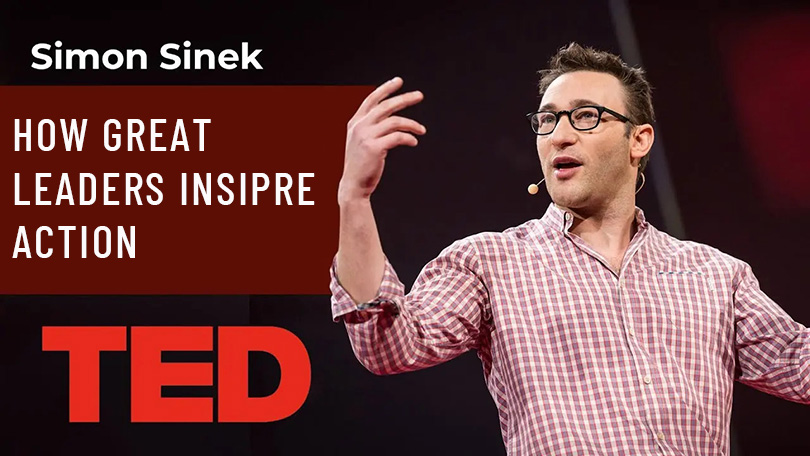
西蒙·斯涅克TED演讲:好的领导如何激发行动力

西蒙·斯涅克于2009年发表的这场TED演讲How great leaders inspire action(好的领导是如何激发行动力的),是TED历史上最具影响力和最受欢迎的演讲之一。它提出了一个简单却极具说服力的模型,解释了为什么某些领导者和组织能够取得非凡的成就,拥有忠实的追随者,而其他许多同样优秀的却做不到。这场演讲不仅改变了无数人对领导力、营销和创新的看法,更成为了商业和管理领域的经典理论。
一、 核心思想:黄金圈法则(The Golden Circle)
斯涅克的核心论点是:世界上所有伟大的、能够激励人心的领导者和组织,无论其规模大小、所在行业,其思考、行动和沟通的方式都完全一样,并且与普通人的方式截然相反。这种方式就是“黄金圈法则”。
黄金圈由三个同心圆组成:
-
WHAT(是什么): 最外层的圆。这指的是每一个组织和个人都知道自己是“做什么的”。这包括他们提供的产品、服务、提供的功能等。例如,“我们制造高质量的电脑。”
-
HOW(怎么做): 中间的圆。这指的是一个组织或个人“如何”完成自己的工作。这通常是使其产品或服务与众不同或更好的独特价值、差异化流程。例如,“我们通过独特的设计和用户友好的界面来制造电脑。”
-
WHY(为什么): 最核心的圆。这指的是其存在的核心目的、信念和使命。“你为什么要做你所做的事情?你的公司为什么存在?你每天早上为什么要起床?” 例如,“我们所做的一切,都是为了挑战现状,以不同的方式思考。”(这实际上是苹果公司的“为什么”)
二、 关键洞见:与大多数人的根本差异
斯涅克指出,绝大多数组织和个人的沟通和思考模式是从外到内的,即 从“什么”到“如何”再到“为什么”。
-
沟通方式: “我们制造最好的电脑(WHAT)。它们设计精美,使用简单,用户体验很好(HOW)。你想买一台吗?”
-
这种沟通方式清晰、理性,但无法激发情感和行为。
而激励型的领导者和组织则是由内而外的,即 从“为什么”开始。
-
沟通方式: “我们所做的每一件事,都是为了挑战现状,以不同的方式思考(WHY)。我们挑战现状的方式是让我们的产品设计精美,使用简单(HOW)。我们只是恰好在制造伟大的电脑(WHAT)。你想买一台吗?”
-
这种沟通方式直接与大脑中负责决策、情感和忠诚度的部分(边缘系统)对话,首先建立起信念上的共鸣,然后再用理性因素来支撑。
以下是西蒙·斯涅克TED演讲:《好的领导如何激发行动力》中英对照文本:
How do you explain when things don’t go as we assume? | 当事情不按我们假设的方向发展时该如何解释?
Or better, how do you explain | 或者更准确地说
when others are able to achieve things that seem to defy all of the assumptions? | 当别人实现那些看似违背所有假设的成就时该如何解释?
For example: | 例如:
Why is Apple so innovative? | 为何苹果公司如此具有创新力?
Year after year, after year, | 年复一年
they’re more innovative than all their competition. | 他们的创新力始终远超竞争对手
And yet, they’re just a computer company. | 然而他们只是一家电脑公司
They’re just like everyone else. | 他们与其他公司并无二致
They have the same access to the same talent, | 他们接触同样的人才
the same agencies, | 同样的代理商
the same consultants, the same media. | 同样的顾问,同样的媒体
Then why is it that they seem to have something different? | 那为何他们却显得如此与众不同?
Why is it that Martin Luther King led the Civil Rights Movement? | 为何是马丁·路德·金领导了民权运动?
He wasn’t the only man who suffered in pre-civil rights America, | 在民权运动前的美国,他并非唯一遭受苦难的人
and he certainly wasn’t the only great orator of the day. | 他也绝非当时唯一的伟大演说家
Why him? | 为什么是他?
And why is it that the Wright brothers | 为何莱特兄弟
were able to figure out controlled, powered man flight | 能成功实现可控的动力飞行
when there were certainly other teams | 当时显然存在其他团队
who were better qualified, better funded — | 拥有更优越的资质和更充足的资金
and they didn’t achieve powered man flight, | 却未能实现动力飞行
and the Wright brothers beat them to it. | 最终被莱特兄弟捷足先登
There’s something else at play here. | 这其中另有玄机
About three and a half years ago, | 大约三年半前
I made a discovery. | 我有了一个发现
And this discovery profoundly changed my view | 这个发现深刻改变了我的认知
on how I thought the world worked, | 对世界运作方式的理解
and it even profoundly changed the way in which I operate in it. | 甚至深刻改变了我自身的处世方式
As it turns out, | 事实证明
there’s a pattern. | 其中有一个模式
As it turns out, all the great and inspiring leaders and organizations in the world, | 事实证明,世界上所有伟大且鼓舞人心的领导者与组织
whether it’s Apple or Martin Luther King or the Wright brothers, | 无论是苹果公司、马丁·路德·金还是莱特兄弟
they all think, act and communicate the exact same way. | 他们的思维、行动与沟通方式完全一致
And it’s the complete opposite to everyone else. | 而这与其他人完全相反
All I did was codify it. | 我所做的只是将其总结为模式
And it’s probably the world’s simplest idea. | 它或许是世界上最简单的一个理念
I call it the golden circle. | 我称之为“黄金圈”
Why? | 为什么?
How? | 如何?
What? | 什么?
This little idea explains why some organizations and some leaders | 这个小小的理念解释了为什么有些组织和领导者
are able to inspire where others aren’t. | 能够激励人心,而另一些却不能
Let me define the terms really quickly. | 我先快速定义下这些概念
Every single person, every single organization on the planet knows what they do, 100 percent. | 世上每个人、每个组织都知道自己在做“什么”,百分之百如此
Some know how they do it, | 有些人知道他们是如何做到的
whether you call it your differentiated value proposition | 不管你称之为差异化价值主张
or your proprietary process or your USP. | 或是独有流程,或独特卖点
But very, very few people or organizations know why they do what they do. | 但只有极少数人或组织知道他们做事的“为什么”
And by “why” I don’t mean “to make a profit.” | 我说的“为什么”并不是“为了盈利”
That’s a result. It’s always a result. | 那只是结果,始终只是结果
By “why,” I mean: What’s your purpose? | 我指的“为什么”,是你的使命是什么
What’s your cause? What’s your belief? | 你的事业是什么?你的信念是什么?
Why does your organization exist? | 为什么你的组织存在?
Why do you get out of bed in the morning? | 你每天早晨起床的动力是什么?
And why should anyone care? | 为什么别人要在乎?
Well, as a result, | 因此
the way we think, the way we act, the way we communicate is from the outside in. | 我们的思维、行动与沟通方式通常是由外而内
It’s obvious. We go from the clearest thing to the fuzziest thing. | 这是显而易见的,从最清晰的“什么”到最模糊的“为什么”
But the inspired leaders and the inspired organizations — | 但那些激励人心的领导者与组织
regardless of their size, regardless of their industry — | 无论规模大小,无论所属行业
all think, act and communicate from the inside out. | 都是由内而外地思考、行动与沟通
Let me give you an example. | 我来举个例子
I use Apple because they’re easy to understand and everybody gets it. | 我用苹果公司做例子,因为大家都熟悉
If Apple were like everyone else, a marketing message from them might sound like this: | 如果苹果公司和其他公司一样,他们的营销信息可能是这样的:
“We make great computers. | “我们制造优质电脑
They’re beautifully designed, simple to use and user friendly. | 它们设计精美、操作简单、用户友好
Wanna buy one?” | 要不要买一台?”
Meh. | 一般般吧
That’s how most of us communicate. | 这就是大多数人的沟通方式
That’s how most marketing and sales is done, | 大多数的营销与销售也是这么做的
and that’s how most of us communicate interpersonally. | 大多数人在人际沟通中也是这样
We say what we do, we say how we’re different or how we’re better, | 我们说自己做什么、如何与众不同或更出色
and we expect some sort of behavior, a purchase, a vote, something like that. | 然后期待某种反应,比如购买、投票之类
“Here’s our new law firm. | “这是我们新的律师事务所
We have the best lawyers with the biggest clients, | 我们有最顶尖的律师和最重要的客户
we always perform for our clients. | 我们始终为客户做到最好
Do business with us.” | 跟我们合作吧”
“Here’s our new car. | “这是我们的新车
It gets great gas mileage, | 它油耗很低
it has leather seats. | 配有真皮座椅
Buy our car.” | 买我们的车吧”
But this is not how inspired leaders and organizations communicate. | 但这并不是鼓舞人心的领导者和组织的沟通方式
Here’s how Apple actually communicates. | 这是苹果公司真正的表达方式
“Everything we do, we believe in challenging the status quo. | “我们所做的一切,源于我们坚信要挑战常规
We believe in thinking differently. | 我们坚信与众不同的思维
The way we challenge the status quo is by making our products beautifully designed, | 我们挑战常规的方式是制造设计精美的产品
simple to use and user friendly. | 操作简洁、用户友好
We just happen to make great computers. | 只是碰巧,我们造的是优质电脑
Wanna buy one?” | 要不要买一台?”
Totally different right? | 完全不同,对吧?
You’re ready to buy a computer from me. | 你已经迫不及待想从我这里买电脑了
What it proves to us is that people don’t buy what you do; | 这证明了人们不会因为你做什么而购买
people buy why you do it. | 他们是因为你为什么而购买
People don’t buy what you do; they buy why you do it. | 人们不会因为你做什么而买单,而是因为你为什么做
This explains why every single person in this room | 这就解释了为什么在座的每一个人
is perfectly comfortable buying a computer from Apple. | 都很乐意购买苹果的电脑
But we’re also perfectly comfortable buying an MP3 player from Apple, | 也同样乐意购买苹果的 MP3 播放器
or a phone from Apple, or a DVR from Apple. | 或苹果的手机,甚至是苹果的数码录像机
But as I said before, Apple’s just a computer company. | 但我之前说过,苹果只是一家电脑公司
There’s nothing that distinguishes them structurally from any of their competitors. | 在组织架构上,他们与竞争对手没有任何区别
Their competitors are all equally qualified to make all of these products. | 他们的竞争对手同样有能力制造这些产品
In fact, they tried. | 实际上他们也尝试过
A few years ago, Gateway came out with flat-screen TVs. | 几年前,Gateway 推出了平板电视
They’re eminently qualified to make flat-screen TVs. | 他们完全有资格制造平板电视
They’ve been making flat-screen monitors for years. | 他们多年来一直在生产平板显示器
Nobody bought one. | 但没人买账
And Dell, Dell came out with MP3 players and PDAs. | 戴尔推出过 MP3 播放器和掌上电脑
And they make great quality products, | 他们制造的产品质量上乘
and they can make perfectly well-designed products — | 完全可以制造设计精良的产品
and nobody bought one. | 但依然没人买单
In fact, talking about it now, we can’t even imagine buying an MP3 player from Dell. | 实际上,现在提起这事,我们甚至无法想象会去买戴尔的 MP3 播放器
Why would you buy an MP3 player from a computer company? | 为什么要从一家电脑公司买 MP3 播放器呢?
But we do it every day. | 但我们每天都在这么做
People don’t buy what you do; they buy why you do it. | 人们不是买你做什么,而是买你为什么做
The goal is not to do business with everybody who needs what you have. | 目标不是和所有需要你产品的人做生意
The goal is to do business with people who believe what you believe. | 目标是和那些相信你信念的人做生意
Here’s the best part: | 关键在于
None of what I’m telling you is my opinion. | 我所说的并非只是我的观点
It’s all grounded in the tenets of biology. | 这一切都有生物学的依据
Not psychology, biology. | 不是心理学,而是生物学
If you look at a cross-section of the human brain, | 如果你观察人类大脑的横截面
looking from the top down, | 从上往下看
what you see is the human brain is actually broken into three major components | 你会发现人脑实际上分为三大部分
that correlate perfectly with the golden circle. | 它们与“黄金圈”完美对应
Our newest brain, our Homo sapien brain, our neocortex, | 我们最新进化出的人脑部分——新皮质
corresponds with the “what” level. | 对应于“什么”层面
The neocortex is responsible for all of our rational and analytical thought | 新皮质掌管理性与分析性思维
and language. | 以及语言
The middle two sections make up our limbic brains, | 中间的两部分构成我们的边缘脑
and our limbic brains are responsible for all of our feelings, | 而边缘脑掌管我们的所有情感
like trust and loyalty. | 比如信任与忠诚
It’s also responsible for all human behavior, | 它还掌管人类的一切行为
all decision-making, | 所有决策
and it has no capacity for language. | 却没有语言功能
In other words, | 换句话说
when we communicate from the outside in, | 当我们由外而内地沟通时
yes, people can understand vast amounts of complicated information | 人们确实能理解大量复杂信息
like features and benefits and facts and figures. | 比如功能、优势、事实与数据
It just doesn’t drive behavior. | 但这并不能驱动行为
When we communicate from the inside out, | 当我们由内而外地沟通时
we’re talking directly to the part of the brain that controls behavior, | 我们实际上是在与控制行为的大脑部分对话
and then we allow people to rationalize it | 然后人们会用新皮质来合理化
with the tangible things we say and do. | 我们所说所做的具体内容
This is where gut decisions come from. | 这就是“直觉决策”的来源
You know, sometimes you can give somebody all the facts and your figures, | 你知道,有时即便你提供给别人所有事实与数据
and they say, “I know what all the facts and details say, | 对方还是会说:“我知道所有事实与细节都指向一个方向
but it just doesn’t feel right.” | 但我就是觉得不对劲。”
Why would we use that verb, it doesn’t “feel” right? | 为什么我们会用“感觉”这个词?
Because the part of the brain that controls decision-making | 因为掌管决策的大脑部分
doesn’t control language. | 并不掌管语言
And the best we can muster up is, | 我们所能说出的最好表达就是:
“I don’t know. It just doesn’t feel right.” | “我不知道,就是感觉不对。”
Or sometimes you say you’re leading with your heart | 有时我们会说“跟随内心”
or you’re leading with your soul. | 或“跟随灵魂”
Well, I hate to break it to you, | 我很遗憾要告诉你
those aren’t other body parts controlling your behavior. | 其实并没有什么其他身体器官在控制你的行为
It’s all happening here in your limbic brain, | 一切都发生在你的边缘脑中
the part of the brain that controls decision-making | 掌管决策的大脑部分
and not language. | 却没有语言功能
But if you don’t know why you do what you do, | 但如果你不知道自己做事的“为什么”
and people respond to why you do what you do, | 而人们却是对“为什么”作出回应
then how will you ever get people to vote for you, | 那你又如何让别人投票给你
or buy something from you, | 或者买你的东西
or, more importantly, be loyal | 更重要的是,如何让他们保持忠诚
and want to be a part of what it is that you do. | 并愿意参与到你所做的事情中呢?
Again, the goal is not just to sell to people who need what you have; | 再次强调,目标不是仅仅把产品卖给需要它的人
the goal is to sell to people who believe what you believe. | 而是卖给那些认同你信念的人
The goal is not just to hire people who need a job; | 目标也不仅仅是雇佣那些需要工作的人
it’s to hire people who believe what you believe. | 而是雇佣那些认同你信念的人
I always say that, you know, | 我常说,你知道
if you hire people just because they can do a job, | 如果你雇人只是因为他们能胜任工作
they’ll work for your money. | 他们只会为了薪水而干
But if you hire people who believe what you believe, | 但如果你雇佣那些认同你信念的人
they’ll work for you with blood and sweat and tears. | 他们会为你拼尽全力,倾注热血与汗水
Nowhere else is there a better example of this than with the Wright brothers. | 莱特兄弟的故事就是最好的例子
Most people don’t know about Samuel Pierpont Langley. | 大多数人并不了解塞缪尔·皮尔庞特·兰利
And back in the early 20th century, | 上世纪初
the pursuit of powered man flight was like the dot-com of the day. | 动力飞行就像当时的“互联网热潮”
Everybody was trying it. | 人人都在尝试
And Samuel Pierpont Langley had what we assume to be the recipe for success. | 而兰利似乎拥有我们认为的“成功公式”
I mean, even now, when you ask people, “Why did your product or why did your company fail?” | 即便现在,当你问人们“为什么你的产品或公司失败?”
and people always give you the same permutation of the same three things: | 人们总会给出三种常见理由的不同组合:
undercapitalized, | 资金不足
the wrong people, | 用错人
bad market conditions. | 市场环境不佳
It’s always the same three things, | 总是这三样
so let’s explore that. | 我们来看看
Samuel Pierpont Langley was given $50,000 by the War Department | 兰利从战争部拿到五万美元经费
to figure out this flying machine. | 去研发飞行器
Money was no problem. | 资金不是问题
He held a seat at Harvard and worked at the Smithsonian | 他在哈佛任职,还在史密森学会工作
and was extremely well-connected; | 人脉极广
he knew all the big minds of the day. | 认识当时的顶尖学者
He hired the best minds money could find | 他雇佣了最优秀的科研人才
and the market conditions were fantastic. | 市场环境也极为有利
The New York Times followed him around everywhere, | 《纽约时报》全程跟踪报道
and everyone was rooting for Langley. | 人人都在为兰利加油
But how come we’ve never heard of Samuel Pierpont Langley? | 可为什么我们从未听说过他呢?
A few hundred miles away in Dayton, Ohio, | 在几百英里外的俄亥俄州代顿
Orville and Wilbur Wright, | 奥维尔和威尔伯·莱特
they had none of what we consider to be the recipe for success. | 并没有我们所谓的“成功公式”
They had no money; | 他们没有钱
they paid for their dream with the proceeds from their bicycle shop. | 只靠修车铺的收入来支撑梦想
Not a single person on the Wright brothers’ team | 莱特兄弟团队里没有一个人
had a college education, | 受过大学教育
not even Orville or Wilbur. | 连他们自己也没有
And The New York Times followed them around nowhere. | 《纽约时报》压根没报道过他们
The difference was, | 区别在于
Orville and Wilbur were driven by a cause, by a purpose, by a belief. | 莱特兄弟是被一种使命、一个目标、一种信念驱动的
They believed that if they could figure out this flying machine, | 他们相信如果能成功研发飞行器
it’ll change the course of the world. | 就能改变世界的进程
Samuel Pierpont Langley was different. | 而兰利则不同
He wanted to be rich, | 他想要发财
and he wanted to be famous. | 想要成名
He was in pursuit of the result, of the riches. | 他追求的是结果——财富与名声
And lo and behold, look what happened. | 结果如何呢?
The people who believed in the Wright brothers’ dream | 那些相信莱特兄弟梦想的人
worked with them with blood and sweat and tears. | 和他们一起拼尽血汗与泪水
The others just worked for the paycheck. | 而兰利团队的人只是为了工资
And they tell stories of how every time the Wright brothers went out, | 据说莱特兄弟每次试飞
they would have to take five sets of parts with them, | 都要带上五套零件
because that’s how many times they would crash before supper. | 因为在晚餐前他们至少会摔坏五次
And, eventually, on December 17th, 1903, | 最终在 1903 年 12 月 17 日
the Wright brothers took flight, | 莱特兄弟飞了起来
and no one was there to even see it. | 现场甚至没有人见证
We found out about it a few days later. | 几天后才有人知道
And further proof that Langley was motivated by the wrong thing: | 进一步证明兰利的动机有问题:
the day the Wright brothers took flight, he quit. | 在莱特兄弟飞起来那天,他放弃了
He could have said, “That’s an amazing discovery, guys, | 他本可以说:“伙计们,你们的发现太了不起了
and I will improve upon your technology.” | 我来帮你们改进技术。”
But he didn’t. He wasn’t first, | 但他没有。因为他不是第一个
he didn’t get rich, | 没发财
he didn’t get famous, | 没出名
so he quit. | 所以他就此放弃
People don’t buy what you do; they buy why you do it. | 人们不是买你做什么,而是买你为什么做
And if you talk about what you believe, | 如果你谈论你的信念
you will attract those who believe what you believe. | 你就会吸引到那些认同你信念的人
But why is it important to attract those who believe what you believe? | 可为什么吸引这些人很重要?
Something called the law of diffusion of innovation. | 这与“创新扩散法则”有关
And if you don’t know the law, you definitely know the terminology. | 即便你不知道这条法则,你一定听过相关术语
The first 2.5 percent of our population are our innovators. | 人口中前 2.5% 是创新者
The next 13.5 percent of our population are our early adopters. | 接下来 13.5% 是早期采纳者
The next 34 percent are your early majority, | 再往下 34% 是早期大众
your late majority and your laggards. | 然后是后期大众与落后者
The only reason these people buy touch-tone phones | 这些落后者之所以买按键电话
is because you can’t buy rotary phones anymore. | 只是因为旋转拨号电话已买不到了
We all sit at various places at various times on this scale, | 在这个曲线上,我们每个人在不同时间处于不同位置
but what the law of diffusion of innovation tells us | 但“创新扩散法则”告诉我们
is that if you want mass-market success | 如果你想要大众市场的成功
or mass-market acceptance of an idea, | 或者让某个理念被大众接受
you cannot have it until you achieve this tipping point | 必须先达到一个临界点
between 15 and 18 percent market penetration, | 大约 15% 到 18% 的市场渗透率
and then the system tips. | 系统才会突然转变
I love asking businesses, “What’s your conversion on new business?” | 我喜欢问企业:”新业务转化率多少?”
They love to tell you, “It’s about 10 percent,” proudly. | 他们总自豪地说:”约10%”
Well, you can trip over 10% of the customers. | 但10%的客户随处可见。
We all have about 10% who just “get it.” | 我们都有10%的客户“天然认同”。
That’s how we describe them, right? | 我们都这样形容他们,对吧?
That’s like that gut feeling, “Oh, they just get it.” | 就像直觉:“他们就是懂。”
The problem is: How do you find the ones that get it | 问题是:如何在交易前就识别
before doing business versus the ones who don’t get it? | 哪些是“懂的人”,哪些不是?
So it’s this here, this little gap that you have to close, | 所以需要填补这个小鸿沟,
as Jeffrey Moore calls it, “Crossing the Chasm” — | 就是杰弗里·摩尔所说的“跨越鸿沟”——
because, you see, the early majority will not try something | 因为早期大众不会尝试新事物
until someone else has tried it first. | 除非有人先尝试。
And these guys, the innovators and the early adopters, | 而创新者和早期采用者
they’re comfortable making those gut decisions. | 乐于凭直觉做决定。
They’re more comfortable making those intuitive decisions | 他们更习惯做直觉决策,
that are driven by what they believe about the world | 基于对世界的信念,
and not just what product is available. | 而非产品本身。
These are the people who stood in line for six hours | 这些人会为买初代 iPhone
to buy an iPhone when they first came out, | 排队六小时,
when you could have bought one off the shelf the next week. | 尽管下周就能随时买到。
These are the people who spent 40,000 dollars | 这些人会花 4 万美元
on flat-screen TVs when they first came out, | 买最早上市的平板电视,
even though the technology was substandard. | 即便当时技术并不成熟。
And, by the way, they didn’t do it because the technology was so great; | 顺便说,他们这样做并非因为技术多棒;
they did it for themselves. | 而是为了自己。
It’s because they wanted to be first. | 因为他们想成为首批用户。
People don’t buy what you do; they buy why you do it | 人们买的不是产品,而是你的信念。
and what you do simply proves what you believe. | 你的行动只是信念的证明。
In fact, people will do the things that prove what they believe. | 事实上,人们会通过行动证明自身信念。
The reason that person bought the iPhone in the first six hours, | 那些人在首发六小时内购买 iPhone,
stood in line for six hours, | 排队六小时,
was because of what they believed about the world, | 是因为他们对世界的认知,
and how they wanted everybody to see them: | 以及希望他人如何看待自己:
They were first. | 他们是首批用户。
People don’t buy what you do; they buy why you do it. | 人们买的不是产品,而是你的信念。
So let me give you a famous example, | 我举个著名案例,
a famous failure and a famous success of the law of diffusion of innovation. | 关于创新扩散定律的成败典范。
First, the famous failure. | 先是失败案例。
It’s a commercial example. | 商业案例。
As we said before, a second ago, the recipe for success | 如之前所说,成功的要素
is money and the right people and the right market conditions. | 是资金、人才和市场环境。
You should have success then. | 这样本该成功。
Look at TiVo. | 看看 TiVo(数字录像机)。
From the time TiVo came out about eight or nine years ago | 从八九年前问世至今
to this current day, | 直到现在,
they are the single highest-quality product on the market, | 它一直是市场上最优质的产品,
hands down, there is no dispute. | 无可争议。
They were extremely well-funded. | 资金极度充足。
Market conditions were fantastic. | 市场环境极好。
I mean, we use TiVo as verb. | 甚至“TiVo”成了动词。
I TiVo stuff on my piece-of-junk Time Warner DVR all the time. | 我总在时代华纳的破烂 DVR 上“TiVo”节目。
But TiVo’s a commercial failure. | 但 TiVo 商业上失败了。
They’ve never made money. | 从未盈利。
And when they went IPO, | 上市时,
their stock was at about 30 or 40 dollars | 股价 30-40 美元,
and then plummeted, and it’s never traded above 10. | 随后暴跌,再未超过 10 美元。
In fact, I don’t think it’s even traded above six, | 事实上我觉得甚至没超过 6 美元,
except for a couple of little spikes. | 除了几次小波动。
Because you see, when TiVo launched their product, | 因为 TiVo 推出产品时,
they told us all what they had. | 只宣传产品功能。
They said, “We have a product that pauses live TV, | 他们说:“我们的产品能暂停直播,
skips commercials, rewinds live TV and memorizes your viewing habits | 跳过广告、回放直播、记忆观看习惯,
without you even asking.” | 无需用户设置。”
And the cynical majority said, | 多疑的大众说:
“We don’t believe you. | “我们不信。
We don’t need it. We don’t like it. | 不需要,不喜欢。
You’re scaring us.” | 这让我们害怕。”
What if they had said, | 如果他们这样说呢:
“If you’re the kind of person who likes to have total control | “如果你是渴望完全掌控
over every aspect of your life, | 生活每个细节的人,
boy, do we have a product for you. | 那我们正为你量身打造产品。
It pauses live TV, skips commercials, | 它能暂停直播、跳过广告、
memorizes your viewing habits, etc., etc.” | 记忆观看习惯等等。”
People don’t buy what you do; they buy why you do it, | 人们买的不是产品,而是你的信念,
and what you do simply serves as the proof of what you believe. | 产品只是信念的证明。
Now let me give you a successful example of the law of diffusion of innovation. | 现在说创新扩散定律的成功案例。
In the summer of 1963, | 1963 年夏,
250,000 people showed up on the mall in Washington | 25 万人聚集华盛顿广场,
to hear Dr. King speak. | 聆听金博士演讲。
They sent out no invitations, | 没有发放请柬,
and there was no website to check the date. | 也没有网站公布日期。
How do you do that? | 怎么做到的?
Well, Dr. King wasn’t the only man in America | 金博士并非美国唯一
who was a great orator. | 的伟大演说家。
He wasn’t the only man in America who suffered | 也非民权运动前
in a pre-civil rights America. | 唯一遭受苦难的人。
In fact, some of his ideas were bad. | 事实上他有些观点并不正确。
But he had a gift. | 但他有天赋。
He didn’t go around telling people what needed to change in America. | 他没有四处宣扬美国需要改变什么,
He went around and told people what he believed. | 而是传播自己的信念。
“I believe, I believe, I believe,” he told people. | 他不断告诉人们:“我相信。”
And people who believed what he believed | 认同他信念的人
took his cause, and they made it their own, and they told people. | 接过他的事业,化为己有,继续传播。
And some of those people created structures | 有些人建立组织
to get the word out to even more people. | 将信息传递给更多人。
And lo and behold, 250,000 people showed up | 于是 25 万人
on the right day at the right time to hear him speak. | 在正确时间地点前来聆听演讲。
How many of them showed up for him? | 有多少人是为他而来?
Zero. | 零。
They showed up for themselves. | 他们是为自己而来。
It’s what they believed about America | 是他们对于美国的信念
that got them to travel in a bus for eight hours | 让他们坐八小时巴士,
to stand in the sun in Washington in the middle of August. | 八月仲夏站在华盛顿烈日下。
It’s what they believed, and it wasn’t about black versus white: | 这是他们的信念,与黑白种族无关:
25% of the audience was white. | 听众中 25% 是白人。
Dr. King believed that there are two types of laws in this world: | 金博士相信世上有两种法律:
those that are made by a higher authority and those that are made by men. | 上天赋予的法与人为制定的法。
And not until all the laws that are made by men | 只有当所有人为法律
are consistent with the laws made by the higher authority | 都与上天法则一致时,
will we live in a just world. | 我们才能活在公正世界。
It just so happened that the Civil Rights Movement | 民权运动恰巧
was the perfect thing to help him bring his cause to life. | 是实现这个信念的最佳途径。
We followed, not for him, but for ourselves. | 我们追随不是为他,而是为自己。
By the way, he gave the “I have a dream” speech, | 顺便说,他的演讲是“我有一个梦想”,
not the “I have a plan” speech. | 不是“我有一个计划”。
(Laughter) | (笑声)
Listen to politicians now, with their comprehensive 12-point plans. | 听听现在政客们的 12 点全面计划。
They’re not inspiring anybody. | 无法激励任何人。
Because there are leaders and there are those who lead. | 因为领导者与引领者是不同的。
Leaders hold a position of power or authority, | 领导者拥有权力职位,
but those who lead inspire us. | 但引领者能激励我们。
Whether they’re individuals or organizations, | 无论个人或组织,
we follow those who lead, not because we have to, | 我们追随引领者不是被迫,
but because we want to. | 而是心甘情愿。
We follow those who lead, not for them, but for ourselves. | 我们追随引领者不是为他们,而是为自己。
And it’s those who start with “why” | 正是那些从“为什么”出发的人
that have the ability to inspire those around them | 才拥有激励他人的能力,
or find others who inspire them. | 或找到激励自己的人。
Thank you very much. | 非常感谢。
西蒙·斯涅克TED演讲《How great leaders inspire action》深度解析:从“为什么”开始的黄金圈法则
西蒙·斯涅克于2009年发表的这场TED演讲,是TED历史上最具影响力和最受欢迎的演讲之一。它提出了一个简单却极具说服力的模型,解释了为什么某些领导者和组织能够取得非凡的成就,拥有忠实的追随者,而其他许多同样优秀的却做不到。这场演讲不仅改变了无数人对领导力、营销和创新的看法,更成为了商业和管理领域的经典理论。
一、 核心思想:黄金圈法则(The Golden Circle)
斯涅克的核心论点是:世界上所有伟大的、能够激励人心的领导者和组织,无论其规模大小、所在行业,其思考、行动和沟通的方式都完全一样,并且与普通人的方式截然相反。这种方式就是“黄金圈法则”。
黄金圈由三个同心圆组成:
-
WHAT(是什么): 最外层的圆。这指的是每一个组织和个人都知道自己是“做什么的”。这包括他们提供的产品、服务、提供的功能等。例如,“我们制造高质量的电脑。”
-
HOW(怎么做): 中间的圆。这指的是一个组织或个人“如何”完成自己的工作。这通常是使其产品或服务与众不同或更好的独特价值、差异化流程。例如,“我们通过独特的设计和用户友好的界面来制造电脑。”
-
WHY(为什么): 最核心的圆。这指的是其存在的核心目的、信念和使命。“你为什么要做你所做的事情?你的公司为什么存在?你每天早上为什么要起床?” 例如,“我们所做的一切,都是为了挑战现状,以不同的方式思考。”(这实际上是苹果公司的“为什么”)
二、 关键洞见:与大多数人的根本差异
斯涅克指出,绝大多数组织和个人的沟通和思考模式是从外到内的,即 从“什么”到“如何”再到“为什么”。
-
沟通方式: “我们制造最好的电脑(WHAT)。它们设计精美,使用简单,用户体验很好(HOW)。你想买一台吗?”
-
这种沟通方式清晰、理性,但无法激发情感和行为。
而激励型的领导者和组织则是由内而外的,即 从“为什么”开始。
-
沟通方式: “我们所做的每一件事,都是为了挑战现状,以不同的方式思考(WHY)。我们挑战现状的方式是让我们的产品设计精美,使用简单(HOW)。我们只是恰好在制造伟大的电脑(WHAT)。你想买一台吗?”
-
这种沟通方式直接与大脑中负责决策、情感和忠诚度的部分(边缘系统)对话,首先建立起信念上的共鸣,然后再用理性因素来支撑。
三、 生物学依据:这不是观点,是生物学
斯涅克将黄金圈法则与人类大脑的结构联系起来,为其理论提供了坚实的基础:
-
“WHAT”对应大脑皮层(Neocortex):负责理性、分析、语言和逻辑思维。它帮助我们理解产品的事实、数据和功能。
-
“WHY”和“HOW”对应边缘系统(Limbic Brain):负责情感、信任、忠诚和所有人类行为决策。它驱动着我们的直觉和“感觉”,是所有决策的源头。
当我们由外向内沟通时(先说WHAT),人们可以理解大量的复杂信息,如功能、优势和事实,但这并不会驱动行为。当我们由内向外沟通时(先说WHY),我们直接与驱动决策的大脑部分对话,让人们首先在情感上认同你的信念和使命,然后再用理性信息来佐证这个感觉。这就是“gut feeling”(直觉)的来源。
四、 经典案例佐证
-
苹果公司(Apple Inc.): 斯涅克用苹果举例。如果苹果像其他公司一样沟通,他们的广告语可能是:“我们制造很棒的电脑(WHAT)。它们设计优雅,操作简单(HOW)。想买一台吗?” 但这并不是苹果的沟通方式。苹果的沟通始终始于他们的“WHY”:“我们做的每一件事,都是为了挑战现状,以不同的方式思考(WHY)。我们挑战现状的方式是让我们的产品设计精美,使用简单(HOW)。我们只是恰好在制造伟大的电脑(WHAT)。” 人们购买苹果产品,不是因为“它是什么”,而是因为他们认同苹果“挑战现状”的信念。他们购买的是品牌的价值观和自身身份的认同。
-
莱特兄弟(Wright Brothers) vs. 塞缪尔·兰利(Samuel Langley): 在发明飞机时,兰利拥有所有的成功要素:国防部的资金、哈佛和史密森尼学会的专家团队、充足的媒体曝光(WHAT和HOW)。而他追求的动机(他的WHY)是财富和名誉。相反,莱特兄弟什么都没有,但他们团队中的每一个人都坚信,如果他们能造出飞机,将会改变世界的发展进程(WHY)。最终,是拥有清晰“为什么”的莱特兄弟成功了。
-
马丁·路德·金(Martin Luther King Jr.): 他之所以能领导25万人参加著名的“我有一个梦想”的游行,不是因为他自己是唯一的伟大演说家,而是因为他传播的是一种“信念”(WHY)。人们是为了他们自己,为了他们内心相信的东西而去的。
五、 演讲的核心结论:领导力的真谛
-
目标不是把东西卖给“需要”它们的人,而是卖给“相信”你所相信的人。
-
目标不是雇佣那些只是为了了一份工作而来的人,而是雇佣那些相信你所相信的人。(斯涅克举了蒂芙尼公司(Tiffany & Co.)和沃尔玛(Walmart)卖同一把锤子的例子,即使价格相差数倍,人们仍然愿意在蒂芙尼购买,因为他们认同其代表的信念和体验)。
-
创新的扩散定律:所有市场的人群分布都遵循2.5%的创新者、13.5%的早期采用者、68%的早期大众和晚期大众、16%的落后者。要想获得大规模成功,你必须吸引那些与你拥有同样信念的“创新者”和“早期采用者”,由他们来带动早期大众。而吸引这些人的方法,就是从“为什么”开始。
六、 总结与影响
西蒙·斯涅克的《How great leaders inspire action》不仅仅是一场商业演讲,它更是一个关于人类行为、动机和领导力本质的深刻探索。它告诉我们:
真正强大的领导力,始于一个清晰的“为什么”——一个超越利润的、真诚的使命和信念。 成功的领导者不是那些拥有所有答案的人,而是那些有勇气坚持自己的信念,并吸引那些同样相信这一信念的人加入他们的人。