看美剧《纸牌屋》学英语:Cut through the noise

美剧《纸牌屋》S01E04这一幕,看似只是一次简单的编辑部管理冲突,实际上却揭示了整部剧关于权力、媒体与政治传播的核心命题之一。严谨而强势的编辑汤姆认为,Zoe一再违抗自己的指示,已经不只是工作方式的问题,而是对编辑权威的挑战。在他的逻辑里,如果记者可以一次又一次无视上级命令,那么整个编辑部的管理秩序就会被破坏。但Margaret看问题的角度完全不同,她并不是因为Zoe听话才保护她,恰恰相反——正因为Zoe不听话,她才认为Zoe有价值。

This scene from House of Cards S01E04 captures a deceptively simple editorial dispute that actually reveals one of the series’ central ideas about power, media, and political communication. Tom Hammerschmidt, the disciplined editor, wants to punish Zoe Barnes for repeatedly ignoring his instructions. From his perspective, this is a matter of authority: if a reporter refuses to follow editorial rules, the newsroom loses its chain of command. Margaret, however, sees the situation through a completely different lens. She does not defend Zoe because Zoe is obedient; she defends her precisely because Zoe is not.
Tom: I specifically told her no interviews. 我明确说过不许接受采访
——>> She disobeyed me…not just once. 她违抗我的命令, 不止一次
——>> At least eight times in the past month. 上个月就至少有8次
Margaret: She stays, Tom. 她不能走 汤姆
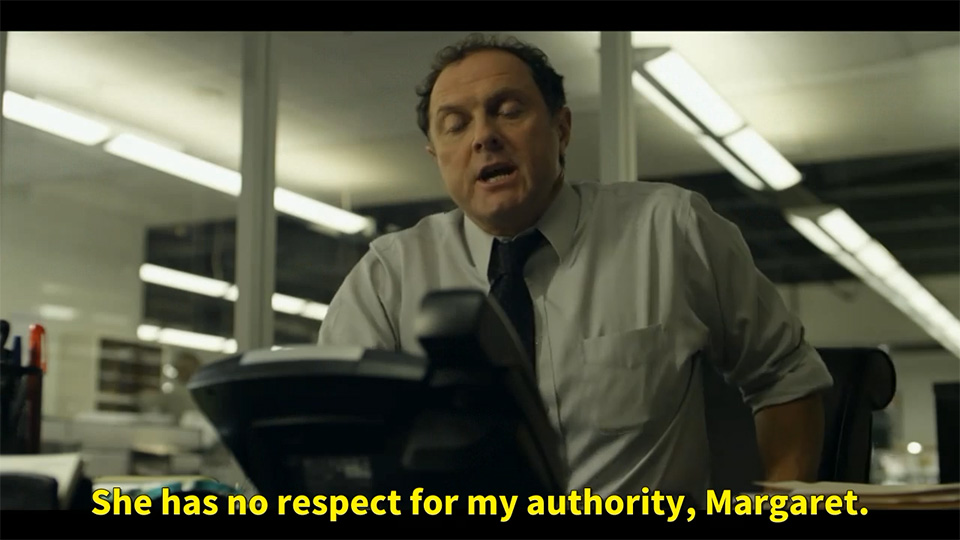
Tom: She has no respect for my authority, Margaret. 她不尊重我的权威 玛格丽特
Margaret: I said she stays. 我说了 她不能走
Tom: There are rules. 我们有规则
——>> There’s a way of doing things. 做事有准则
——>> If I have a reporter who won’t listen to…如果我的记者不听…
Margaret: Two freshmen girls are moving into their dorm room together. 两个大一女生一起搬进她们的宿舍
——>> One of them’s from Georgia, 一个来自佐治亚州
——>> one of them’s from Connecticut. 另一个来自康涅狄格州
——>> The girl from Connecticut’s helping her mother put up curtains. 康涅狄格的女孩在帮她妈妈挂窗帘
——>> The girl from Georgia turns to them and says, 佐治亚的姑娘对她们说
——>> “Hi. Where y’all from?” 你们好啊 你们打哪来
——>> The girl from Connecticut says, 康涅狄格州姑娘说
——>> “We’re from a place where we know 我们来自一个
——>> not to end a sentence with a preposition.” 句子不以介词结尾的地方
——>> The girl from Georgia says, “Oh, beg my pardon. 佐治亚的姑娘说 不好意思
——>> Where y’all from…你们打哪来
——>> cunt?” 婊子
——>> You heard that one before? 以前听过吗?
Margaret讲的那个佐治亚女孩和康涅狄格女孩的故事,是这场争论中最精彩的“类比论证”。两个女孩一起进入大学宿舍,一个来自Georgia,一个来自Connecticut。佐治亚女孩自然地问:“Where y’all from?”康涅狄格女孩却纠正她,说她们来自“a place where we know not to end a sentence with a preposition.”从语言规范来看,后者显然更加“正确”;但佐治亚女孩随后用一句粗俗甚至冒犯性的反击,让整个故事瞬间完成了反转。这个笑话真正有意思的地方并不在于谁的语法更准确,而在于:那个最正确的人,却未必是那个最有效的人。 Margaret借这个故事告诉Tom,语言的价值并不只存在于规则之中,更存在于它是否能够进入人的耳朵、激发人的反应,并最终留下印象。换句话说,Correctness can make you respectable; personality makes you memorable.——正确可以让你体面,个性才能让你被记住。
Tom: A version of it. With softer language. 听过其他版本 没那么粗鲁
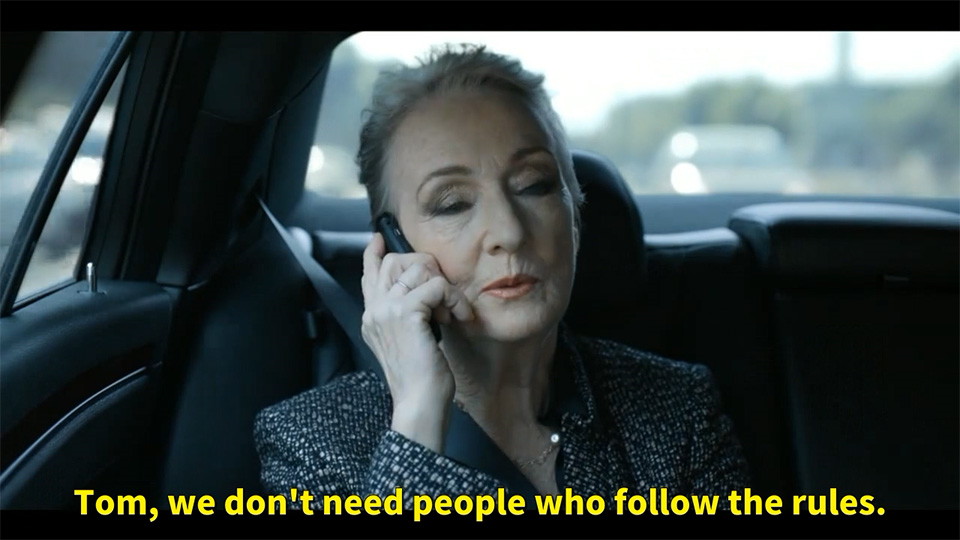
Margaret: Tom, we don’t need people who follow the rules. 汤姆 我们不需要循规蹈矩的人
—–>> We need people with personality. 我们需要有个性的人
—–>> We want Zoe’s face, her energy. 我们需要佐伊这张面孔 她的能量
—–>> We want to get her on TV as much as possible.要尽可能让她多上电视
—–>> It helps us cut through the noise. 这能让我们脱颖而出
—–>> See what I’m saying? 明白吗Margaret真正关心的问题不是“Zoe有没有遵守规则”,而是:我们经营这家媒体,到底是为了什么?如果目标只是培养一批听话、规范、语法正确的记者,那么Tom显然是对的。但如果目标是吸引注意力、影响公众认知、在嘈杂的信息环境中脱颖而出,那么Zoe那种不安分、带有个人锋芒的特质,反而成了竞争优势。所以Margaret说:“We don’t need people who follow the rules. We need people with personality.” “我们不需要循规蹈矩的人,我们需要有个性的人。”
Her argument is that political journalism does not need more people who merely follow rules—it needs personalities capable of attracting attention in an increasingly noisy media environment. And then Margaret delivers her little story about the two freshmen girls from Georgia and Connecticut. On the surface, it is a joke about grammar and regional speech. But rhetorically, it is much more than that: she turns an abstract argument about “rules” into a vivid demonstration of why personality beats correctness when communication is ultimately about being heard.
这其实是在区分两个概念:compliance(服从) 与 differentiation(差异化)。用商业语言来说,Tom维护的是组织的流程完整性(process integrity);Margaret维护的则是组织的竞争优势(competitive advantage)。而她最后一句:“It helps us cut through the noise.” (这能帮助我们穿透噪音、脱颖而出。)才是整个场景的点睛之笔–在现代媒体环境中,信息本身已经不稀缺,真正稀缺的是注意力。你说得对,并不意味着别人会听你;你说得精彩,才可能让别人停下来听你。
《纸牌屋》S01E04这一幕,看似只是一次编辑部内部的管理冲突,实际上却触及了媒体、商业与领导力中一个非常重要的问题:一个组织究竟应该更看重“服从规则”,还是更看重“创造价值”? Tom Hammerschmidt站在管理者的立场上,认为Zoe Barnes一再违抗指示,已经不是简单的工作方式问题,而是对权威和组织秩序的挑战。他强调:“There are rules. There’s a way of doing things.”——“我们有规则,做事有准则。”
这套逻辑当然没有错,因为任何组织都需要制度、流程和边界,否则个人主义最终会侵蚀组织的运行效率。但Margaret真正高明的地方在于,她没有直接跟Tom争论Zoe到底有没有错,而是悄悄改变了问题的维度:**我们到底为什么需要这些记者?**如果一家媒体只是需要一群严格服从命令、按照规范办事的人,那么Tom显然是对的;但如果媒体真正需要的是能够吸引注意力、制造话题、影响公众的人,那么Zoe的“麻烦”恰恰可能是她最值钱的地方。
That sounds perfectly reasonable. A newsroom cannot function if everyone simply does whatever they want. His frustration is therefore not irrational. Zoe has repeatedly violated instructions, and Tom sees her behavior as a threat to managerial discipline.
But Margaret changes the battlefield. She does not argue that Zoe is right to disobey. Instead, she asks a more consequential question:
What is the organization actually trying to achieve?
If the goal is merely to produce grammatically correct, obedient journalism, Tom wins. But if the goal is to capture attention, shape public perception, and cut through media noise, then Zoe’s very refusal to behave like everyone else becomes an asset.
因此,Margaret说出了整段对白最关键的一句话:“We don’t need people who follow the rules. We need people with personality.”——“我们不需要循规蹈矩的人,我们需要有个性的人。”这其实是在区分compliance(服从)与differentiation(差异化)。从商业管理的角度看,Tom维护的是组织的流程完整性,而Margaret维护的是组织的竞争优势。一个组织当然需要流程,但如果所有人都只是流程的执行者,那么组织最终会变得整齐,却也会变得平庸;尤其是在新闻、传媒、广告、娱乐、销售和个人品牌这些高度依赖注意力的行业里,“正确”远远不够,真正稀缺的是让别人停下来听你说话的能力。
Margaret最后说的“We want Zoe’s face, her energy. We want to get her on TV as much as possible. It helps us cut through the noise.”——“我们需要Zoe这张脸,需要她身上的能量,我们要尽可能让她多上电视,因为这能帮助我们穿透噪音、脱颖而出。”这其实已经不是在评价一个记者,而是在定义一种媒体竞争逻辑:在信息过剩的时代,内容本身并不稀缺,注意力才是。你说得对,并不意味着别人会听你;你说得精彩,才可能让别人停下来听你。
That is why Margaret says: “We don’t need people who follow the rules. We need people with personality.” This is a classic distinction between compliance and differentiation. In business terms, Tom is protecting the organization’s process integrity; Margaret is protecting its competitive advantage. And her final phrase is the key:
“It helps us cut through the noise.”
That is essentially a media-business version of signal versus noise. In a crowded information environment, being correct is not enough. You have to be memorable.
而这个类比还有一个更加漂亮的地方:Margaret讲故事的方式本身就在证明她的观点。她没有用一套严谨、标准、四平八稳的论证去说明“个性的重要性”,反而选择了一个带有地域口音、俚语、粗俗笑话甚至政治不正确意味的故事。正因为它不循规蹈矩,所以它令人印象深刻;正因为它有一点冒犯、有一点意外,所以它成功“cut through the noise”。这个例子本身,就成了她观点最有力的证据。这也是《纸牌屋》这类政治剧最值得学习的地方:真正高明的说服往往不是告诉对方“我的观点是正确的”,而是让对方在不知不觉中亲眼看到你的观点正在发生。
Her Georgia–Connecticut story is clever because it mirrors the very conflict they are having. The Connecticut girl represents formal correctness. She knows the grammatical rule: don’t end a sentence with a preposition.The Georgia girl represents natural communication. She asks: “Where y’all from?” The Connecticut girl corrects her—and the Georgia girl responds with an intentionally vulgar version of the same question. The joke works because the “correct” speaker loses the conversational battle. She may be grammatically superior, but she is not necessarily more effective. Margaret’s underlying message is: Correctness can make you respectable; personality makes you memorable. That is why the analogy is so effective. She doesn’t lecture Tom about abstract principles. She shows him the principle in miniature.
把这个场景放到今天的商业世界里,我们同样可以看到一个非常现实的管理困境。假设公司里有两个员工:A严格遵守所有流程,从不越界;B偶尔挑战惯例,却总能吸引客户、制造话题、提出让人记得住的想法。流程型管理者自然会偏爱A,因为A更容易管理、更容易预测;但真正以增长和竞争优势为导向的领导者会进一步追问:谁真正创造了更多价值?当然,这并不意味着“破坏规则”永远是正确的。在航空、医疗、会计、金融风控等高监管行业,规则本身就是价值的一部分;但在传媒、广告、娱乐、销售和品牌传播领域,如果一个组织把所有人的锋芒都磨平,它也可能同时磨掉了自己的竞争力。规则应该约束那些会破坏价值的行为,而不应该消灭那些能够创造价值的个性。
This scene has a surprisingly modern application to business, branding, and leadership. Imagine two employees: Employee A follows every procedure perfectly.
Employee B occasionally breaks convention but consistently attracts customers, generates attention, and creates memorable ideas. A process-driven manager may naturally prefer A. A growth-oriented leader may ask: Which one creates more value? The answer depends on the industry.In accounting, aviation, medicine, or compliance-heavy financial operations, deviation from procedure can be dangerous. Rules are the product. But in journalism, advertising, entertainment, sales, media, and personal branding, excessive conformity can become a competitive disadvantage. Attention is the product. Zoe represents this second category. She is not valuable despite her personality. Her personality is part of the value proposition. That is Margaret’s real insight.
所以,Margaret这段看似随意的谈话,其实可以提炼成一个非常有力量的商业管理原则:Rules keep an organization from falling apart; personality keeps it from becoming irrelevant.——规则让组织不至于失控,个性让组织不至于被淘汰。一个组织最危险的状态,有时候并不是混乱,而是所有人都非常专业、非常规范、非常守规矩,却没有任何人能够让别人真正记住。因为在一个越来越嘈杂的世界里,“正确”只能让你获得尊重,“独特”才能让你获得注意;而一旦没有人注意你,再 brilliant 的思想,也只能消失在背景噪音里。
Margaret’s argument can be distilled into a broader principle: Rules keep an organization from falling apart; personality keeps it from becoming irrelevant. Or, in a sharper formulation: In a noisy world, being right gets you respected. Being distinctive gets you noticed. And if nobody notices you, even brilliance can disappear into the background noise.
这也是Margaret真正看懂Zoe的地方。她并不是在为Zoe的任性辩护,更不是鼓励组织陷入无规则的混乱;她真正提醒Tom的是:**一个成熟的组织必须学会区分哪些规则是在保护价值,哪些规则只是在保护习惯。**好的领导者,在规则保护价值的时候坚持规则;而真正优秀的领导者,则知道什么时候规则已经开始扼杀价值,并敢于给个性留下空间。毕竟,一个组织如果只有规则,它可以运行;如果既有规则,又有能够突破规则的人,它才可能成长。
That is what Margaret understands about Zoe—and, more broadly, about modern media. She is not arguing for chaos. She is arguing that a successful organization must know which rules protect its standards and which rules merely protect its habits. And that distinction is crucial in leadership.
Good leaders enforce rules when rules protect value; great leaders break rules when rules begin to suffocate value.