看美剧学英语高频短语:Put on airs

Put on airs: it means to behave as if you are more important, sophisticated, educated, or socially superior than you really are, especially in a way that feels affected or pretentious. (摆架子;装腔作势;故意显得高人一等;拿腔拿调。)

中文释义:put on airs 的核心不是单纯的“傲慢”,而是故意端着、装出一副比别人更高级的样子。所以最贴切的中文要根据语境翻成“摆架子、装腔作势、拿腔拿调、装高贵、故作高人一等”。这个短语通常带贬义和嘲讽色彩。它特别常用于三类场景:一个人身份提高后开始摆谱;故意炫耀自己的文化、品位或阶层;在不同的人面前故意表现出不同的姿态。
以下是英语高频短语“Put on airs”在美剧语料库中的相关例句:
场景一:选自《唐顿庄园》Downton Abbey S01E02 45:17
Mr. Carson: If you’re going to the ceremony, I thought we might walk together. 如果你要去参加仪式,我想我们可以一起走。
Mrs. Hughes: Certainly, I’m going. 当然,我要去的。
——>> I want to see the old bat’s face when they announce it. 我想看看宣布时那个老家伙的表情。
——>> I must try not to look too cheerful. 我得努力别显得太高兴。
——>> Or shouldn’t I talk like that in your presence? 还是说我不该在您面前这么说话?
Mr. Carson: Do you find me very ridiculous, Mrs. Hughes? 您觉得我很可笑吗,休斯太太?
——>> Putting on airs and graces I’ve no right to? 摆出一副我根本没资格摆的派头?
Mrs. Hughes: What’s brought this on? 怎么突然说起这个?
Mr. Carson: Nothing. 没什么。
场景二:选自《傲骨贤妻》The Good Wife S01E01 16:25
Alicia: No tea for me, Mrs. Duretsky. 我不要茶,杜雷茨基太太。
Mrs. Duretsky: Suit yourself. 随你便。
Alicia: So the other jurors said you were a holdout. Is that correct? 所以其他陪审员说你是那个持反对意见的人。是这样吗?
Mrs. Duretsky: They all thought they were so much smarter than me. 他们都觉得自己比我聪明得多。
——>> My vote counted just as much as theirs. 我的投票和他们的一样算数。
Alicia: What exactly in the defense’s case convinced you? 辩方的辩护中到底是什么说服了你?
Mrs. Duretsky: The whole thing, really. 整个事情,真的。
——>> I tend to look at a person and size them up pretty quickly. 我习惯看一个人,然后很快做出判断。
——>> That lady, I liked her. 那位女士,我喜欢她。
Alicia: The defendant, Jennifer? 被告,詹妮弗?
Mrs. Duretsky: No, that lawyer lady. 不,是那位女律师。
——>> She never put on airs. I like that. 她从不摆架子。我喜欢这一点。
Alicia: Just so I’m clear: the defense expert argued that the gunshot residue on Jennifer’s hands came from the struggle. 我只是想确认一下:辩方专家论证说詹妮弗手上的枪弹残留物来自搏斗。
Mrs. Duretsky: So sweet. 真贴心。
Alicia: Is that why you held out? 这就是你持反对意见的原因吗?
Mrs. Duretsky: I don’t know about that. 这我就不知道了。
——>> I just tend to get a feeling. Don’t I, Cyrus? 我只是比较容易有一种感觉。是吧,赛勒斯?
场景三:选自《蛇蝎女佣》Devious Maids S02E09 20:30
Remi: Look, grandma. Zoila made fried chicken and corn on the cob in your honor. 看,奶奶。索伊拉特意为您做了炸鸡和玉米棒。
Old Lady: If I really mattered, one of you would’ve called me a week ago 如果我真的重要,你们其中一个早该在一周前打电话给我,
——>> to say that my daughter’s dying. 告诉我我的女儿快不行了。
Genevieve: I’m not that sick, mother. 我没那么严重,妈妈。
Old Lady: Don’t lie. 别撒谎。
——>> I can see it in your body. You’re wasting away. 我能从你身上看出来。你在消瘦下去。
Genevieve: This is my normal weight, mother. 这是我的正常体重,妈妈。
Old Lady: You should’ve seen her when she was six. 你真该看看她六岁时的样子。
——>> Everyone called her the butterball express. 大家都叫她“黄油球快车”。
Genevieve: Not everyone, mother. Just you. 不是所有人,妈妈。只有你。
Old Lady: You used to be fat? 你以前很胖?
Genevieve: I was zaftig. 我那是丰满。
Old Lady: German women are zaftig. You were fat. 德国女人才叫丰满。你就是胖。
Zoila: Do you want some iced tea? 您想来点冰茶吗?
Genevieve: Only if it’s laced with valium. 除非里面掺了安定。
Old Lady: Don’t know why you’re so angry at me. 不知道你为什么对我这么生气。
——>> I haven’t seen you for two years. 我已经两年没见过你了。
Genevieve: Well, you’re here now. 嗯,你现在来了。
——>> So, why don’t we just enjoy this…ridiculously unhealthy meal. 那我们为什么不就好好享用这顿……荒唐得不健康的饭菜呢。
Old Lady: You need more fat in your diet. 你的饮食需要更多脂肪。
——>> Women look better when they’re a little chubby. 女人稍微丰满一点更好看。
——>> Well, like Zoila here. 嗯,就像这里的索伊拉。
Zoila: Where did you say we keep that Valium? 您说我们那安定放哪儿来着?
Genevieve: I’m sorry I’m not in a good mood. 抱歉我心情不好。
——>> It’s been a stressful time. 这段时间压力很大。
Old Lady: Bull. You just don’t want me to visit, and I know why. 胡说。你就是不想让我来,我知道为什么。
——>> ‘Cause I don’t let you act like a phony. 因为我不让你装模作样。
Genevieve: What are you talking about? 你在说什么?
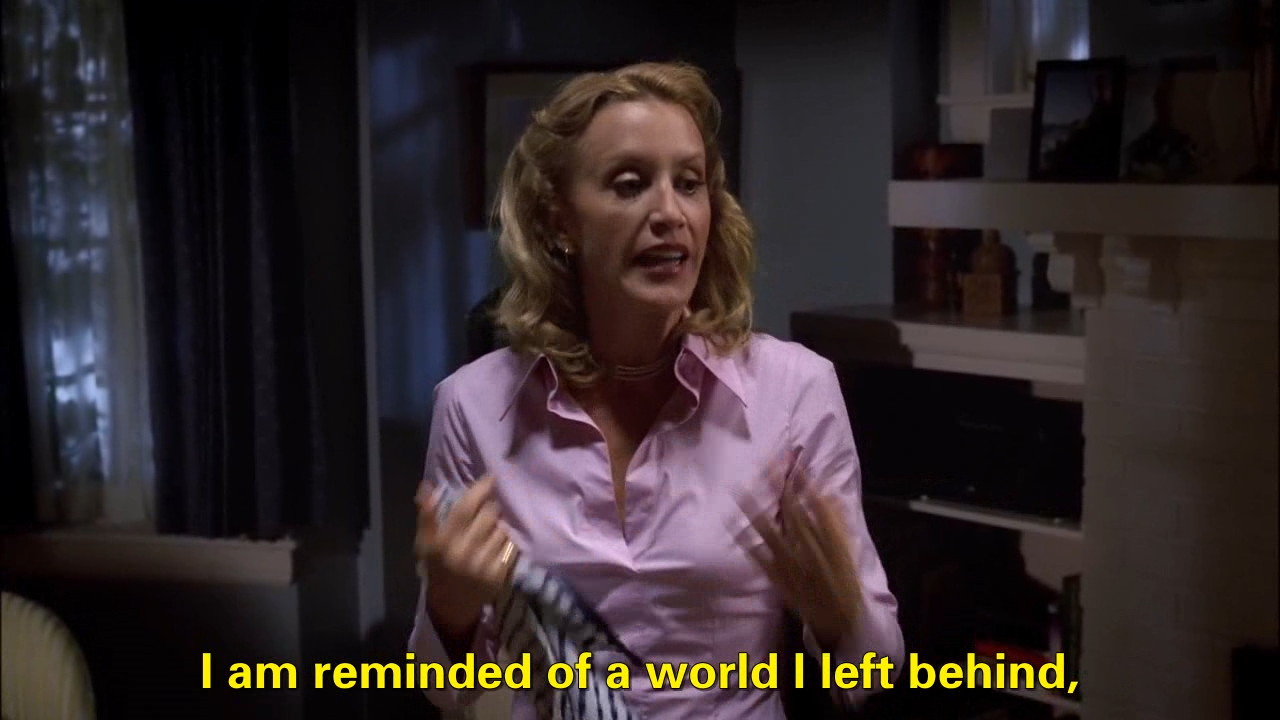
Old Lady: You put on airs, use big words like your rich, snobby friends. 你摆架子,用那些你那些有钱、势利的朋友一样的大词。
——>> Her name isn’t really Genevieve, you know. 她的真名其实不叫吉纳维芙,你知道吗。
Remi: What? 什么?
Genevieve: Knock it off, mother. 别说了,妈妈。
Old Lady: She got “Genevieve” from a romance novel. 她是从一本言情小说里弄来“吉纳维芙”这个名字的。
——>> Her real name is Eunice. Eunice Mudge. 她的真名是尤妮丝。尤妮丝·马奇。
Genevieve: I’ll put you in a nursing home, so help me. 我会把你送进养老院的,我发誓。
Old Lady: She made her brother, Henry, change his name, too. Big phony. 她还让她弟弟亨利也改了名。大骗子。
Genevieve: One with bars on the windows! 一家窗户上装铁栏杆的!
Old Lady: See how she talks to me? 看到她是怎么跟我说话的吗?
——>> All I want to do is enjoy my corn on the cob, 我只想好好享用我的玉米棒,
——>> and I can’t because she’s got to yell at me. 可不行,因为她非要冲我嚷嚷。
Genevieve: Do you know why I yell, mother? 你知道我为什么嚷嚷吗,妈妈?
——>> It’s because I’m trying to rise above the muck and mire of my childhood 是因为我在努力摆脱童年时的泥沼和污秽,
——>> to create a life of elegance and refinement and — 去创造一种优雅精致的生活,还有——
——>> For god’s sakes, mother, what are you doing? 看在上帝的份上,妈妈,你在干什么?
Old Lady: I got something stuck on my choppers. 我牙上卡了东西。
Remi: Grandma, put your teeth back in. 奶奶,把假牙戴回去。
Old Lady: Sorry, folks. After 80, corn is not your friend. 抱歉,各位。过了80岁,玉米就不是朋友了。
Genevieve: I can’t do this. 我受不了了。
Old Lady: Where are you going? 你去哪儿?
Genevieve: I can’t. Not anymore. I’m sorry. 我受不了了,再也受不了了。抱歉。
Zoila: Are you all right? 你没事吧?
Genevieve: I want her out of this house. 我要她离开这栋房子。
Zoila: She’s your mother. You can’t kick her out. 她是你的母亲。你不能把她赶出去。
Genevieve: You’re right. I can’t, but you can. 你说得对。我不能,但你可以。
Zoila: Hold on a second. 等一下。
Genevieve: You brought her here. You get rid of her. And that’s an order. 是你把她带来的。你把她弄走。这是命令。
Common scenarios in daily conversation
| Scenario | Typical meaning | Examples |
|---|---|---|
| 1. Someone suddenly acts superior after gaining status | 升职、发财、出名后开始摆架子 | He never used to talk like that, but now he puts on airs. 他以前从不这么说话,现在却开始摆架子了。 Ever since she became a manager, she’s been putting on airs around the staff. 她当上经理后,就开始在员工面前摆起架子来。 |
| 2. Someone deliberately shows off education, taste, or sophistication | 故意显得有文化、有品位、高人一等 | He puts on airs because he studied abroad. 他因为留过学就故意摆出一副高人一等的样子。 She always puts on airs when she talks about wine and art. 她一谈到葡萄酒和艺术,就总是一副拿腔拿调的样子。 |
| 3. Someone behaves differently around “important” people | 对普通人傲慢,对有身份的人特别殷勤 | He’s friendly with the boss but puts on airs with everyone else. 他对老板很客气,对其他人却摆架子。 Don’t put on airs just because there are a few executives here. 别因为来了几个高管,就摆出一副高高在上的样子。 |
| 4. Describing someone who is trying too hard to look classy | 刻意装优雅、装高级 | The restaurant is nice, but the staff put on airs. 餐厅不错,但员工有点摆谱。 He started putting on airs after moving into that expensive neighborhood. 他搬进那个高档社区后,就开始装腔作势了。 |
| 5. Calling someone out directly | 直接责备别人“别装了” | You don’t have to put on airs with me. 你没必要在我面前装腔作势。 Why are you putting on airs all of a sudden? 你怎么突然摆起架子来了? |