

在《亿万》第四季第四集这场关键的演讲中,主角查克·罗兹(Chuck Rhoades)——一位出身显赫、野心勃勃的联邦检察官,面对满屋的听众,做了一件在美国政坛史无前例的事:他主动公开了自己私生活中最隐秘的部分——他与妻子之间自愿进行的施虐受虐(BDSM)行为。这场演讲并非一次失控的忏悔,而是一场精心设计的政治豪赌。查克引用丘吉尔关于“谎言与真相”的比喻开篇,却反其道而行之,选择用最赤裸的真相作为武器。他深知政敌正密谋用这一隐私来要挟他,于是他选择在对手出招之前,自己将这颗“炸弹”亲手引爆,并借此将一场潜在的个人丑闻,转化为一场关于信任、羞耻与真实性的公开宣言。
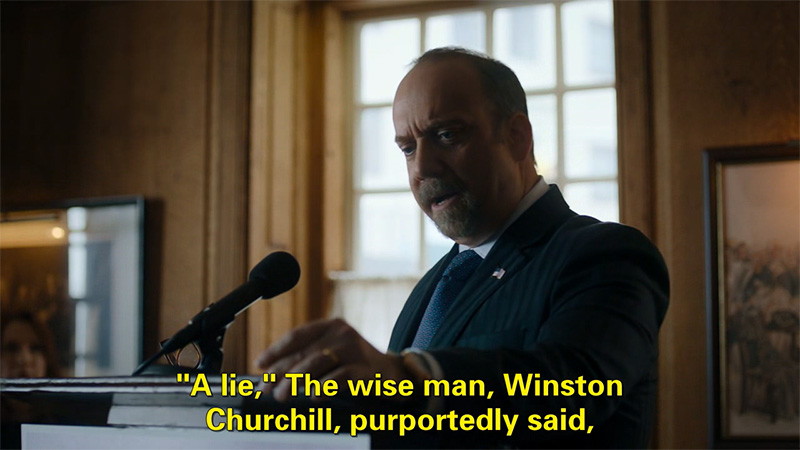
In this pivotal speech from Billions Season 4, Episode 4, Chuck Rhoades—a prominent federal prosecutor with a distinguished pedigree and relentless ambition—stands before a room full of listeners and does something unprecedented in American politics: he voluntarily reveals the most intimate aspect of his private life—his consensual BDSM relationship with his wife. This speech is not a moment of uncontrolled confession but a meticulously calculated political gamble. Chuck opens with Winston Churchill’s metaphor about “lies and truth” but subverts it, choosing to wield the rawest form of truth as his weapon. Aware that his political opponents are plotting to use this secret against him, he decides to detonate the “bomb” himself before they can strike, transforming a potential personal scandal into a public declaration about trust, shame, and authenticity.
Chuck:“A lie,” The wise man, Winston Churchill, purportedly said, “谎言”……据说,智者温斯顿·丘吉尔曾说过,
——>> “Gets halfway around the world 当真相还在穿鞋的时候,
——>> before the truth has a chance to get its pants on.” 谎言就已经走遍了半个世界。”
——>> But, uh, I have a feeling that this truth 但是,呃,我有种感觉,这个真相
——>> will find its way quick enough. 很快就会水落石出。
——>> And it’s high time for truth, too. 现在也正该是说出真相的时候了。
——>> For openness. For unburdening. 为了坦诚,为了卸下重负。
——>> I am not here, as most politicians might be, 我来到这里,不像大多数政客那样,
——>> to ask you to trust me. 是来请求你们信任我的。
——>> No. Instead, I am asking if I may trust you, 不。相反,我是在问,我是否可以信任你们,
——>> with my deepest fear, 将我内心最深的恐惧托付给你们,
——>> which is that you might know me, 那就是你们可能会了解我,
——>> who I really am. 了解真实的我。
——>> The job of the prosecutor is to expose that 检察官的职责是揭露
——>> which is hidden away, the evil, the dirty, 那些被隐藏起来的东西,邪恶的、肮脏的、
——>> the crooked and the untruthful. 狡诈的、不真实的。
——>> To shine light and reveal 去照亮并揭示
——>> what’s under all that darkness. 那所有黑暗之下的东西。
——>> And I have come to realize that in order to do it right, 而我逐渐意识到,要想做好这份工作,
——>> I must first shine that light on my own dark parts. 我必须首先将那束光照进我自己黑暗的部分。
——>> Which is why I have asked you all here today. 这也是我今天请诸位来到此地的原因。
——>> Alright. Y– You know what? 好吧。你们——你们知道吗?
——>> I’m just going to say it. Uh… 我就直说了。呃……
——>> I…In my private life… 我……在我的私生活中……
——>> in the confines of my happy marriage… 在我这段美满婚姻的范畴内……
——>> with my consenting wife… 与我情投意合的妻子的……
——>> practice sadomasochism… 进行着施虐受虐行为……
——>> Uh, yeah. 呃,是的。
——>> Bondage, dominance, uh, all the rest. 捆绑、支配,呃,诸如此类。
——>> Masks. Binds. Ropes. Fire. 面具、束缚、绳索、火焰。
——>> Even just saying it like that I can feel my shoulders loosen 即使只是这样说出来,我都能感觉到我的肩膀
——>> for the first time in decades. 几十年来第一次放松了下来。
——>> I am a masochist. 我是个受虐狂。
——>> In order to achieve sexual gratification, 为了获得性满足,
——>> I need to be tied up, punched, pinched, whipped, 我需要被捆绑、被拳打、被掐、被鞭打、
——>> kicked or otherwise tortured. 被踢或以其他方式被施以折磨。
——>> By my loving wife… 由我深爱的妻子来执行……
——>> And here’s the bigger truth. 而更重要的真相是这样的。
——>> All of us need something, right? 我们所有人都需要点什么,对吧?
——>> You know, I don’t know what you do in your bedroom, 你知道,我不知道你们在自己的卧室里,
——>> with your loved one, but I do know this: 与爱人做些什么,但我深知这一点:
——>> you’re probably a little embarrassed about it. 你们大概对此都有点难为情。
——>> You probably don’t want the rest of us looking at you 你们大概也不希望我们其他人看着
——>> while you do it–unless that’s your thing and if so, great. 你们做那事——除非那是你的癖好,如果是,那很好。
——>> But wouldn’t we be better off 但如果我们不让羞耻占据上风,
——>> if we didn’t let shame win. 会不会过得更好一些?
——>> If we didn’t feel sheepish, 如果我们不感到难为情,
——>> didn’t feel like we had to hide what moves us? 不觉得必须隐藏那些触动我们内心的东西?
——>> Chuck, are you still gonna run? 查克,你还打算竞选吗?
——>> Chuck, how… 查克,怎么……
——>> There are those who believe that I have just ended 有些人认为,我刚刚亲手终结了
——>> my legal and political careers. 我的法律和政治生涯。
——>> They don’t think you can handle what I just told you. 他们认为你们承受不了我刚才所说的话。
——>> In fact, uh, political opponents of mine 事实上,呃,我的政治对手们
——>> were plotting to use it against me. 原本正密谋用这个来攻击我。
——>> I said “Bring it.” 我说“尽管放马过来。”
——>> And that’s why I told you I was here to trust you. 正因如此,我才告诉你们,我来这里是信任你们的。
——>> Because I know that you can handle it. 因为我知道你们能承受得住。
——>> That you may laugh a little. 你们可能会笑一笑。
——>> But that at the end of the day, you’ll get it, 但最终,你们会理解的,
——>> because you want the truth. 因为你们渴望真相。
——>> At worst, uh, maybe it won’t stop you 往坏了说,呃,也许这并不会阻止你们
——>> from getting to the polls to support me. 去投票站支持我。
——>> At best, 往好了说,
——>> maybe on the way you tell someone who you really are. 也许在去投票的路上,你会告诉别人真实的自己。
——>> Maybe they like it. 也许他们会喜欢那样的你。
——>> And maybe you feel just a little more comfortable 也许你会感觉自己
——>> in your own skin. 更自在那么一点点。
——>> As I finally do in mine. 正如我终于在我自己的皮囊里感到了自在。
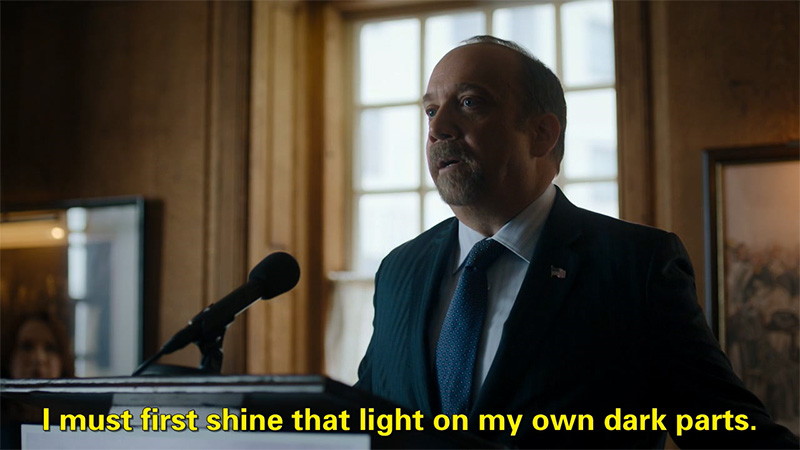
In one’s own skin:it means feeling comfortable, confident, and authentic in oneself, without trying to be someone else or hiding one’s true nature. (指在自己本身的状态下感到自在、自信和真实,不去模仿别人或掩饰真实的自我。)
E.G.1:After years of self-doubt, she finally feels comfortable in her own skin.
参考翻译:经历多年的自我怀疑后,她终于对自己感到自在。
E.G.2:He’s always been confident in his own skin, never worrying about what others think.
参考翻译:他一直都很自信,完全不在意别人怎么想。
E.G.3:The company encourages employees to be in their own skin and share innovative ideas freely.
参考翻译:公司鼓励员工保持真实自我,自由分享创新想法。
E.G.4:Leaders who are in their own skin often inspire trust and loyalty among their teams.
参考翻译:自信真实的领导者往往能赢得团队的信任和忠诚。
Karl:Fraunces. Fitting. 弗朗西斯酒馆。很应景。
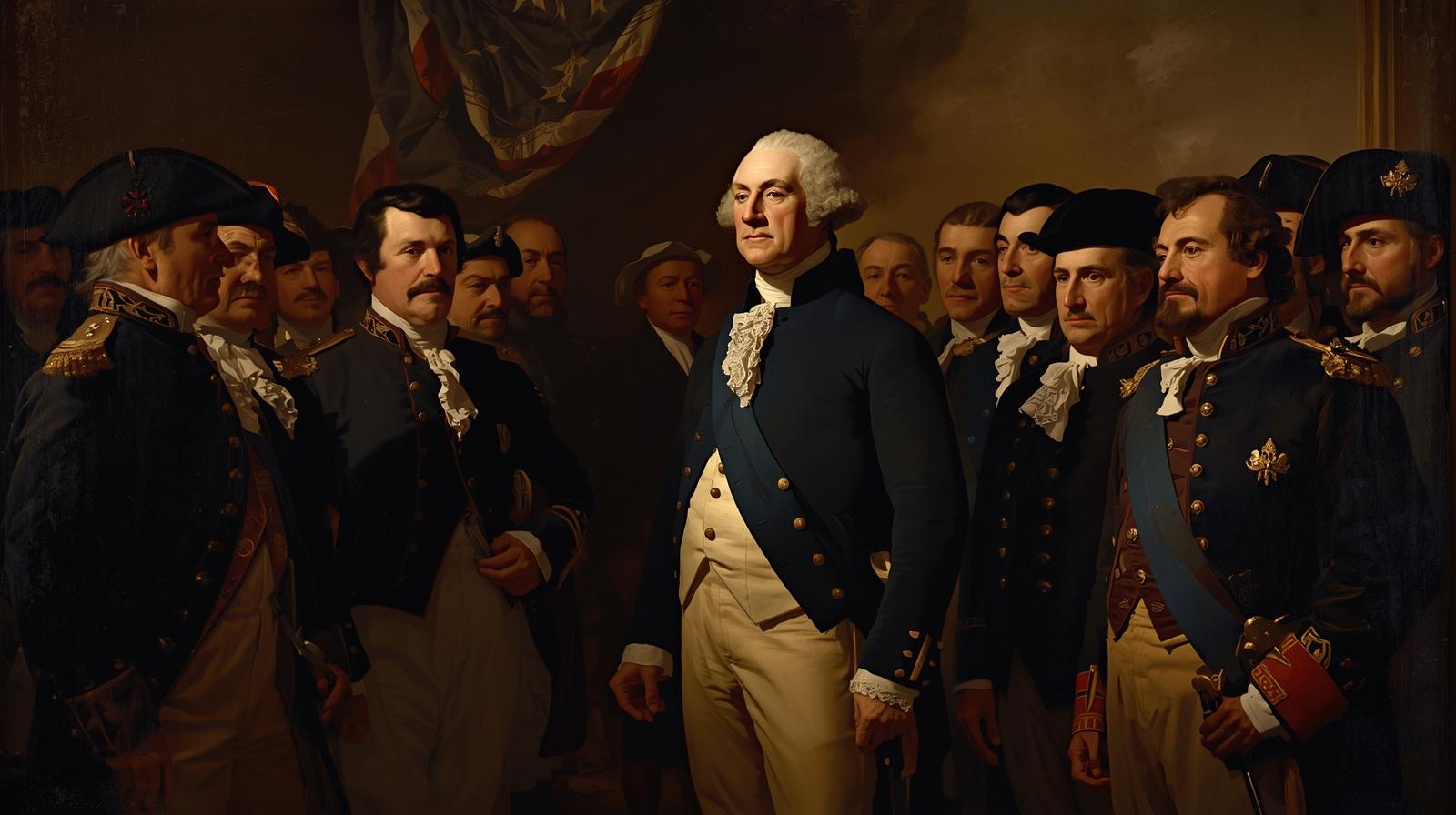
——>> Washington bid farewell to his troops here. 华盛顿当年就是在这里告别他的部队的。
Chuck:Even though I never got my troops again… 虽然我的部队再也不会回来了……
——>> Just the farewell. 只剩下告别了。
Karl:I don’t see any other way either. Yeah. 我也想不出别的办法了。是啊。
Chuck:I go out there. Give up. Everyone moves on. 我走出去。认输。大家继续向前。
Karl:Yeah. I wrote it all down for you. 嗯。我帮你把讲稿都写好了。
Chuck:Let’s see here. 我来看看。
——>> …And so for reasons having more to do with ……因此,鉴于这更多地是出于
——>> familial commitments 家庭责任方面的考量,
——>> than a lack of desire to do the job, 而非缺乏对这份工作的热忱,
——>> I hereby… 我在此……
——>> Yup. That’s about it. 行。差不多就是这个意思。
Karl:– Okay. – 好。
Chuck:– Okay. – 好。
Chuck:Gimme a few alone. 让我独自待几分钟。
Karl:Uh, yeah. I’ll get out there, tell ’em a couple minutes. 呃,好的。我先出去,告诉他们再等几分钟。
Chuck:Nope. Not gonna read that one. 不。我不打算念那份稿子了。
剧情导读 | Plot Summary
这段对话发生在查克发表那场惊世骇俗的演讲之前,地点是纽约的弗朗西斯酒馆——一个极具象征意义的历史场所。1783年,乔治·华盛顿正是在这里含泪告别了他的大陆军军官们,放弃了唾手可得的军事独裁权力,为美国民主奠定了基石。编剧选择这一地点绝非偶然。
查克与他的助手卡尔在此进行了一段简短而凝重的对话。卡尔为查克准备了一份标准的“认输”讲稿——一篇以“家庭责任”为由宣布退出竞选的体面声明。查克看着讲稿,确认这就是计划中的“投降路线”。然而,当卡尔离开后,查克独自一人,做出了最后的决断:“我不打算念那份稿子了。”
这段对话是整场演讲的关键前奏。它向观众揭示了一个重要事实:查克原本的计划是体面退场,用家庭责任作为掩护,悄无声息地结束自己的政治生涯。但就在独自一人的那一刻,他选择了另一条路——不是投降,而是用一种前所未有的方式发起反击。弗朗西斯酒馆的隐喻在此刻完成闭环:华盛顿在这里告别权力,而查克在这里,以一种扭曲而大胆的方式,重新夺回了对自身命运的控制权。
This exchange takes place moments before Chuck delivers his shocking speech, set at Fraunces Tavern in New York—a location heavy with symbolic resonance. It was here, in 1783, that George Washington bid an emotional farewell to his Continental Army officers, relinquishing the opportunity to seize military dictatorship and laying the cornerstone for American democracy. The writers’ choice of this setting is far from coincidental.
Chuck and his aide Karl share a brief, somber conversation. Karl has prepared a standard “concession” speech—a dignified statement citing “familial commitments” as the reason for withdrawing from the race. Chuck glances at the text, confirming it as the planned retreat. But after Karl steps out to give him a moment alone, Chuck makes his final decision: “Nope. Not gonna read that one.”
This scene serves as the essential prelude to the speech that follows. It reveals to the audience a crucial fact: Chuck’s original plan was to exit gracefully, using family obligations as cover to quietly end his political career. Yet in that solitary moment, he chooses a different path—not surrender, but a counterattack of unprecedented audacity. The metaphor of Fraunces Tavern completes its circle here: Washington came to this place to relinquish power; Chuck, in this same place, seizes back control over his own destiny—in a twisted, brazen, and unmistakably defiant fashion.
编剧视角:台词设计与修辞分析
Writer‘s Perspective: An Analysis of Dialogue and Rhetoric
从编剧的角度来看,这场戏是整个《亿万》系列中最为大胆且最具文学性的时刻之一。它完美地展示了该剧的核心魅力:将金融与法律世界的权谋博弈,升华为对人性幽暗角落的深度挖掘。编剧团队(以剧集主创布赖恩·科佩尔曼和大卫·莱维恩为代表)在此处展现了极高的叙事智慧和修辞功力。
1. 以经典比喻作为“安全网”,构建叙事权威
查克的演讲以一句据称出自丘吉尔的名言开场:“谎言已经走遍了半个世界,而真相还没来得及穿上裤子。” 这个开场堪称精妙。编剧选择让角色引用一位战时领袖,其目的有三:首先,为即将发表的惊世骇俗之语铺上一层“严肃、宏大”的基调,用历史的厚重感为个人的“离经叛道”做掩护;其次,建立查克的智识形象——他是一个用经典与逻辑武装自己、而非被情绪裹挟的人;最后,这句引言本身构成了一个精妙的“元叙事”,暗示了接下来发生的一切,都是为了让真相抢在谎言之前“穿好裤子”。
2. 修辞的渐进式剥离:从公共话语到私人禁区的阶梯
编剧在台词的结构上,设计了一个极具仪式感的“层层剥开”过程。查克的发言从标准的公共演讲语体开始(“检察官的职责是揭露……”),逐渐过渡到犹豫、停顿(“Y– You know what? I’m just going to say it”),最终滑入一种近乎临床诊断式的坦白。当他最终说出“practice sadomasochism…”时,语句变得简短、破碎,甚至带着一种超然的冷静。这种从宏大叙事到私人呓语的语体断裂,模拟了角色内心从紧张到释放的心理过程,也让观众感受到他跨越这道边界时的真实挣扎。
3. “我信任你们”的认知重构
最精妙的设计在于对“信任”这一概念的倒置。传统政客会说“请信任我”,而编剧让查克说:“我是否可以信任你们?” 这一句式将权力关系完全反转。查克不再是请求者,而成为“给予者”——他将自己的软肋(而非政绩)作为信任的“抵押品”交予公众。这种修辞策略让听众产生一种错觉:他们不是在窥探一个政客的丑闻,而是在被一个“真实的人”邀请进入他的内心。查克将自己从被审视的客体,转变成了主动选择的叙事主体。
4. 从“性”到“普遍人性”的隐喻跳跃
编剧并未让台词停留在猎奇的层面。在查克袒露最隐私的行为后,台词迅速转向普世价值的追问:“All of us need something, right? … you’re probably a little embarrassed about it.” 这是整个剧本设计中最高明的一步。它将“BDSM”这一极具争议且私密的话题,巧妙地置换成了“每个人都有不愿示人的欲望”这一普遍人性体验。查克不再是一个“异类”,而成为了一个“代言人”。编剧借此将故事的主题从“隐私与丑闻”的博弈,升华为关于“羞耻文化”与“真实自我”的社会性讨论。
5. 精准的“施虐受虐”结构:对观众心理的操控
从剧本写作的深层结构来看,这场戏本身就是一个“施虐受虐”的隐喻。编剧先通过冗长的铺垫和沉重的气氛对观众施加“心理束缚”,让观众既紧张又期待;随后,查克用连续的名词(“Masks. Binds. Ropes. Fire.”)如重拳般击出,这是剧本对观众的一次“施虐”冲击;而最后,当话题转向普遍的人性弱点,并表达“我终于在自己皮囊里感到自在”时,编剧又完成了对观众的“安抚与解救”。整个演讲的节奏——从束缚、释放、冲击到和解——完美复刻了查克所描述的私人体验,让观众在不知情中“体验”了那种从羞耻到解脱的心理弧线。
总而言之,这场戏是编剧室的一次“权力宣言”。它证明了《亿万》的野心不止于讲述金融犯罪的猫鼠游戏,更在于通过高度风格化的台词和精准的心理操控,将政治惊悚片的外壳与严肃的文学性主题融为一体,让观众在震惊之余,不得不直面关于权力、羞耻与真实的终极拷问。
Writer‘s Perspective: An Analysis of Dialogue and Rhetoric
From a writer’s standpoint, this scene stands as one of the most audacious and literarily accomplished moments in the entire run of Billions. It perfectly exemplifies the series‘ core strength: elevating the power games of finance and law into a profound exploration of human psychology’s darker recesses. The writing team—led by series creators Brian Koppelman and David Levien—demonstrates exceptional narrative intelligence and rhetorical craftsmanship here.
1. A Classic Aphorism as a “Safety Net” for Narrative Authority
Chuck opens his speech with a purported quote from Winston Churchill: “A lie gets halfway around the world before the truth has a chance to get its pants on.” This opening is a masterstroke. By having the character invoke a wartime statesman, the writers achieve three things. First, it sets a solemn, grand tone for what is about to be revealed, using historical gravitas to shield personal transgression. Second, it establishes Chuck as a figure of intellect—someone armed with classicism and logic, rather than driven by raw emotion. Finally, the quote itself functions as a clever piece of meta-narrative, suggesting that everything about to happen is an attempt to let truth get dressed before the lie can spread.2. Gradual Rhetorical Stripping: A Staircase from Public Discourse to Private Confession
The writers structure the dialogue with a ritualistic sense of “layered exposure.” Chuck‘s speech begins in the standard register of public address (“The job of the prosecutor is to expose…”), then transitions into hesitation and fractured syntax (“Y– You know what? I’m just going to say it”), and finally descends into a tone approaching clinical detachment. When he utters “practice sadomasochism…,” the language becomes clipped, fragmented, and eerily composed. This stylistic rupture—from grand rhetoric to intimate stammer—mirrors Chuck’s internal journey from tension to release, allowing the audience to viscerally feel the weight of crossing that boundary.3. Cognitive Reframing of Trust
One of the most ingenious touches lies in the inversion of “trust.” Where a conventional politician would say “trust me,” the writers have Chuck ask, “I am asking if I may trust you.” This simple shift reverses the power dynamic entirely. Chuck is no longer a supplicant seeking approval, but a grantor—entrusting the public with his vulnerability (rather than his accomplishments) as collateral. This rhetorical move creates the illusion that the audience is not gawking at a politician’s scandal, but being invited into the inner life of a “real person.” Chuck transforms himself from an object of scrutiny into a subject actively choosing self-disclosure.4. Metaphorical Leap from Sexuality to Universal Human Experience
The writers do not allow the dialogue to linger on mere titillation. Immediately after Chuck’s most intimate confession, the speech pivots to a universalizing inquiry: “All of us need something, right? … you‘re probably a little embarrassed about it.” This is the scene’s most brilliant narrative maneuver. It deftly transmutes “BDSM”—a highly charged, private subject—into the universally relatable experience of harboring desires one feels ashamed to reveal. Chuck is no longer an outlier; he becomes an everyman figure. Through this shift, the writers elevate the scene from a debate about privacy and scandal into a broader social meditation on shame culture and authenticity.5. A Sado-Masochistic Structure: Manipulating Audience Psychology
Viewed through the lens of dramatic structure, the scene itself functions as a metaphor for sado-masochism. First, the writers “bind” the audience with extended preamble and mounting tension, creating a sense of anxious anticipation. Then comes the “strike”—Chuck’s staccato list (“Masks. Binds. Ropes. Fire.”) delivered with almost percussive force, a moment of narrative sadism that shocks the viewer. Finally, as the speech pivots to universal human vulnerability and concludes with the line, “As I finally do in mine,” the writers administer the “aftercare,” offering catharsis and resolution. The arc of the speech—from restraint, to release, to impact, to reconciliation—mimics the very psychological trajectory Chuck describes, allowing the audience to unconsciously experience the journey from shame to liberation.In sum, this scene functions as a “power play” by the writers‘ room. It demonstrates that Billions aspires to more than just chronicling a cat-and-mouse game of financial crime. Through its stylized dialogue and precise psychological manipulation, the series fuses the conventions of political thriller with serious literary themes, forcing viewers to confront fundamental questions about power, shame, and authenticity—long after the initial shock has subsided.