
看美剧绝望的主妇学英语:Gaby与Lynette的代理战争

《绝望的主妇》第八季第十一集的核心主题是:身份、自我能力,以及情感依赖。本集中,Gaby 正为一场需要金融知识的商务会议做准备,她找 Lynette 求助,但两人最深层的自我不安被相互触发:Gaby 害怕被揭穿自己没文化、不能独当一面。Lynette 害怕自己控制欲强、吹毛求疵,最终让关系破裂。
Gaby: Hey! How are you? 嘿!你好吗?
Lynette: That’s the “Hey” that means “I need something.” 这种“嘿”意思是“我需要帮忙”。
Gaby: No, come on. This is important. 不,别这样。这事很重要。
——>> Okay, Carlos is away, 好吧,卡洛斯出门了,
——>> and I need some help with his business, 我需要有人帮忙处理他的生意,
——>> And you’re the only friend I have who knows this stuff. 而你是我唯一懂这些的朋友。
Lynette: – What stuff? – I don’t know. – 哪些事?- 我不知道。
Gaby: Some big British company. 一家英国大公司。
——>> Bennett something. 贝内特什么的。
Lynette: The Bennett Group? 贝内特集团?
Gaby: Yeah! See? You get it. 对!看吧?你懂的。
——>> Anyway, they’re on the verge of signing with Carlos, 总之,他们马上就要和卡洛斯签约了,
——>> and since he’s not “free,” 既然他“没空”,
——>> I thought I’d take ’em to dinner and close the deal. 我想我可以请他们吃顿饭,把合同签下来。
Lynette: You? How would you even know what to talk about? 你?你连该聊什么都不知道吧?
Gaby: Hey, that’s where you come in. 嘿,所以需要你出马呀。
——>> You used to work for Carlos. 你以前为卡洛斯工作过。
——>> Maybe you can give me a few pointers. 也许你能给我指点一二。
Lynette: I have spent my life learning about the world of finance. 我花了一辈子学习金融世界的知识。
——>> I can’t just teach it to you in a couple of weeks. 我不可能在几周内就教会你。
Gaby: Could you teach it to me in a couple hours? 那你能在几小时内教会我吗?
——>> ’cause the meeting’s tomorrow. 因为会议就在明天。
——>> – Gaby. – I’m a fast learner, I swear. – 盖比。- 我学得很快,我发誓。
——>> And from what I understand, the deal’s as good as done. 而且据我了解,这交易已经十拿九稳了。
——>> This is just a formality. 这仅仅是个形式。
Lynette: Okay. Fine. 好吧。行。
——>> Come back tonight after the kids are done. 今晚等孩子们睡了以后你再过来。
——>> I’ll do my best. 我会尽力。
Gaby: – Oh, you’re the greatest. – Yeah, yeah, yeah. – 哦,你最好了。- 是是是。
——>> Hey, could you at least bring– 嘿,你至少能不能带——
Lynette: Bring some wine. I’m one step ahead of you. 带点酒来。我早你想一步。
Gaby: I was going to say Carlos’ files. 我本来是想说卡洛斯的文件。
Lynette: Oh, jeez. Those are at his office, 哦,天啊。那些在他办公室,
——>> And that’s all the way across town. 而且在城那头呢。
Gaby: Hey! 嘿!
Lynette: No. 不行。
场景二:选自美剧《绝望的主妇》S08E11 19:24 (对话人物:Lynette and Gaby)
Lynette: The main thing that distinguishes you 让你区别于
——>> from a corporate firm is custom benchmarking. 企业公司的主要是定制基准分析。
——>> Let them know you provide superior customer service, 让他们知道你们提供卓越的客户服务,
——>> even though your responsibilities are not fiduciary [fɪ’djuːʃəri] . 尽管你们的责任不属于受托责任。
Gaby: Ooh, “Fiduciary.” I love how that sounds. 哦,“受托责任”。我喜欢这词的发音。
——>> Can you spell it for me? 你能帮我拼一下吗?
Lynette: – Well, let me explain it first. – No, no, no, no, no. – 嗯,我先解释一下。- 不,不,不,不,不。
——>> Your explanations take forever. Just spell it. 你的解释没完没了。直接拼。
Lynette: Gaby, you can’t write down a bunch of buzzwords 盖比,你不能写下一堆流行词,
——>> and read them off a piece of paper at the meeting. 然后在会议上照着纸念。
Gaby: Good point. I should hide a piece of paper. 有道理。我应该把纸藏起来。
Lynette: Or you could actually buckle down 或者你也可以认真起来,
Buckle down = To start working seriously and with strong focus, especially after delaying or not putting in enough effort before. (开始认真努力、专心投入去做某件事,尤其是在之前不够用心之后。)
Daily Conversation:
I really need to buckle down and finish my homework tonight.
我今晚得认真坐下来把作业做完。After weeks of wasting time, he finally buckled down and started studying.
浪费了好几周后,他终于开始认真学习了。Business Context:
We have a tight deadline, so the team needs to buckle down this week.
我们的截止日期很紧,所以团队这周必须认真投入工作。She buckled down on the report and completed it faster than expected.
她认真投入到报告里,比预期更快完成了。
——>> and learn the concepts. 好好学学这些概念。
Gaby: It’s just fancy lingo [‘lɪŋɡəʊ]. You throw it around. 这只是些花哨的行话。你随便往外抛。
——>> You sound smart. Clients are happy. 听起来就很聪明。客户就高兴。
——>> I mean, who really understands this stuff? 我是说,谁真懂这些东西?
Lynette: – Everybody. – Really? – 每个人都懂。- 真的?
Gaby: Everybody? Okay. Hey, Penny. 每个人都懂?好吧。嘿,彭妮。
——>> What does “Fiduciary” mean? “受托责任”是什么意思?
Penny: Um, I think it’s like someone who’s allowed to manage 嗯,我想是指被允许管理
——>> to someone else’s money– 别人钱财的人——
——>> like… A bank or something. 比如……银行之类的。
Gaby: Okay. Guess who’s going to their prom alone. 好吧。猜猜谁要独自去参加毕业舞会了。
——>> Look, can we take a break? 听着,我们能休息一下吗?
——>> We’ve been at this for hours. 我们都搞了好几个小时了。
Lynette: 43 minutes. 43分钟。
Gaby: Well, it feels like hours. 嗯,感觉像几个小时。
——>> Just give me a couple more smart words, and we’ll be done. 再给我几个聪明的词儿,我们就完事。
Lynette: What happens when they have a question? 如果他们提问怎么办?
——>> You can’t just spout off a bunch of terms 你不能只是喷出一堆
——>> you don’t understand. 你自己都不懂的术语。
Gaby: Of course I can. 我当然能。
——>> You think when I was a spokesmodel at car shows 你以为我以前在车展当模特代言人时,
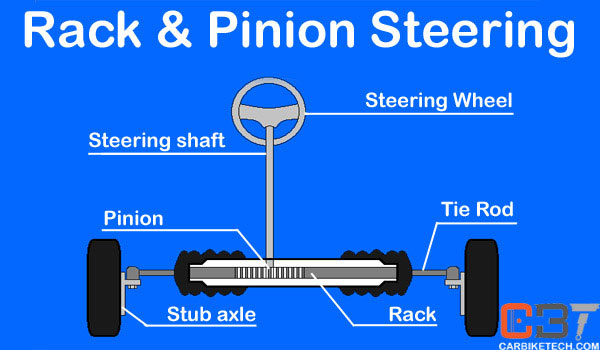
——>> I knew what rack and pinion steering was? 我知道齿轮齿条式转向是什么吗?
是一种常见于汽车上的转向系统。它的结构是:方向盘通过转向轴带动一个圆形的小齿轮(pinion)旋转,这个小齿轮带动一根带齿的直条形金属杆(rack)左右移动。
当齿条左右移动时,就会带动车轮转向。(小齿轮旋转 → 推动齿条左右移动 → 拉动车轮转向 → 汽车改变方向。)
——>> I didn’t have to, ’cause I had charm. 我不需要知道,因为我有魅力。
Lynette: And a tight little dress that barely covered your hoo-ha. 还有一条 勉强遮住你私处的紧身小裙子。
“Hoo-ha” is a light, joking euphemism for a woman’s private area (the crotch/pelvic [‘pelvɪk] area, especially the genitals).
“Hoo-ha” 指的是女性的私密部位(胯部 / 生殖区域),是一种轻松、不粗俗的委婉表达方式。
Gaby: I wonder if I still fit into that dress. 我在想那裙子我现在还穿不穿得下。
Lynette: Well, here’s a thought. 嗯,我有个想法。
To apply yourself means: to put in real effort, focus, and discipline toward something you’re doing — to work hard and take it seriously. ()
日常对话(2)
If you apply yourself, you can finish this assignment before dinner.
如果你好好努力,你可以在晚饭前完成这个作业。He’s smart, but he never applies himself, so his grades stay average.
他很聪明,但他从来不认真努力,所以成绩一直很普通。商务场景(2)
If we all apply ourselves this week, we can close the project ahead of schedule.
如果我们这周都专注努力,就能提前完成这个项目。She applied herself during the training and picked up the new system quickly.
她在培训期间很认真,所以很快学会了新系统。
——>> How about for once in your life you apply yourself? 你这一生中,能不能有那么一次认真用功?
Gaby: What does that mean? 你什么意思?
Lynette: It means for as long as I’ve known you, 意思是从我认识你到现在,
——>> you have been skating by on your looks and charm. 你一直在靠外表和魅力混日子。
Gaby: For as long as you’ve known me? 从你认识我到现在?
——>> Wow, you’ve been holding on to that for a long time. 哇,你憋这话憋了很久了吧。
——>> Tell me I’m wrong. 说我错了啊。
Gaby: No, Lynette, I can’t. 不,勒奈特,我不能。
——>> No one can tell you you’re wrong, 没人能说你错了,
——>> ’cause you’re always right. 因为你总是对的。
Lynette: Okay. What does that mean? 好吧。这又是什么意思?
Gaby: It means you’re a know-it-all. 意思是你是个万事通。
——>> I have never once heard you say the words “I don’t know.” 我从没听你说过“我不知道”这几个字。
Lynette: Well, get ready to, 那么,准备好听吧,
——>> Because I don’t know why I agreed to help you. 因为我不知道我为什么同意帮你。
——>> This is a complete waste of my time. 这完全是在浪费我的时间。
Gaby: It’s a bigger waste of my time, 这更是在浪费我的时间,
——>> ’cause listening to you, time goes slower. 因为听你说话,时间过得更慢。
Lynette: Good luck at your meeting. 祝你会议顺利。
Gaby: Yeah, well, thanks for nothing. What a fi-douche. 是啊,好吧,多谢你的“帮助”。真是个“托”混蛋。
构成逻辑
Fiduciary(源自拉丁语 fiducia,意为“信任”):指在法律或道德上承担受托责任的角色(如财务顾问、监护人),强调“基于信任的权威性”。
Douche(俚语):指傲慢无理、令人反感的人,常带有“自以为是”或“故作优越”的贬义。
合成词“Fi-douche”:讽刺性地将 “看似权威的受托人” 与 “惹人厌的傲慢态度” 结合,形容 “以权威或专业姿态掩饰其自大、令人反感本质的人”。
对话语境印证
Gaby 指责 Lynette 是“万事通”(know-it-all),且“从不说‘我不知道’”,暗示 Lynette 总是以自信权威的姿态指导他人。
但 Lynette 后续表现出不耐烦(“这是浪费我的时间”),Gaby 则反击其建议毫无帮助且态度傲慢。
最终 Gaby 用 “What a fi-douche” 总结:既讽刺 Lynette 摆出“专业帮助者”(近乎履行受托角色)的姿态,又揭露其实际上的自负与惹人厌。
Gaby: Enough business talk. Let’s just eat. 别谈生意了。我们吃饭吧。
Female customer: Oh, no, I love this stuff. 哦,不,我就爱聊这个。
——>> In fact, I am going to pick your brain for the entire meal. 事实上,我打算整顿饭都向你请教。
Male customer: So you were just about to tell us your feelings 所以你刚才正要告诉我们你对
——>> about the future of a unified European currency. 统一欧洲货币未来的看法。
The “unified European currency” refers to the Euro (€), the official currency of the Eurozone—a monetary union of 20 out of the 27 European Union (EU) member states. It was introduced in non-physical form (e.g., banking) in 1999 and as physical banknotes and coins in 2002. The euro is managed by the European Central Bank (ECB) and aims to facilitate economic integration, eliminate exchange rate fluctuations, and strengthen the EU’s single market by providing price transparency and reducing transaction costs.
“统一欧洲货币”即指 欧元(€),它是 欧元区(由欧盟27个成员国中的20个国家组成的货币联盟)的官方货币。欧元于1999年以非实物形式(如银行业务)推出,并于2002年发行实体纸币和硬币。欧元由 欧洲中央银行(ECB) 管理,旨在通过提供价格透明度和降低交易成本,促进经济一体化、消除汇率波动并加强欧盟单一市场。
Gaby: Fiduciary. (我关注的是)受托责任。(牛头不对马嘴)
✅ “That’s a mismatch.”(最中性)
✅ “That doesn’t add up.”(最口语)
✅ “You’re comparing apples and oranges.”(最地道)
场景三:选自美剧《绝望的主妇》S08E11 36:44
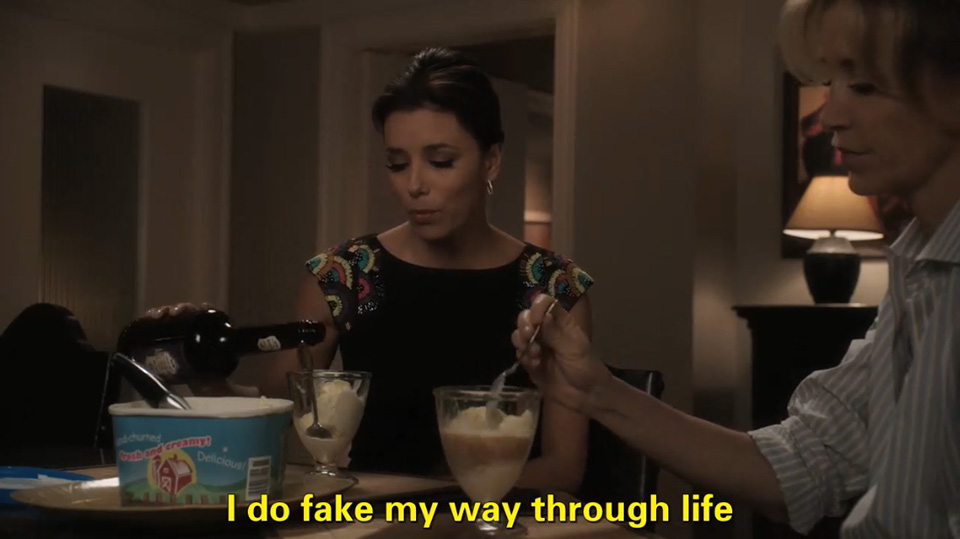
Gaby: I’m busy. 我忙着呢。
Lynette: Too busy for bourbon? 忙得连波本威士忌都没空喝?
——>> Or ice cream? 或者冰淇淋?
——>> Hey, we can make a bourbon float. 嘿,我们可以做波本漂浮。
Gaby: Okay. Terrible idea. 好吧。真是个馊主意。
Lynette: I just came to say you were right. 我只是来告诉你,你说得对。
——>> I am a pain-in-the-ass know-it-all, and I am sorry. 我是个烦人的万事通,我很抱歉。
Gaby: You were right, too. 你也说得对。
——>> Bourbon float‘s a terrible idea. 波本漂浮是个馊主意。
A bourbon float is a cocktail or dessert drink that combines bourbon whiskey with a float (a layer poured on top) of another beverage, typically a carbonated soda like ginger ale, cola, or root beer, or occasionally ice cream. The “float” technique creates distinct layers, often served over ice. It is a simple, refreshing drink that highlights bourbon’s sweetness and spice notes.
波本漂浮(Bourbon Float)是一种鸡尾酒或甜品饮料,将波本威士忌与另一种饮品(通常为碳酸饮料,如姜汁汽水、可乐或根汁啤酒,有时也可加入冰淇淋)以“漂浮”方式结合,即后者缓慢倒入后悬浮在酒液上层。这种“漂浮”技法形成鲜明分层,通常加冰饮用。它是一款简单爽口的饮品,能突出波本威士忌的香甜与辛辣风味。
——>> But an amaretto [ˌæmə’retəʊ] float… 但是杏仁酒漂浮 / 意大利苦杏酒……

An amaretto float is a dessert-style cocktail or non-alcoholic beverage made by pouring amaretto—a sweet, almond-flavored Italian liqueur—over ice and then gently adding a “float” (top layer) of a carbonated mixer such as cream soda, cola, or ginger ale. Often, a scoop of vanilla ice cream or a dollop of whipped cream is added to create a creamy, layered drink reminiscent of an Italian soda or an adult ice cream float.
阿马雷托漂浮(Amaretto Float)是一款甜品风格的鸡尾酒或无酒精饮料,制作方式是将甜杏仁风味的意大利利口酒——阿马雷托(amaretto)倒在冰块上,然后缓缓倒入一层“漂浮”的碳酸混合饮料(如奶油苏打、可乐或姜汁汽水)。通常还会加入一勺香草冰淇淋或一团搅打奶油,制成一款层次分明、口感柔滑的饮品,类似意大利苏打或成人版冰淇淋漂浮。
Lynette: It’s just so typical. You came to me for help, 这太典型了。你来找我帮忙,
——>> But instead, I gave you a lecture, 但我却给了你一通说教,
——>> And when you wouldn’t do what I said, 而当你不按我说的做时,
——>> – I kicked you out. 我就把你赶走了。
Gaby: It’s okay. — 没关系的。
Lynette: No, it’s not. 不,有关系。
——>> I have been doing this to Tom forever… 我一直都对汤姆这样……
——>> Till he got fed up and left. 直到他受够了然后离开。
——>> I really don’t want that to happen with my friends, too. 我真的不希望这同样发生在我和朋友之间。
Gaby: Honey, I deserved it. You’re right. 亲爱的,我活该。你说得对。
——>> I do fake my way through life 我确实靠眨眨眼睛、卖弄漂亮
——>> by batting my eyes and looking pretty. 在人生中蒙混过关。
——>> And the problem is, I can’t do that anymore. 但问题是,我再也做不到了。
Lynette: Right. Because you’re getting older. 对啊。因为你年纪大了。
Gaby: No, ’cause Carlos is gone. 不,因为卡洛斯不在了。
Lynette: Oh, sorry. 哦,抱歉。
Gaby: I just have all these responsibilities. 我只是有这么多责任。
——>> I have to grow up. 我必须长大了。
Lynette: Well, he should be back in a few weeks. 嗯,他几周后应该就回来了。
Gaby: What if he isn’t? What if he can’t kick this thing? 如果他不回来呢?如果他戒不掉(酒瘾)呢?
——>> Then I’m gonna be on my own, and I am helpless on my own. 那我就得靠自己了,而我一个人是无助的。
——>> And that’s why I came to you. 所以我才来找你。
——>> I just wanted someone to take care of things 我只是想让有人能把事情处理好,
——>> so I wouldn’t have to. 这样我就不用自己处理了。
——>> I wanted you to be my Carlos. 我希望你能当我的卡洛斯。
——>> I just miss him so much. 我只是太想他了。
Lynette: I miss Tom, too. 我也想念汤姆。
——>> But at least we have each other. 但至少我们还有彼此。
——>> We’re gonna get through this. 我们会渡过难关的。
Gaby: How do you know? 你怎么知道?
Lynette: Because… 因为……
——>> I know everything, remember? 我无所不知,记得吗?
1. The Core Concept: A Political Metaphor
In international relations, a proxy war occurs when two or more major powers avoid direct military confrontation by supporting and fighting through third-party actors (often smaller states or non-state groups). The core characteristics are:
-
Substitute for Direct Conflict: The primary adversaries (e.g., US and USSR during the Cold War) channel their rivalry into a secondary theater to avoid the catastrophic risks of a head-on clash.
-
Displacement of the Battlefield: The fundamental conflict (ideological, geopolitical) is fought on a surrogate, “safer” battleground, such as Vietnam or Afghanistan.
-
Surface Issue vs. Root Cause: The stated reason for the conflict (e.g., civil war, liberation) often masks the deeper, core struggle between the sponsoring powers (e.g., sphere of influence, resource control).
Analogy: Two master martial artists, unwilling to risk injuring each other, each train a champion to fight in their stead. The champions’ battle is a proxy for the masters’ unresolved competition.
2. Application to Interpersonal Dynamics and Narrative
When applied to psychology, communication, and narrative analysis, a “proxy war” describes a pattern where:
-
Individuals avoid confronting or expressing their core, vulnerable emotions (e.g., fear, insecurity, grief, need).
-
Instead, they engage in a heated conflict over a comparatively “safe,” superficial, or tangential issue.
-
This surface issue becomes the “proxy” or “battlefield” upon which the hidden, emotional war is indirectly fought.
1. 概念本源:国际政治中的“代理战争”
在国际关系和政治学中,“代理战争” 是指两个或多个大国不直接进行正面军事冲突,而是通过支持、资助或操纵第三方国家、地区或非国家团体来进行对抗。
核心特征:
直接冲突的替代品:主要大国(如美国和苏联在冷战时期)为了避免全面开战带来的毁灭性风险,选择在其他地方“打代理人”。
战场转移:真正的矛盾(意识形态、地缘政治竞争)被转移到一个 次要的、相对安全的“战场” 上进行,例如朝鲜、越南、阿富汗。
表面议题 vs. 深层矛盾:代理人战争的表面议题(如某国内部统一、政权更迭)往往掩盖了背后大国博弈的深层、核心矛盾(如势力范围争夺、资源控制)。
简单比喻:两个武林高手(大国)不想自己动手两败俱伤,于是各自扶持一个门派(代理人),让这两个门派去拼个你死我活。输赢关乎高手的面子和利益,但流血牺牲的是门派弟子。
2. 在人际与叙事中的隐喻应用
当我们将这个概念移植到人际关系、心理学和文学/影视分析时,“代理战争”指代一种沟通或冲突模式:
人们不直接面对或表达自己内心真正的、核心的伤痛、恐惧或需求,而是通过一个相对“安全”的、表面的议题进行争吵或对抗。
这个“表面议题”就成了 内心真实战争的“代理人”或“战场”。
3. Analysis of the Desperate Housewives Scene: Lynette vs. Gaby
The confrontation between Lynette and Gaby is a textbook interpersonal proxy war.
-
The Root Cause / The Real War:
-
Gaby’s Inner Front: Profound fear of abandonment (Carlos’s absence), terror of incompetence in facing adult responsibilities, and a crisis of self-worth beyond her beauty and charm. She feels helpless and lost.
-
Lynette’s Inner Front: Anger and shame from Tom’s rejection, deep-seated anxiety that her competence and need for control poison her relationships, and pain from the realization that “being right” couldn’t keep her marriage intact. She feels isolated and flawed.
-
-
The Surface Issue / The Proxy Battleground:
-
The argument about “fiduciary” definitions, business jargon, Gaby’s work ethic, and Lynette’s condescension.
-
These topics are merely the “safe” territory where they funnel their unmanageable inner turmoil.
-
-
The Proxy Combat Process:
-
Gaby’s attack, “You’re a know-it-all!” is a proxy for her true cry: “I’m drowning in fear and need your help, but your lecturing makes me feel stupid and even more powerless!”
-
Lynette’s accusation, “You skate by on your looks!” is a proxy for her deep fear: “My greatest strengths—being capable and right—seem to destroy intimacy. If they fail me, what is my value?”
-
By attacking each other’s behavior on the proxy battlefield (poor studying, overbearing teaching), they indirectly discharge the artillery of their real emotional war (desperation, sorrow, self-doubt).
-
-
应用于勒奈特与盖比的场景分析
在剧中,这场争吵完美地演绎了一场人际间的“代理战争”:
-
深层矛盾/真实战争:
-
盖比:内心充满 对失去卡洛斯的恐惧、对独自承担责任的无力感、对自身价值(除了美貌之外)的深刻怀疑。她感到无比脆弱和迷失。
-
勒奈特:内心充满 对被汤姆抛弃的愤怒、对控制欲可能破坏关系的自我怀疑、对“总是正确”却留不住所爱之人的痛苦。她同样感到孤独和挫败。
-
-
表面议题/代理战场:
-
“如何谈生意”、“fiduciary的定义”、“盖比是否认真”、“勒奈特是否傲慢”。
-
她们激烈地争论“商业行话”、“学习态度”、“人生选择”,这些看似是争吵的核心,但实际上只是 转移内心痛楚的安全话题。
-
-
战争的代理过程:
-
盖比的愤怒(“你是个万事通!”)代理了她内心的呐喊:“我害怕一个人面对这个世界,我需要你帮我,但你的说教让我觉得自己更蠢、更无助!”
-
勒奈特的指责(“你一辈子都在靠外表混日子!”)代理了她内心的恐惧:“我引以为傲的能力和正确性,在亲密关系中似乎成了毒药。如果连‘正确’都留不住人,我还有什么价值?”
-
她们通过攻击对方在“代理战场”上的行为(不学习、爱说教),来间接宣泄内心“真实战场”上的情感风暴(恐惧、悲伤、自我否定)。
-
-
4. Conclusion and Broader Implication
The “proxy war” ends not when the surface argument is won, but when the combatants see past the smoke and recognize the shared vulnerability in the opposing trench.
-
Ceasefire: Gaby’s admission: “I wanted you to be my Carlos… I just miss him so much.”
-
Peace Treaty: Lynette’s response: “I miss Tom, too… But at least we have each other.”
At this point, the proxy war dissolves because they finally engage directly on the real battlefield (shared grief, fear of the future) and form an alliance against their common internal enemies.
This concept is a powerful analytical tool because it reveals:
-
The Complexity of Communication: Human conflict often involves “fighting the wrong war,” where surface words require translation to uncover true emotions.
-
The Escalation Mechanism: Arguments spiral when superficial issues become overloaded with the emotional weight of unaddressed core conflicts.
-
The Path to Resolution: Genuine reconciliation requires bypassing the proxy issue to acknowledge and address the shared, underlying vulnerability.
This dynamic is not limited to fiction but is prevalent in real-life family disputes, workplace tensions, and friendship fallouts. Recognizing a conversation as a “proxy war” is the first step toward deeper understanding, de-escalation, and authentic connection.
4. 总结与延伸
因此,这场“代理战争”的结束,并非因为她们在表面议题上分出胜负(谁对谁错),而是当她们穿越炮火,识别出对方战壕里与自己相同的恐惧时。
停火信号:盖比的坦白——“我希望你能当我的卡洛斯……我只是太想他了。”
和平协议:勒奈特的回应——“我也想念汤姆……但至少我们还有彼此。”
这时,代理战争结束了,因为她们终于敢于在 “真实战场”(失去伴侣的脆弱、对未来的迷茫)上直接对话,并结成了 共同应对内心战争的联盟。
这个概念之所以是强有力的分析工具,是因为它揭示了:
人类行为的复杂性:我们常常“指桑骂槐”,真正的情绪需要被翻译。
冲突的升级机制:当人们无法识别或表达深层需求时,表面争吵会因承载过多情绪而无限升级。
和解的关键:真正的和解不在于解决表面分歧,而在于触及并承认隐藏其下的共同脆弱。
这不仅发生在《绝望的主妇》中,也普遍存在于现实的家庭争吵、职场矛盾和朋友争执里。识别一场对话是“代理战争”,是理解他人、化解冲突、进行深度沟通的第一步。
这段来自《绝望的主妇》第八季的三部分场景,捕捉了勒奈特和盖比友谊中的一个关键转折点,背景设定在两人各自的生活危机之中:勒奈特的丈夫汤姆离开了她,而盖比的丈夫卡洛斯正在外进行康复治疗,迫使她突然接手管理他的商业帝国。
这段情节始于盖比,她完全不知所措,绝望地寻求勒奈特的帮助来完成一笔关键交易。这立刻凸显了她们之间根本的动态冲突:终身依赖“魅力”策略的盖比,对阵务实“智慧”型的勒奈特。她们的教学课演变成一场激烈的争吵,多年未说出口的怨气浮出水面。勒奈特指责盖比一辈子靠外表混日子,而盖比则反击说勒奈特是个令人难以忍受的万事通。
场景的真正深度在最后饮酒和解的部分得以展现。她们的争吵从来不只是关于商业术语;这是一场 针对她们共同悲伤、恐惧和脆弱的代理战争。盖比坦言,她来找勒奈特不仅是为了生意上的帮助,更是希望勒奈特能“成为她的卡洛斯”——一个她自感缺乏的力量支柱。这番坦率的告白瓦解了她们的防线,让她们能够基于共同的孤独和对未来的不确定感建立起连接。
最终,这段情节讲述了她们友谊在压力下的进化。它从一种交易性的、基于技能的关系,转变为一种更深层的、基于脆弱的联结。她们不再将彼此视为刻板印象(“愚蠢的花瓶模特”和“专横的职业女性”),而是开始将对方视为同样需要彼此扶持才能度过难关的、充满恐惧的女人。这证明了该剧将尖锐喜剧与真挚情感融合的能力。
This three-part scene arc from Desperate Housewives Season 8 captures a pivotal moment in the friendship between Gaby and Lynette, set against the backdrop [‘bækdrɒp] of personal crisis. Both women are reeling: Lynette’s husband Tom has left her, and Gaby’s husband Carlos is away at rehab, forcing her to suddenly manage his business empire.
The arc begins with Gaby, utterly out of her depth, desperately seeking Lynette’s help to close a crucial business deal. This immediately sets up their fundamental dynamic clash: Gaby, the lifelong “charm” strategist, versus Lynette, the pragmatic “brains.” Their tutoring session devolves into a spectacular fight, where years of unspoken resentments surface. Lynette accuses Gaby of skating through life on her looks, while Gaby fires back that Lynette is an insufferable know-it-all.
The true depth of the scene is revealed in the final, reconciliatory part over drinks. Their argument was never just about business terms; it was a proxy war for their shared grief, fear, and vulnerability. Gaby confesses she came to Lynette not just for business help, but hoping Lynette could “be her Carlos”—a pillar of strength she feels she lacks. This raw admission breaks down their defenses, allowing them to connect over their mutual loneliness and fear of an uncertain future.
Ultimately, this arc is about the evolution of their friendship under pressure. It moves from a transactional, skill-based relationship to a deeper, vulnerability-based bond. They stop seeing each other as stereotypes (the “ditzy model” and the “bossy career woman”) and start seeing each other as equally scared women who need each other to survive. It’s a testament to the show’s ability to blend sharp comedy with genuine emotional truth.
Scene Analysis (场景分析)
这一场是典型的“角色互为镜子”的设计:Lynette 戳中 Gaby 依赖美貌与包装混日子的弱点,而 Gaby 反击 Lynette 是事事插手、永远自以为正确的控制狂。因为双方都说中了对方最不想被揭穿的真相,冲突瞬间爆炸。主题上,这段戏揭示了“能力 vs. 伪装”与“控制 vs. 合作”的双线:Gaby 想闯入自己完全不懂的职场,却妄想用魅力蒙混过关;她的不安与对 Carlos 的依赖在“fiduciary(受托责任)”一词里被放大。另一边,Lynette 从好心辅导变成高高在上的训斥,让 Gaby 的羞耻直接点燃怒火。她们的幽默来自真实的不安:Gaby 用浮夸掩饰脆弱,Lynette 用说教掩饰焦虑,喜剧让残酷的真相得以被观众轻松接受。
This scene is a classic example of “characters acting as mirrors”: Lynette calls out Gaby for coasting through life on beauty and charm, while Gaby fires back that Lynette is a controlling know-it-all who meddles in everything. Because both accusations hit painfully accurate truths, the conflict escalates immediately. Thematically, the scene explores “competence vs. performance” and “control vs. collaboration”: Gaby is trying to enter a professional world she doesn’t understand, assuming she can bluff her way through with charisma. Her insecurity—and dependence on Carlos—are exposed through the word “fiduciary,” which symbolizes responsibilities she’s never had to face. Meanwhile, Lynette’s attempt to teach quickly shifts into condescension, triggering Gaby’s shame and frustration. The humor arises from both women masking deep insecurity: Gaby hides behind exaggeration and flirtiness; Lynette hides behind lecturing and correction. Comedy softens what would otherwise be brutally honest truths.
后续的道歉场景完成了情绪修复,两人终于说出隐藏的需求:Lynette 明白自己的控制欲曾逼走 Tom,她不想再失去朋友;Gaby 在 Carlos 离开后第一次意识到自己真的不会独立生活,“装聪明”只是为了对抗无助。波本浮冰与杏仁酒的轻松玩笑象征她们的友谊仍有柔软底色,而“I wanted you to be my Carlos.” 则是情感高潮——她追求的不是术语,而是安全感,希望 Lynette 能在她崩溃时接住她。“Because I know everything, remember?” 则是回扣式幽默,把缺点转化成支撑彼此的力量。对整个季节而言,这段戏说明:当旧的安全依靠瓦解(Carlos、Tom 离开),女人必须重新成长,而友谊成为新的支撑。冲突真正讨论的不是“fiduciary”,而是依赖、自尊、成熟与害怕失去重要的人,因此和解才格外动人。
The follow-up apology scene completes the emotional arc, revealing what each woman truly needs beneath the conflict. Lynette realizes her controlling tendencies once drove Tom away, and she doesn’t want to lose friends the same way. Gaby, without Carlos, finally admits she has no idea how to function independently, and her “fake-it-till-you-make-it” routine is just a defense against helplessness. The bourbon-float and amaretto-float jokes symbolize the lingering playfulness in their friendship—proof that despite hurting each other, they can still laugh together. “I wanted you to be my Carlos” becomes the emotional peak: Gaby wasn’t seeking jargon knowledge; she wanted safety, someone to take over when she falls apart. Lynette’s closing line, “Because I know everything, remember?” is a humorous callback that reframes her flaw as a source of support. For the season’s larger narrative, these scenes show that when old sources of security collapse (Carlos and Tom leaving), these women must grow, and their friendship becomes the new anchor. Ultimately, the conflict has nothing to do with “fiduciary”—it’s about dependency, pride, maturity, and the fear of losing someone important, which makes the reconciliation especially moving.